
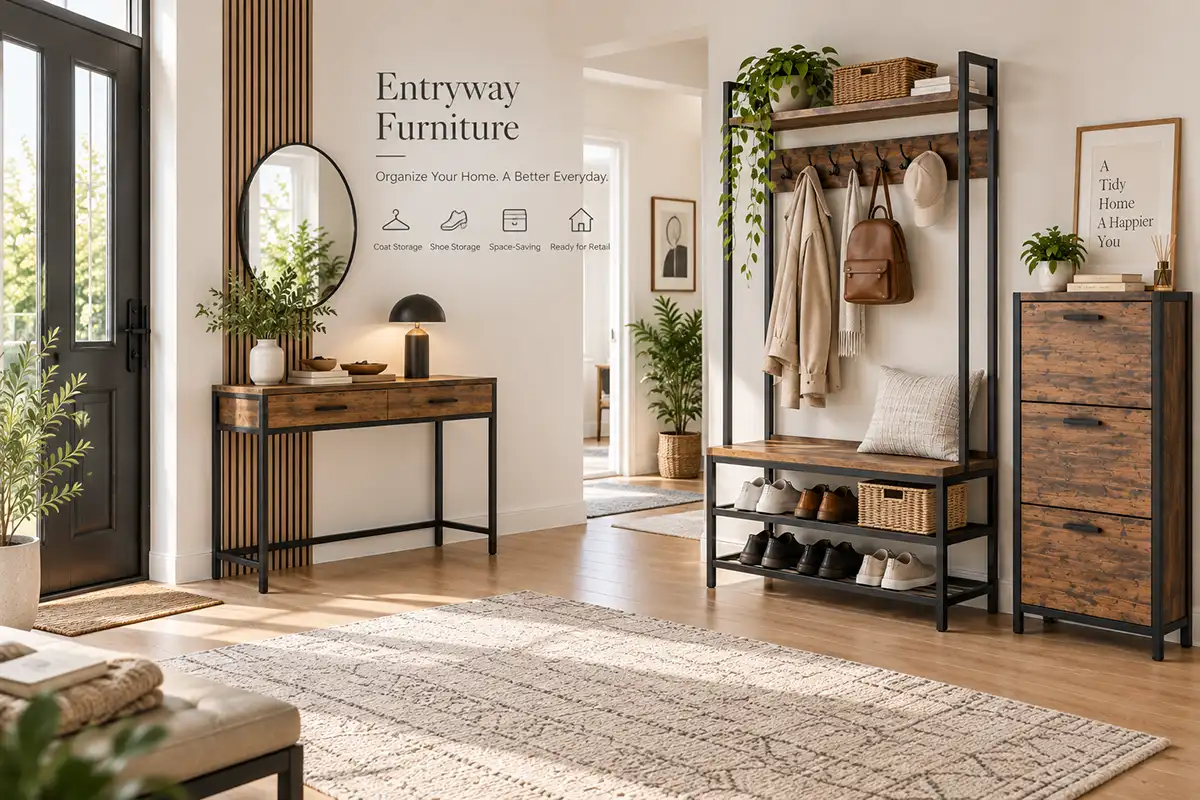
Entryway Furniture Manufacturer & Supplier
HOMVND develops flat-pack entryway furniture for ecommerce retailers, private-label brands and importers, including shoe storage, hall trees, coat racks and compact organizers. We support model-specific finish options and OEM/ODM development, with hardware, assembly instructions and mail-order packaging reviewed for each program.
Products
20 products
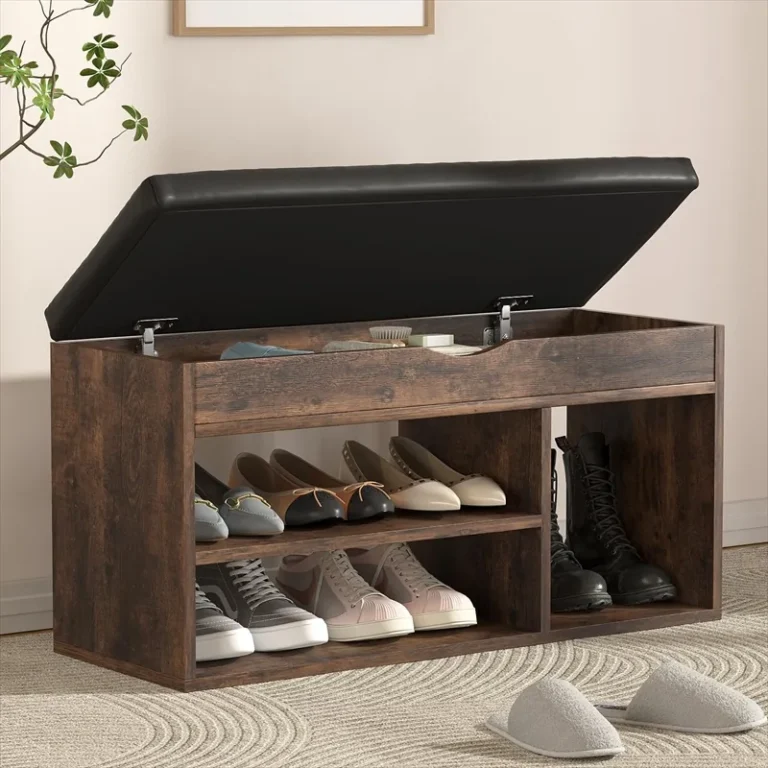
Padded Storage Bench with Shoe Shelves
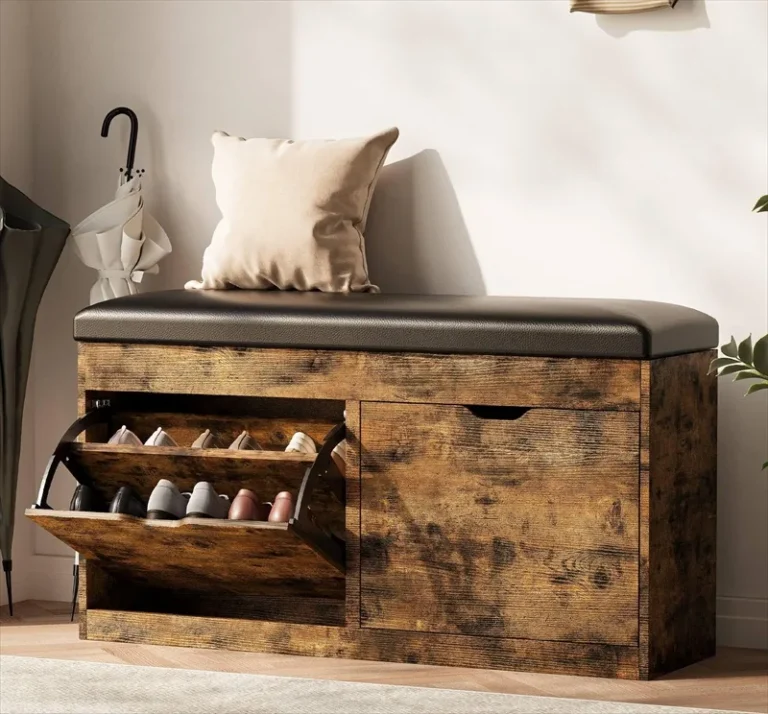
Padded Shoe Bench with Two Flip-Down Compartments
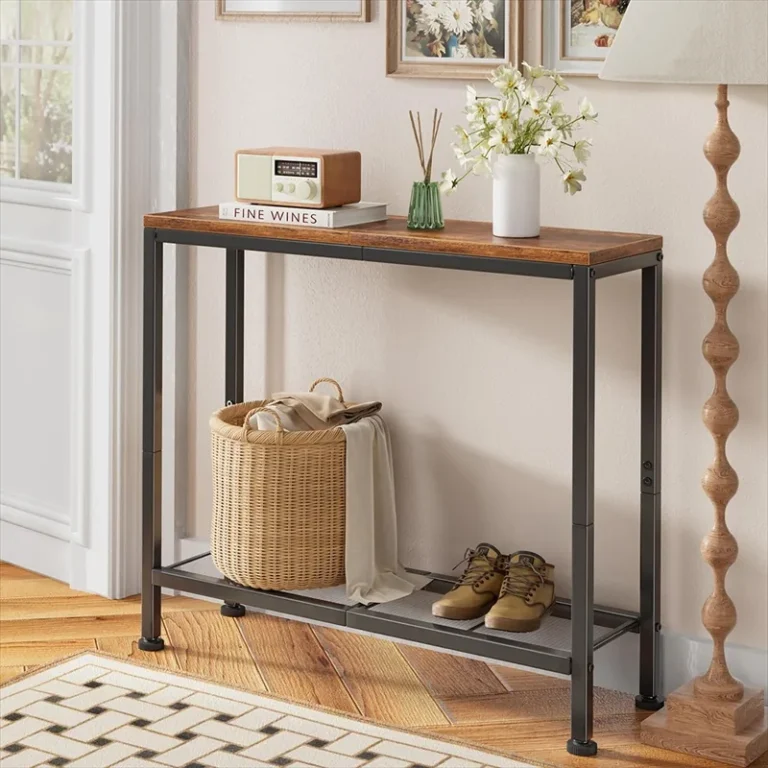
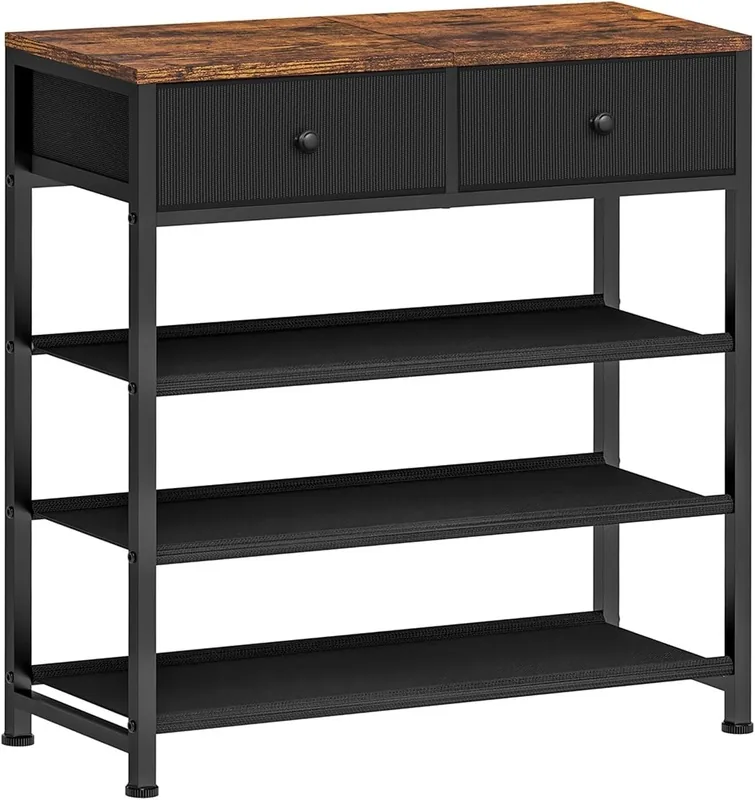
Compact Console Table with Lower Shelf
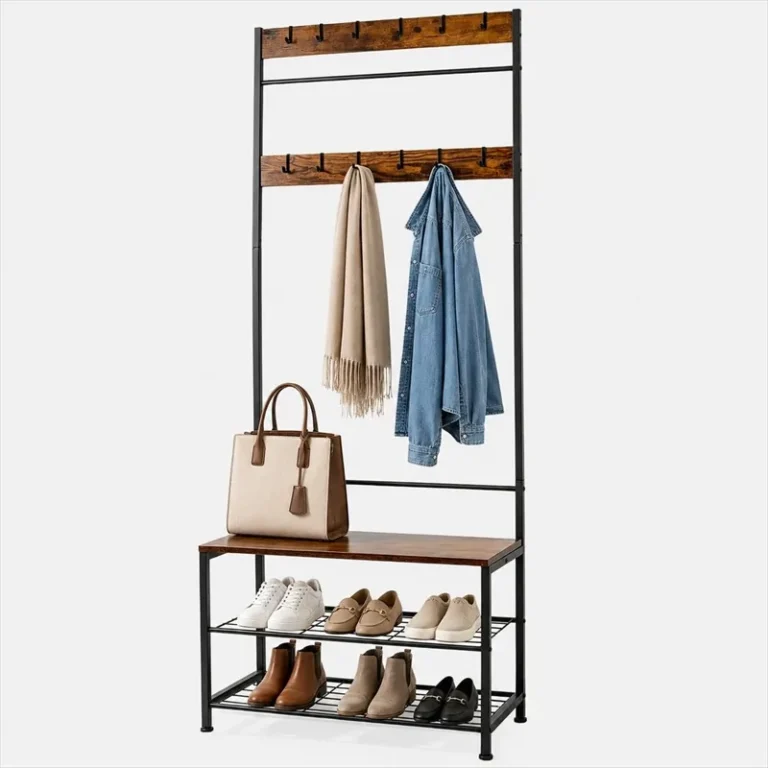
Hall Tree with Bench and Two Shoe Shelves
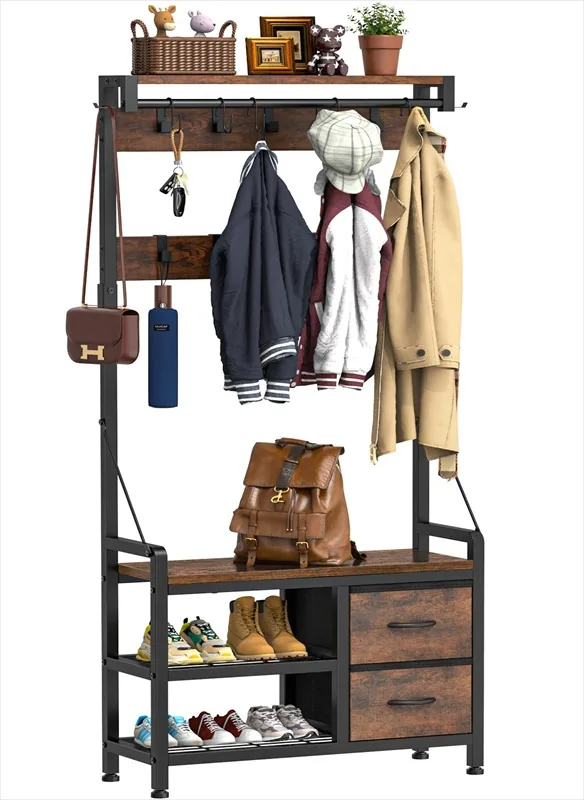
Hall Tree with Bench, Drawers and Shoe Shelves
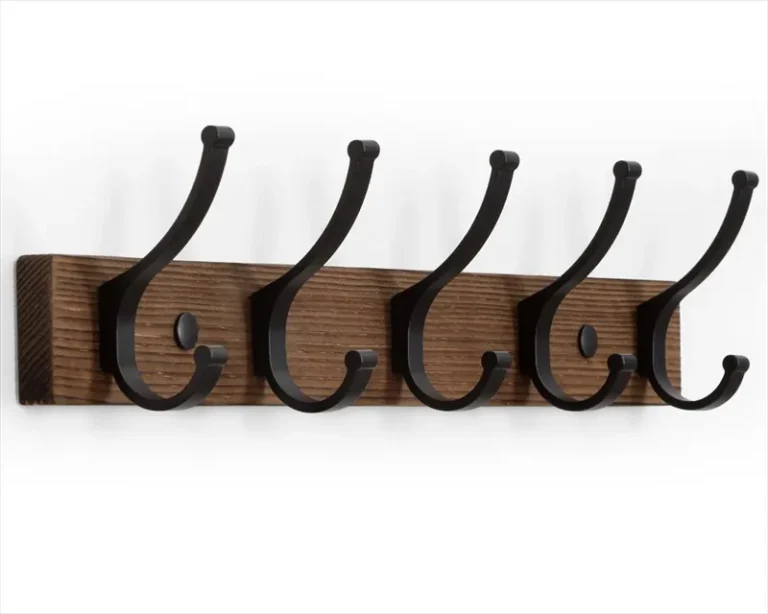
Wall Coat Rail with Five Double Hooks
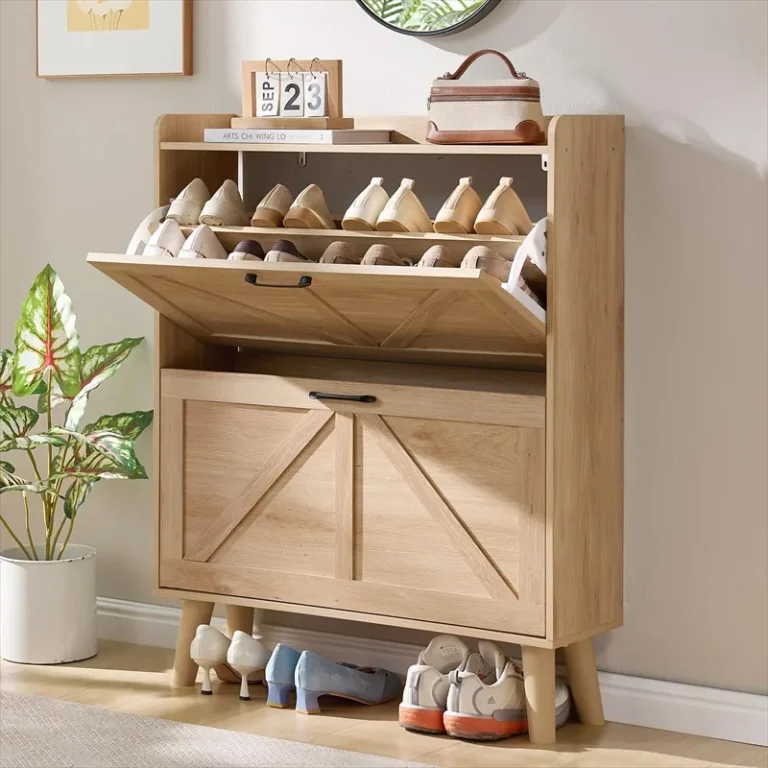
Two-Tier Flip-Down Shoe Cabinet
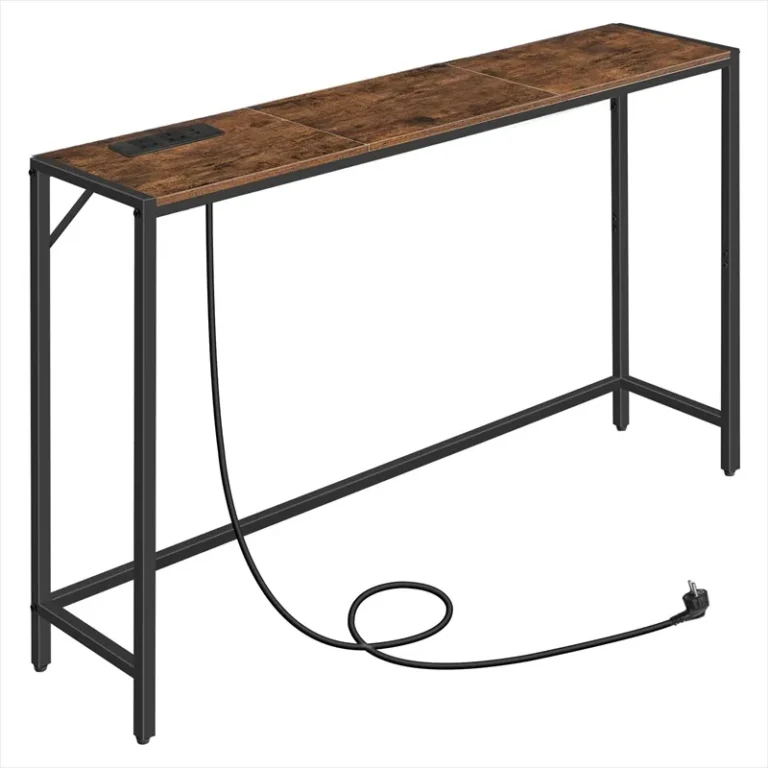
Narrow Charging Console Table
Entryway Furniture for Different Storage Needs
Shoe Storage
Compare cabinets, racks and benches by footwear depth, tier spacing and access.Coat & Hall Tree Storage
Review hanging, seating and shoe storage together, including footprint and wall-fixing needs.Entryway Cabinets & Organizers
Match the internal layout, panel connections and access to your sourcing brief.HOM-CR148: One Structure, More Finishes
One confirmed hall-tree structure, available in White, Brown, Greige and Black. 4 confirmed finishes · Same base structure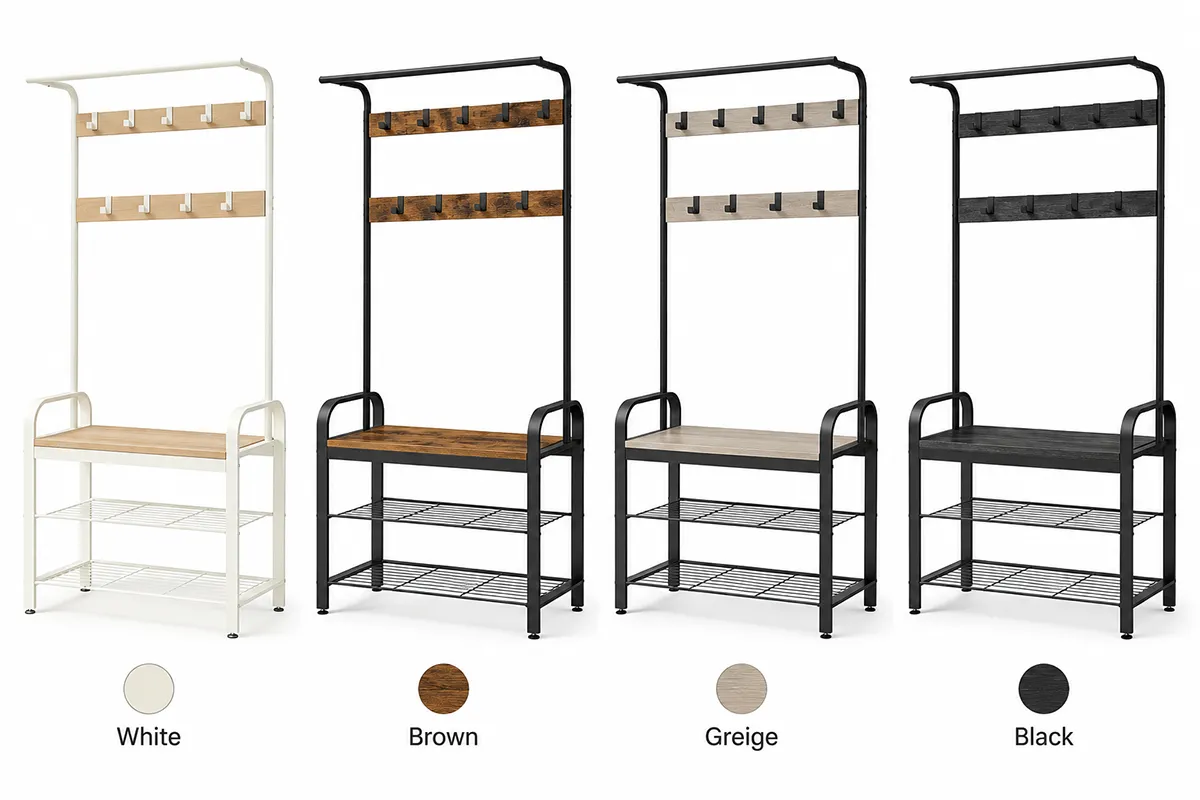
Built for Flat-Pack Ecommerce
Product Structure
Review material and hardware specifications by component for the selected model.Assembly Readiness
Review parts, connectors, hardware and instructions together for clearer assembly.Packaging Review
Review packed dimensions, weight, protection and carton layout during development.HOM-CR148 Packaging Example
Packed size (HOM-CR148BX): 78.8 × 38.7 × 16.4 cm · 1 pc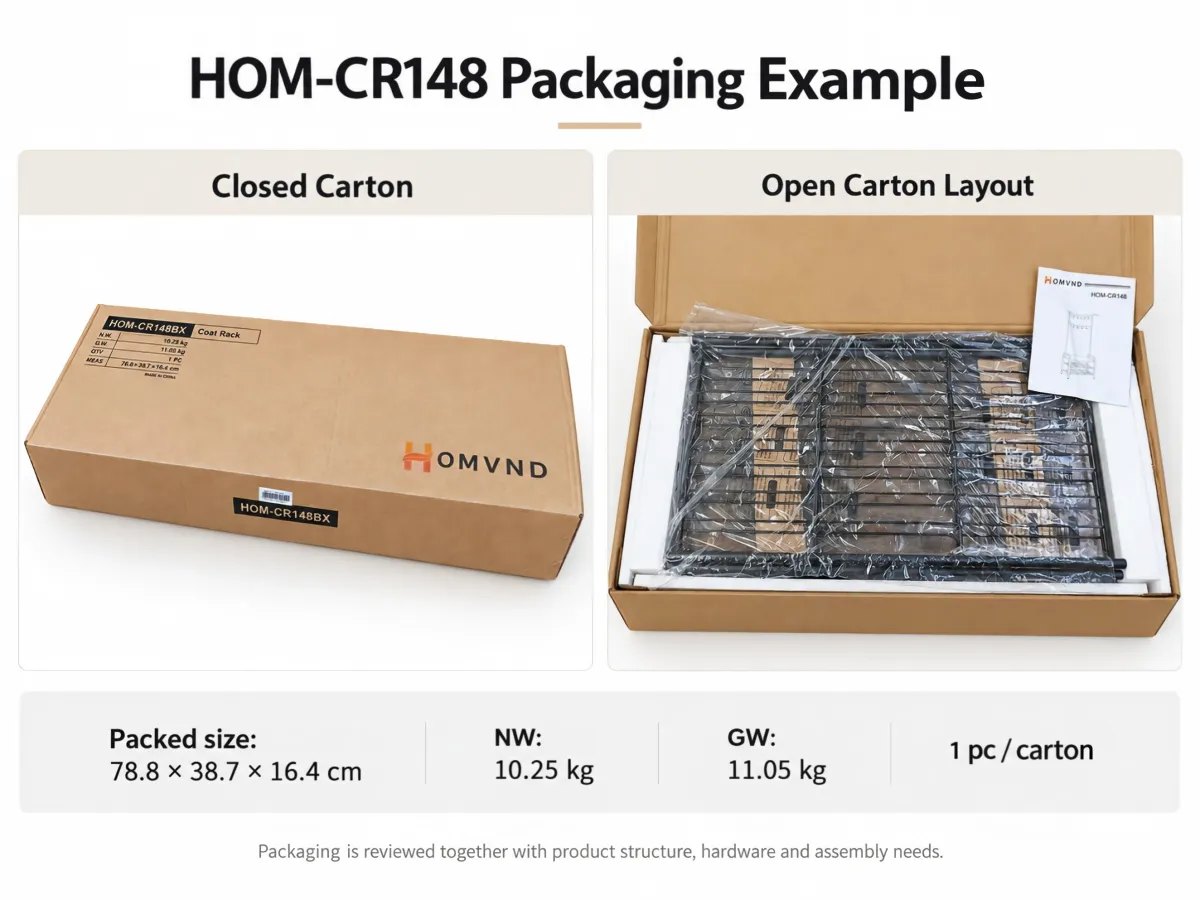
OEM/ODM for Entryway Furniture
-
1. Buyer Brief
Share your reference, market, dimensions and functions. -
2. Specification
Review structure, materials, finish and hardware. -
3. Sampling
Review the sample and confirm corrections. -
4. Production Preparation
Confirm specifications, assembly and packaging details.
What Buyers Should Check
- Footprint & Depth Confirm the fit and access within the intended space.
- Tall-Structure Stability Review base contact, upright connections and required wall fixing.
- Assembly System Check how the main components connect.
- Transit Protection Review protection for metal parts, hardware and finished edges.
Entryway Furniture FAQ
Dimension changes can be reviewed against your brief, subject to structure, stability, packaging and sample checks.
HOM-CR148 comes in White, Brown, Greige and Black on one base structure. Other models require separate finish confirmation.
Selected models can be reviewed for changes, subject to access, stability and carton dimensions.
HOM-CR148 combines hanging, a seat panel and shoe storage. Changes require model-specific structure and sample review.
Yes. Packed dimensions, gross weight, protection and carton layout can be reviewed for your target market and channel.
HOM-CR148 has illustrated instructions with identified parts and a final wall-fixing step. Other models are confirmed separately.
Send a product reference, dimensions, required functions, finishes, target market and packaging needs.