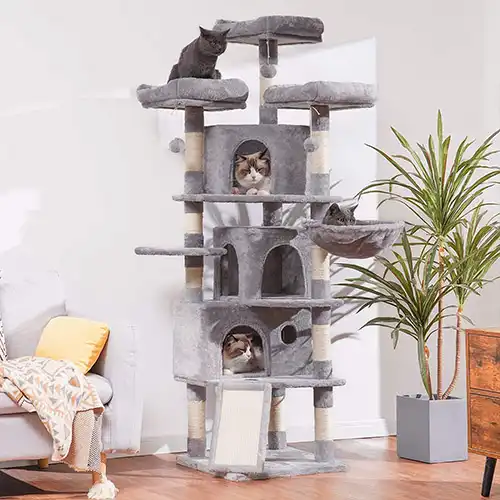
Quick Buyer Takeaways
- Define the target market and commercial position before locking the product specification.
- Evaluate stability across the complete structure — including the base, height, connections, platforms, hardware and assembly accuracy — rather than relying on one material or feature.
- Use sample approval to document material, dimensions, hardware, finish and packaging decisions before production.
- Supplier evaluation should cover development, repeatability, assembly verification, QC and packaging — not unit price alone.
- Flat-pack design can influence carton dimensions, warehouse handling and assembly experience. Any effect on returns or logistics cost should be verified with channel-specific data.
- For ecommerce programs, check hardware identification, manuals, labels and carton protection across repeat orders.
01 / Range Strategy
Choose the Product Position Before the Specification
A useful sourcing brief starts with the role each Cat Tree will play in the buyer’s range, rather than with a list of materials copied from an existing model. Define the target market, intended use, size range, price position and channel requirements first.
Compact, multi-level, large-cat and furniture-style designs place different demands on footprint, platform layout, post connections, assembly, packaging and visual differentiation. These priorities should be agreed before materials, dimensions and hardware are finalized.
The Pet Furniture & Cat Trees Collection presents current product and customization directions; this guide focuses on how to define, document and evaluate the sourcing requirements.
02 / Specification
Evaluate Materials and Construction as a System
Material choices can influence durability, appearance, weight, assembly, carton design and cost. Specify cat tree materials and component interfaces rather than relying on isolated marketing labels.
Boards, Platforms & Bases
Define thickness and finish by component, then check rigidity, edge quality, weight, footprint and fastener locations.
Posts, Sisal & Coverings
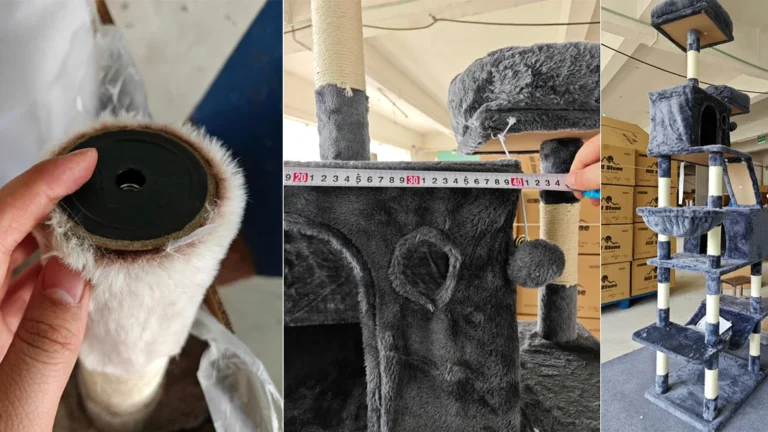
Review connection strength, rope coverage and attachment, color consistency, seams and finished edges around hardware.
Hardware & Assembly
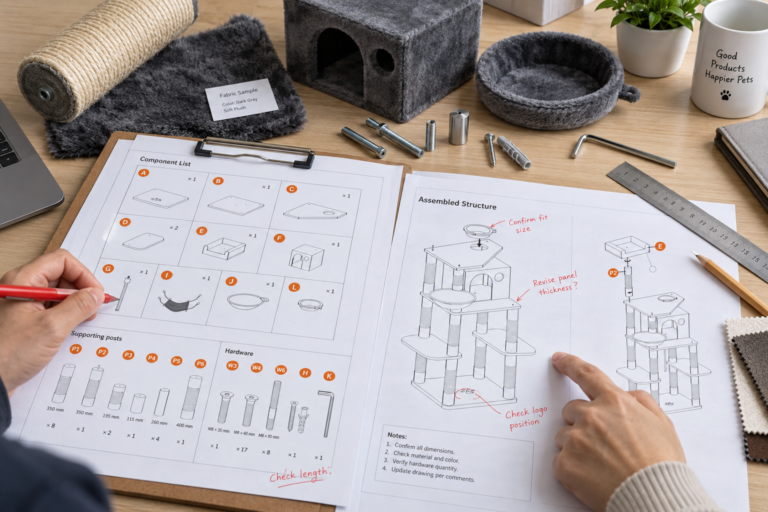
Control bolts, inserts, brackets and fasteners by count, finish, tool requirement and spare-part strategy. Check tolerances, hole alignment and component identification, then document the interfaces that need to remain consistent in production.
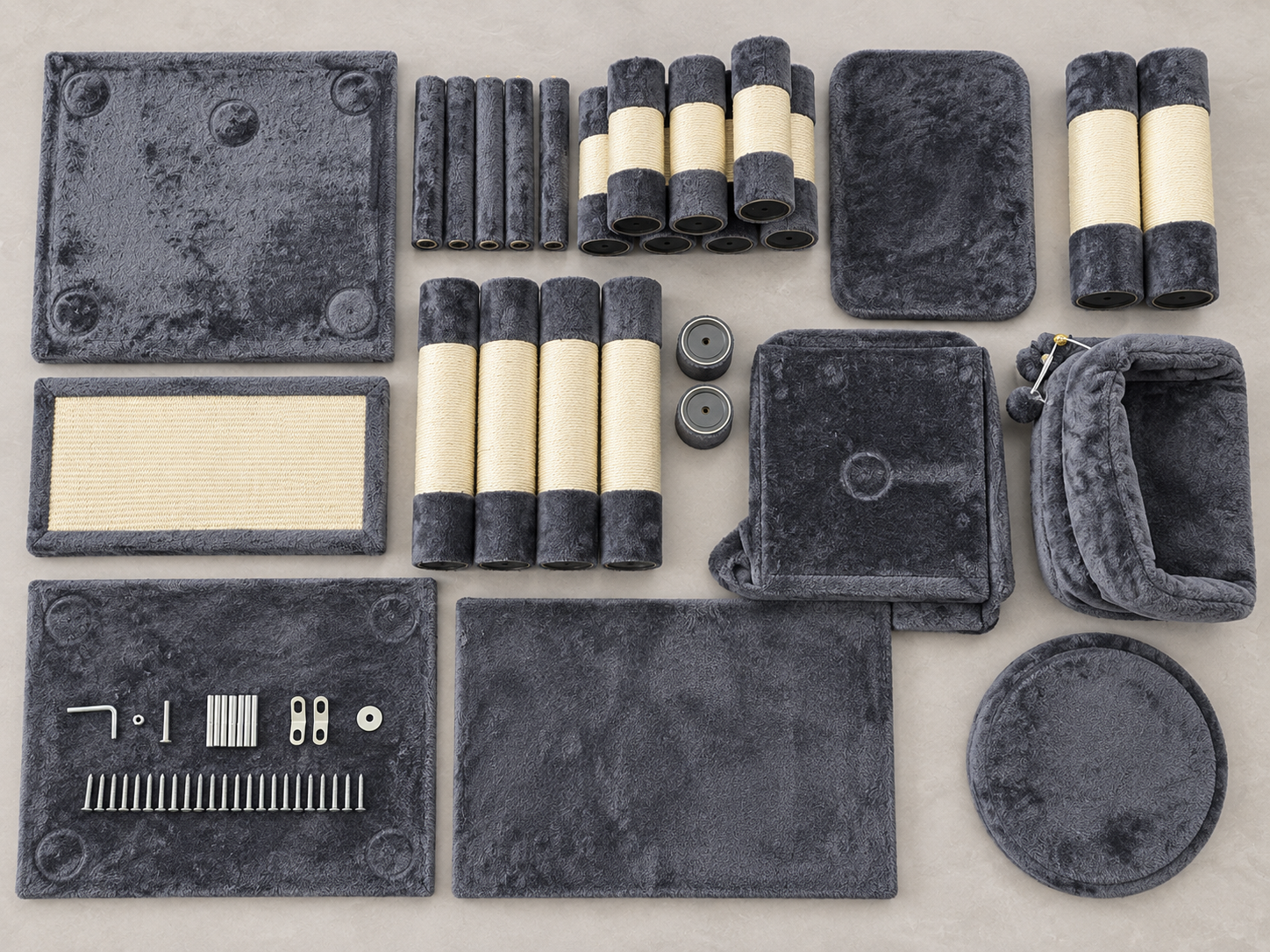
Procurement implication: a lower-cost component can create higher total program cost if it increases weight, complicates assembly, produces inconsistent finish or forces a larger carton.
03 / Structure
How to Evaluate Cat Tree Structural Stability
No single material or feature proves stability. Evaluate proportions, connections, loading questions and assembly across the complete structure.
Start with the relationship between height and base footprint, then consider the center of gravity created by platforms, hideouts and upper features. Review how posts connect to boards, how loads transfer through the structure and whether the base stays flat during assembly and use.
Document the agreed method and result in the sample approval record so the same checkpoints can be reviewed on representative production units. Do not treat one assembled showroom sample as evidence for every packed unit.
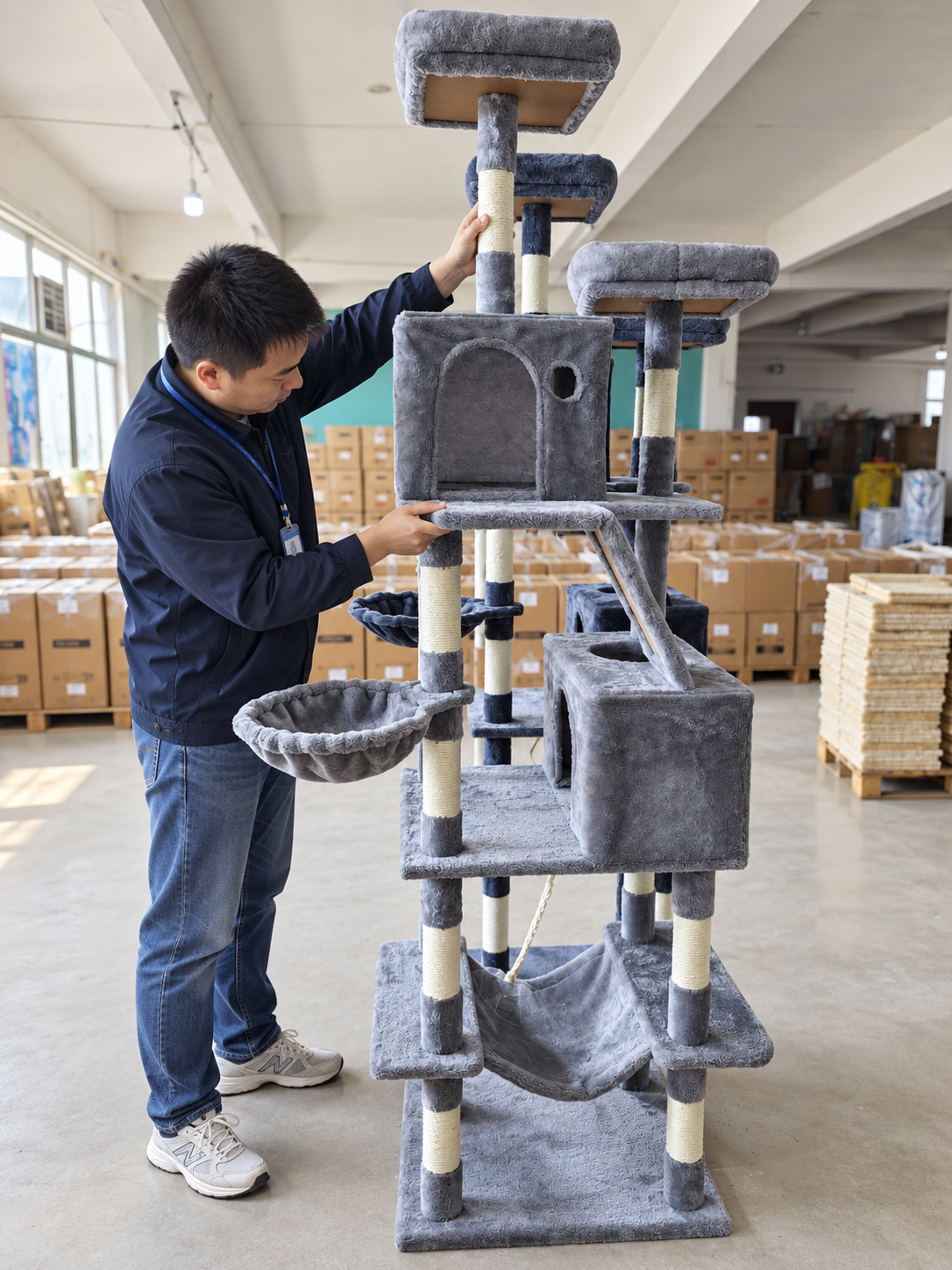
Key evaluation point: use the same assembly method and documented checkpoints when comparing the approved sample with representative production units.
04 / Development
From Product Brief to Approved Specification
A documented development process can reduce ambiguity before production. The following is one practical framework for aligning product direction, structure, materials, packaging and target cost; it is not a universal industry process.
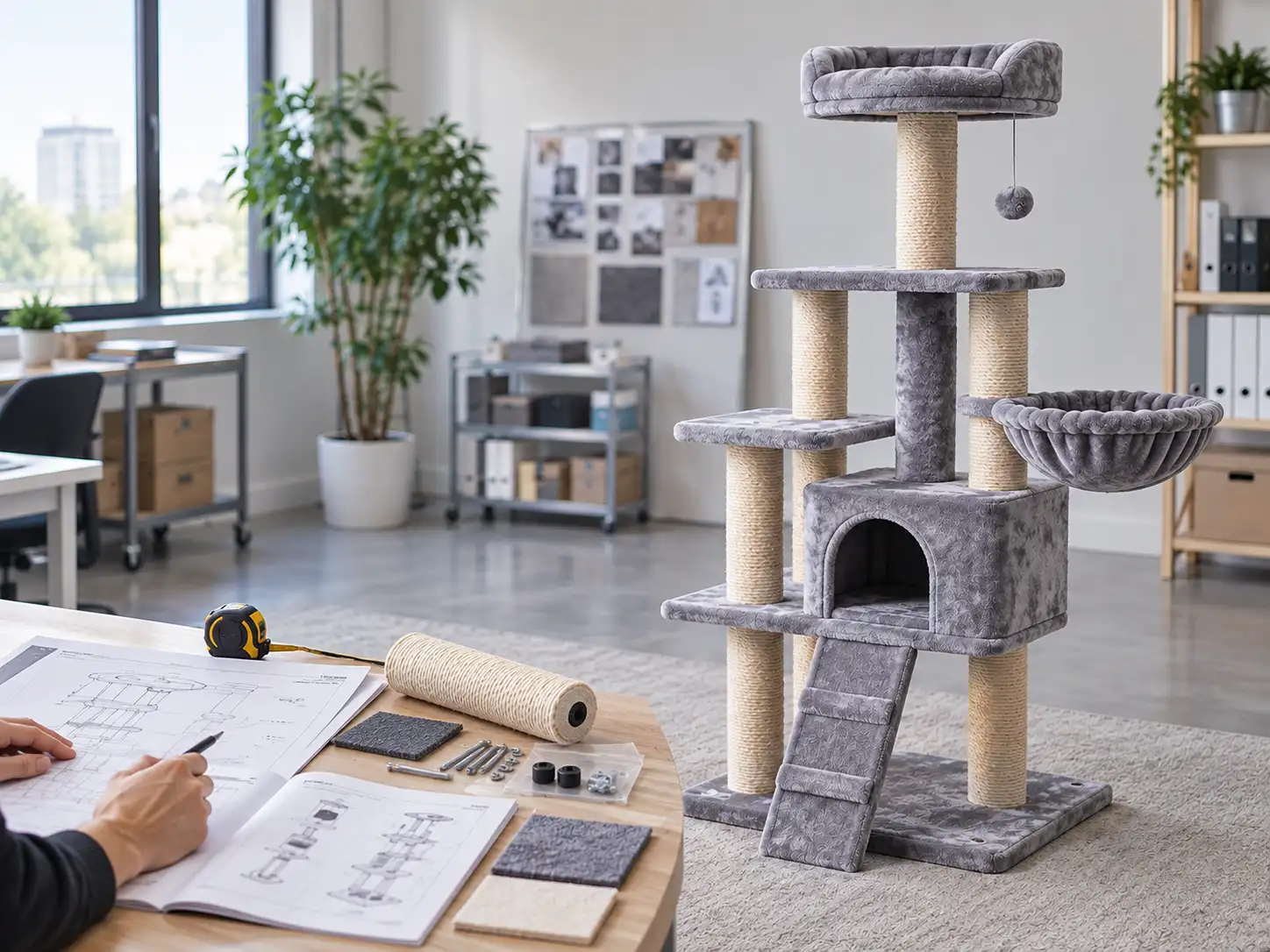
For OEM/ODM or private-label projects, the product brief should be converted into a documented specification before sample approval.
- Buyer BriefMarket, channel, references, quantity and constraints
- Product DirectionAdapt an existing platform or define a new structure
- Material & StructureComponents, connections, finish and carton assumptions
- Sample DevelopmentBuild the physical construction reference
- Review & ApprovalAssemble, measure, inspect and close revisions
- Production SpecificationDocument BOM, dimensions, hardware, manual, carton and QC checkpoints
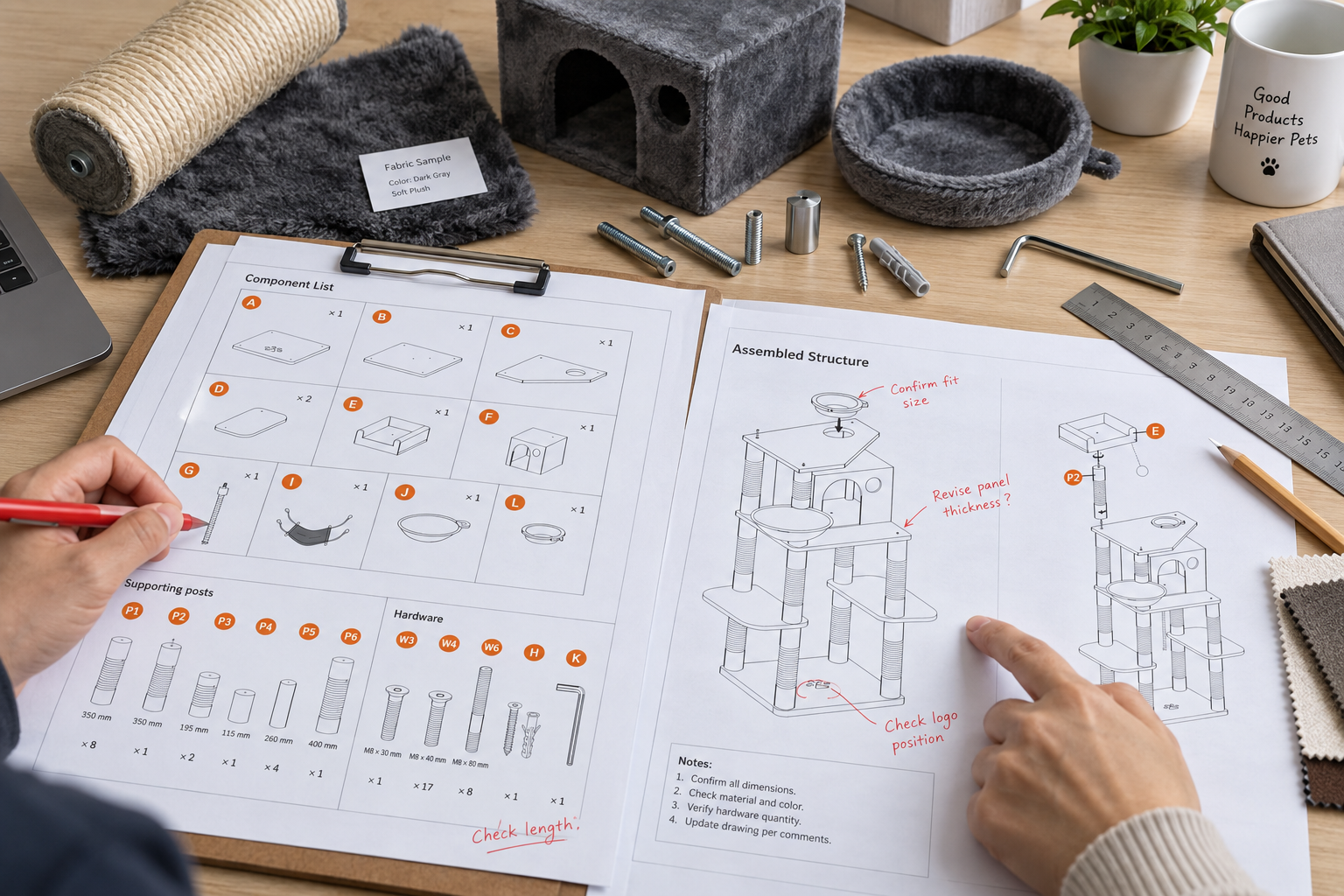
Specification and Evidence Checklist
- Assembled height and base footprint
- Platform dimensions
- Post and connector specification
- Board or component thickness where relevant
- Hardware identity and count
- Material and finish references
- Carton dimensions and packed weight when available
- Assembly manual revision
- Approved sample and revision record
05 / Supplier Due Diligence
Supplier Evaluation: What Evidence Should Buyers Review?
Compare evidence, controls and communication against the needs of the program. A quotation alone does not document whether the approved specification can be repeated at production scale.
| Evaluation Area | What the Buyer Should Check | Evidence Value |
|---|---|---|
| Product development | Brief interpretation, drawing/specification control and practical structure feedback | Documents how the brief becomes a reviewable specification |
| Sampling | Sample scope, revision records, assembly review and approval evidence | Creates a physical and documented reference for approval |
| Material consistency | Component definitions, incoming checks and substitution controls | Documents the requirements that need to remain consistent across production runs |
| Assembly understanding | Part identification, hardware counts, tool needs and manual verification | Links part and hardware records to the assembly review |
| Quality control | In-process and final checkpoints tied to the approved specification | Provides checkpoints for identifying specification or packing issues before shipment |
| Packaging | Carton design, internal protection, labels and packed-product tests | Records the packed-product controls to review for the target channel |
| Communication | Clear owners, change confirmation, lead-time assumptions and exception reporting | Creates a record of confirmed changes, owners and exceptions |
| Repeat-order control | Production records, hardware control and repeat-order change management | Supports review of changes between production runs |
Evidence Review
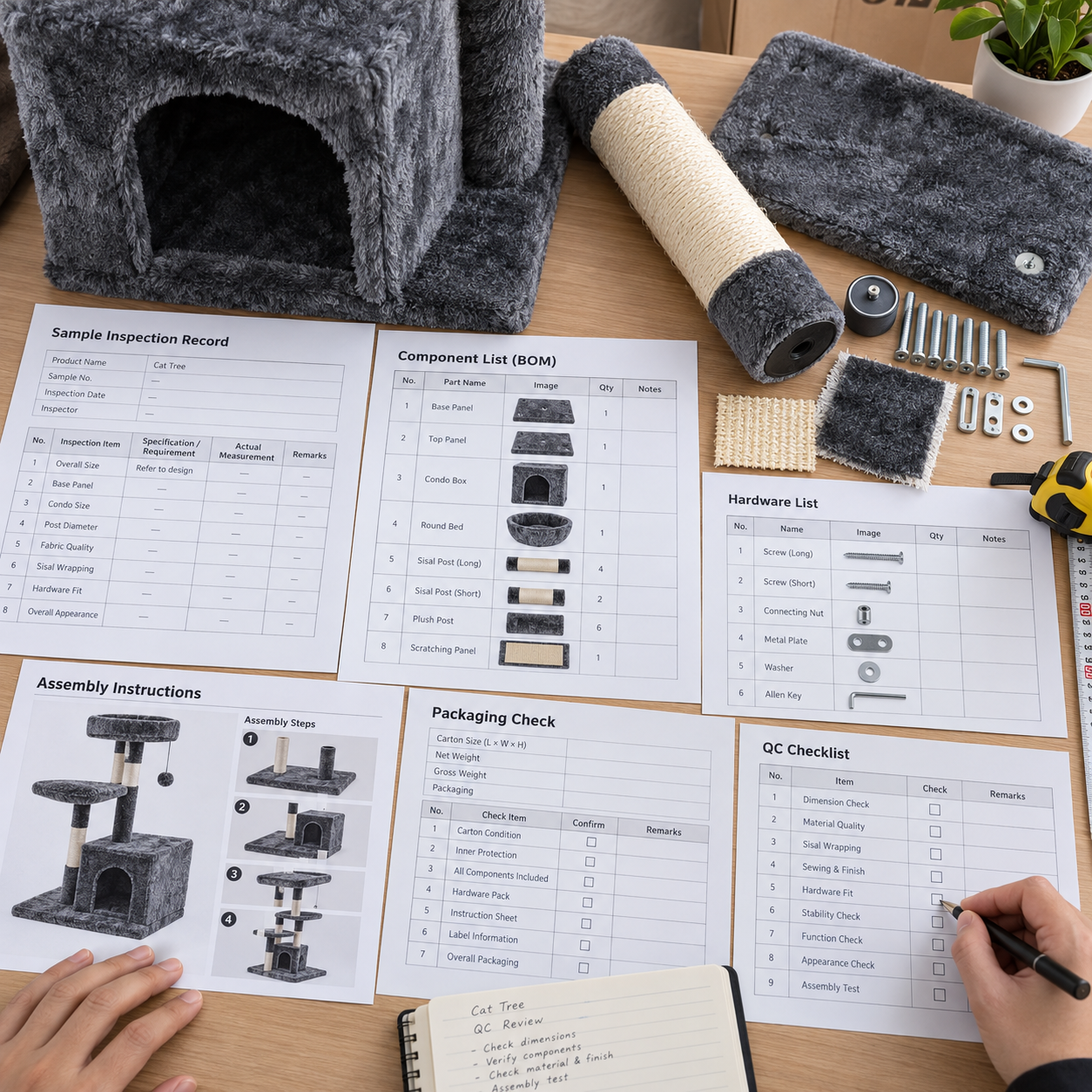
Documents to Request and Compare
Ask for records that connect the approved sample, specification, packing method and inspection checkpoints.
Useful Evidence Categories
- Sample and revision records
- Material and component definitions
- Assembly and hardware documents
- QC and packing evidence
06 / Pre-shipment Control
Build Quality Control Around the Approved Sample
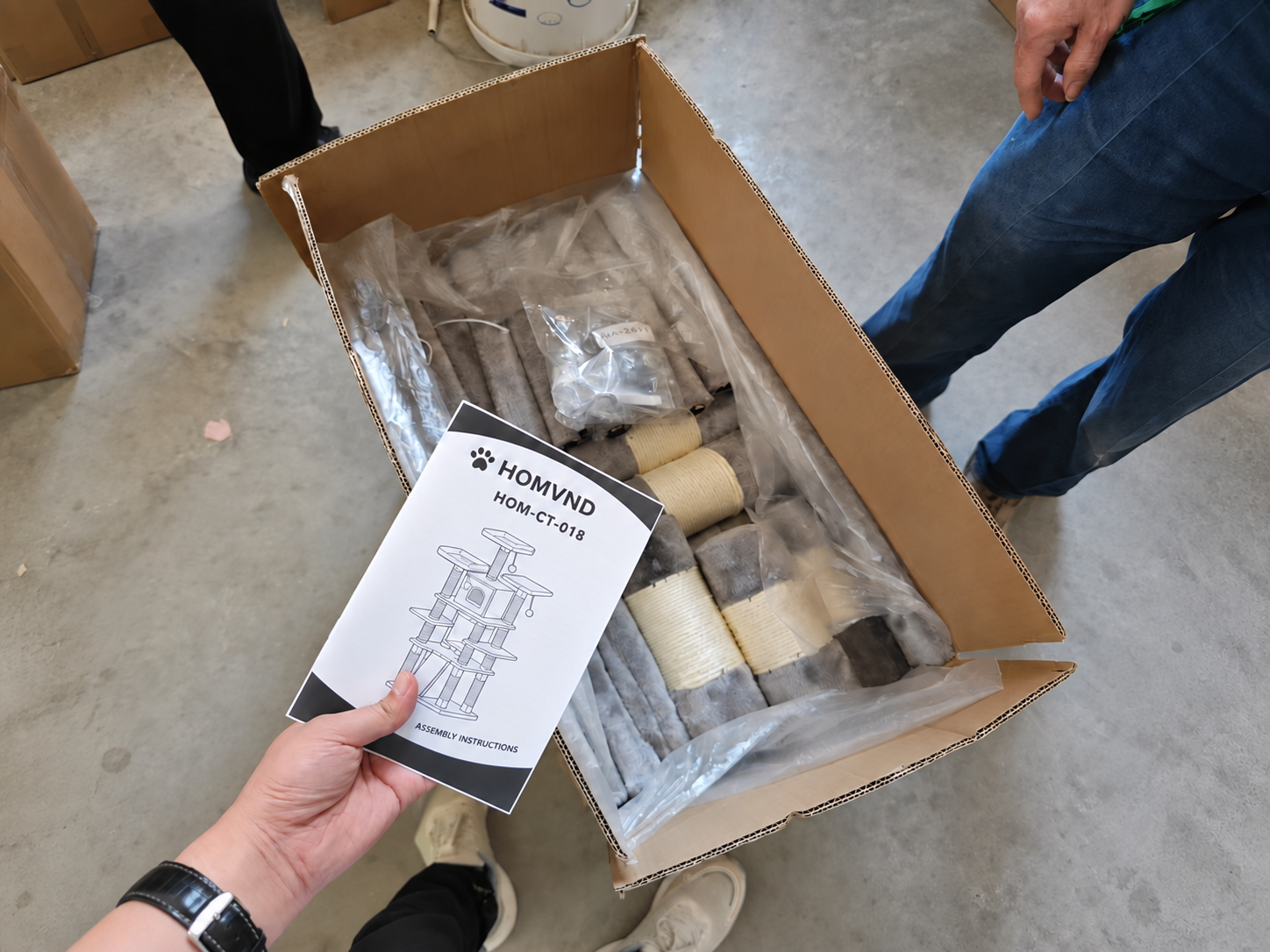
A useful QC plan links each checkpoint to the approved specification and records evidence the buyer can review.
Specification and materials: confirm the current drawing, bill of materials, finish references, dimensions and approved changes before assembly hides connection details.
Assembly and stability: verify part identity, hole alignment, hardware completeness, tool requirements and instruction sequence on representative units.
Finish and packing: inspect visible surfaces and seams, then verify the hardware bag, manual, labels, protection and final carton.
Buyer checkpoint: define who approves deviations and how corrections will be evidenced before shipment. Unrecorded verbal changes are difficult to control on repeat orders.
07 / Distribution Readiness
Packaging, Assembly and Ecommerce Readiness
A cat tree that performs well as an assembled product may still be unsuitable for a target distribution model if the packed unit, hardware organization or assembly instructions are not properly evaluated.
- Carton dimensions: compare packed size and weight with the documented parcel and marketplace constraints for the target channel.
- Internal protection: review component movement and protection around high-risk edges, surfaces and connections.
- Assembly instructions: match the final parts, sequence and tool requirements.
- Labels: document product, barcode, carton and warehouse requirements in the specification.
08 / Decision Support
Buyer Decision Matrix
Use the target market and channel requirements to decide which product and sourcing questions deserve priority. These are evaluation directions, not fixed engineering rules.
| Buyer Requirement | What to Prioritize | Procurement Implication |
|---|---|---|
| Small-apartment market | Compact footprint, vertical use, simple assembly | Balance usable levels with carton and room constraints |
| Large cats | Base proportion, platform area, connection support | Review loading questions and wobble on the assembled sample |
| Multi-cat households | Multiple access routes, usable platforms, structural repeatability | Review how additional components affect hardware, assembly and carton complexity |
| Entry-price marketplace SKU | Focused feature set, controlled component count, efficient carton | Remove complexity without weakening assembly clarity or essential structure |
| Premium private-label range | Distinctive finish, furniture fit, replaceable components | Plan visual consistency, spares and after-sales support |
| Ecommerce fulfillment | Carton dimensions, protection, labels, manual and hardware control | Review the complete packed-unit journey |
| High container-utilization priority | Flat-pack nesting and carton efficiency | Review carton efficiency alongside protection, handling and assembly requirements |
09 / Execution
From Sourcing Brief to Production Readiness
The following is a practical sourcing sequence, not a universal industry process. Use it to keep decisions visible as the project moves from market intent to a documented, packed product.
- Define market and product
Set audience, channel, position and constraints. - Share requirements
Provide references, dimensions, materials, quantity and packaging needs. - Develop or select a solution
Align product direction, structure and target cost. - Build the sample
Create the physical reference for review. - Confirm the specification
Document materials, dimensions, hardware, finish, labels and carton. - Plan production
Confirm responsibilities, records and change control. - Run quality control
Inspect against the approved sample and specification. - Verify packaging
Check the packed unit, manual, hardware and labels. - Prepare shipment
Close documentation and handover requirements.
10 / Buyer Questions
Cat Tree Sourcing FAQ
Use these questions to organize product, sample, packaging and supplier evidence before production approval.
What should a cat tree sourcing brief include?
Record the target market and channel, product role, references, assembled dimensions, material and finish direction, expected quantity, packaging needs and required documentation.
How should buyers compare cat tree materials and construction?
Compare materials by component and interface. Review board or component thickness where relevant, post and covering specifications, finish references, fastener locations and substitution controls.
What evidence should support a stability review?
Review the assembled sample using documented checkpoints for base proportion, height, platform layout, connections, hardware, wobble and assembly accuracy. Do not treat one material label as proof of stability.
Which dimensions should be documented before sample approval?
Document assembled height, base footprint, platform dimensions, post and connector specifications, and packed dimensions and weight when available.
What should buyers check in flat-pack packaging?
Check component protection, hardware identity and count, manual revision, labels, carton dimensions and packed weight, then assemble from the final packed set.
What supplier documentation is useful before production approval?
Request the current drawing or specification, component or BOM definitions, sample approval and revision record, hardware or part list, assembly instructions, packing specification and inspection evidence.
Supporting Insights
Go Deeper on the Decisions That Shape a Cat Tree Program
Use these focused articles when your sourcing brief reaches supplier due diligence, quality planning or custom product development.
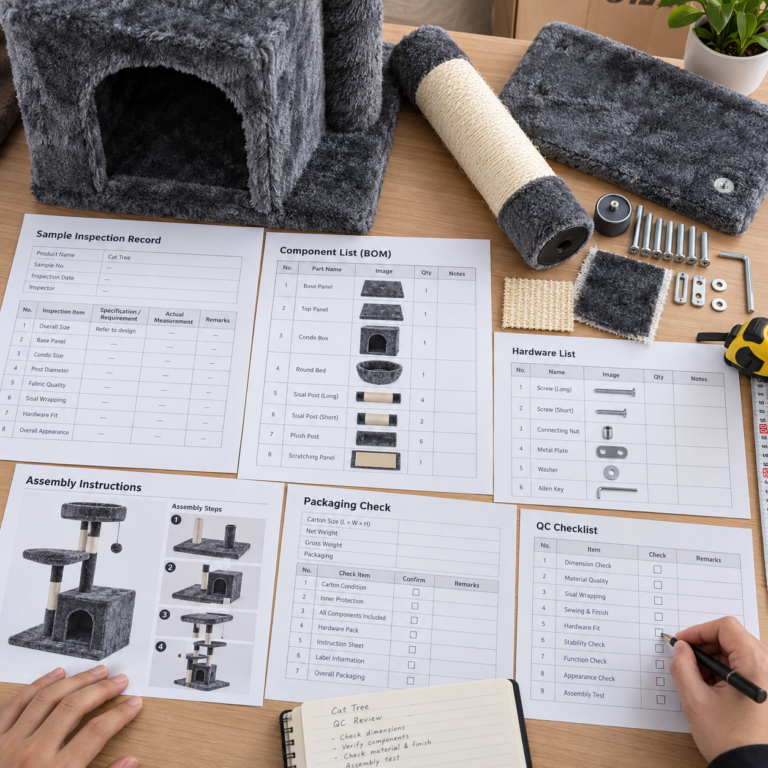
Product Discovery
Explore Cat Tree & Pet Furniture Programs
Use the collection to review current Cat Tree and pet furniture product directions, then return to this framework to define the specification, evaluation and packaging questions for your program.
Explore Cat Tree Collection