
Planning Spare Parts for Furniture and Cat Tree Orders
Plan furniture and cat tree spare parts by model and revision. Agree quantities, stock responsibility, supply terms and the handover for replacement requests.
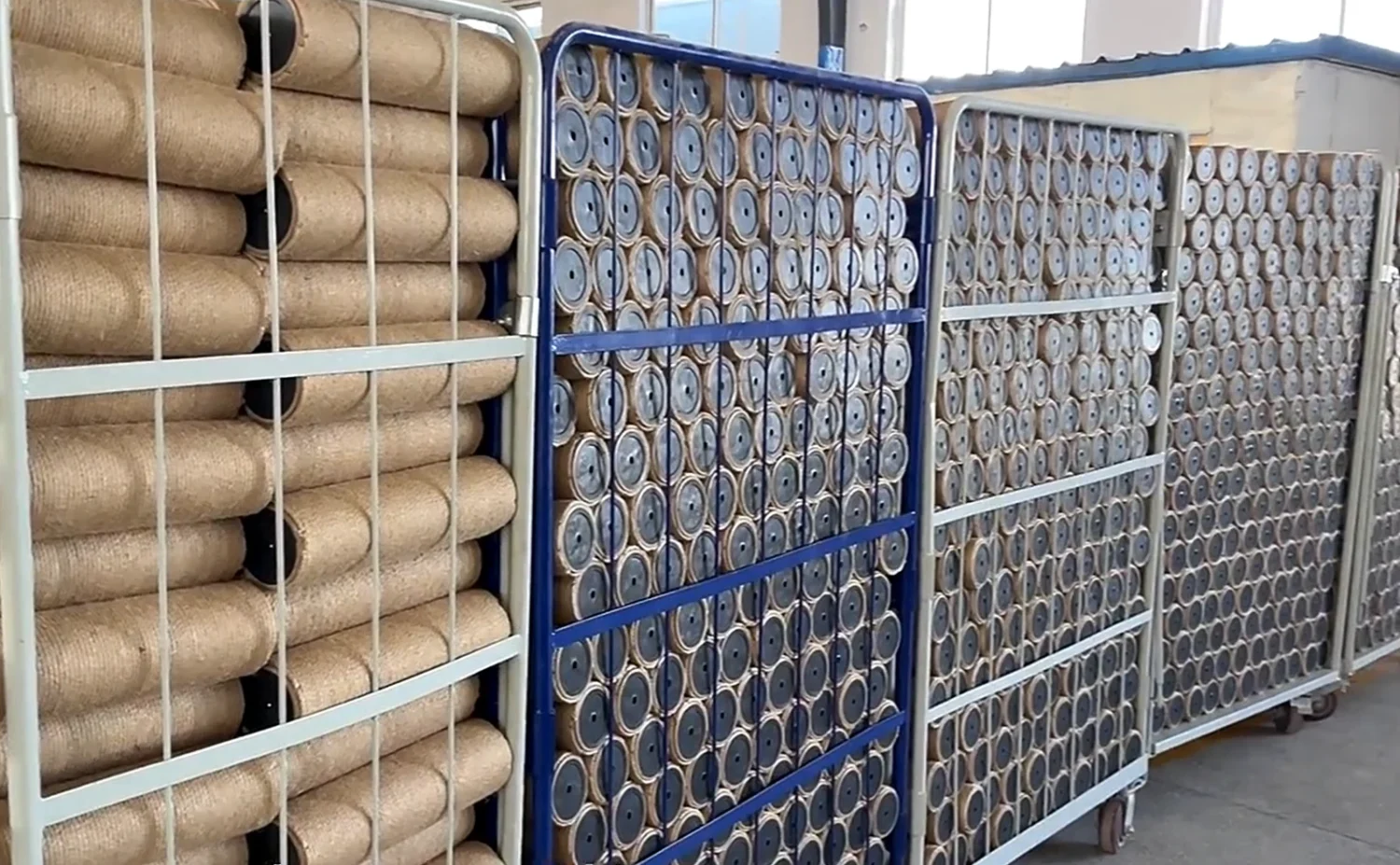
Wrapped cat tree posts arranged in metal storage racks.
Plan spare parts before approving the bulk order: identify the parts and product versions they fit, agree quantities and supply terms, and define how a replacement request becomes an authorized shipment. An extra hardware bag in the carton and a separately ordered replacement post serve different purposes. Neither establishes that every component will remain available.
For furniture importers, private-label sellers and cat tree buyers, the useful output is a spare-parts agreement tied to the order and its approved product records. It should connect what can be requested to who holds it, what it costs and what happens when the product changes. The steps below are procurement decisions to agree for the project, not a fixed spare-parts policy or a promise of long-term supply.
1. Separate In-Carton Extras, Service Parts and Substitutes
Start with the normal assembly contents. The fasteners and components needed to assemble one complete product belong to the standard bill of materials (BOM). They are not spare stock. Record any extras separately so a packing team can distinguish a complete normal set from an agreed spare allowance.
- In-carton extras: selected additional hardware packed with each eligible product. Specify the exact part codes and additional quantities, how they are identified, and which product versions receive them.
- Service parts: separately held or separately purchased items for later requests, such as an identified furniture fitting, panel, cat tree post or removable cushion. Confirm which items can actually be supplied individually and which are available only as a pair, kit or larger assembly.
- Substitutes: a different part proposed when the original is unavailable or has changed. Treat it as a proposal requiring compatibility review and approval, not as an interchangeable item merely because it has a similar name or appearance.
For a cat tree, do not assume that a worn covering can be supplied or replaced separately from the post or platform beneath it. Agree the serviceable unit and the applicable replacement instructions. For furniture, distinguish one left-hand component from a pair or a complete hardware pack.
The custom pet furniture design process connects the original components, hardware, instructions and packaging. The spare-parts agreement adds the separate supply and handover decisions for those approved items.
2. Connect Every Service Part to a Model and Revision
Create one service-parts record for each distinct item you intend to order. Connect the buyer SKU, supplier model, variant and product revision to the supplier’s part code, the manual’s illustrated code and the service ordering code if these differ. A letter in an assembly diagram is meaningful only with its model and manual revision.
The record should state the approved application: which versions the part fits, its position or orientation, and the reference used to confirm the match. If the same part is approved for several products, list those applications explicitly. Do not extend that list to other models without confirmation.
Ask the supplier or responsible technical reviewer to confirm the features that determine fit. For furniture, these may include the mounting position, left/right orientation, matching hardware, hole pattern and finish reference. For a cat tree post, they may include length, finished dimensions and the connections at both ends. For a platform, identify its hole layout, orientation and covering. A matching outside dimension alone does not settle the connection or complete-product suitability.
Retain the relevant drawing, parts list, manual and approval reference. Where a proposed change affects a connection or structural component, agree the necessary technical review and verification before release. A buyer’s approval of a different colour does not establish structural compatibility or replace applicable safety requirements.
When a request already contains conflicting codes, use the parts-identification checklist for replacement requests. Resolve the identity before allocating stock; this article addresses the supply arrangement that follows that identification.
3. Agree Quantities in Defined Ordering Units
Specify quantities by part and revision, with an explicit ordering unit: individual piece, matched pair, bag or complete kit. If a bag contains several items, attach its contents list. “Ten spare sets” is incomplete unless both sides know what one set contains.
Keep three quantities separate: extras included per product, the initial service-stock purchase, and later replenishment orders. State whether an allowance is included in the product price or invoiced separately. A percentage, if the parties choose to use one, still needs a defined base, rounding rule and resulting count for each item.
Build the initial proposal from information relevant to the product: comparable replacement-request history where available, the planned sales and service period, replenishment timing, pack or minimum-order quantities, storage space and the consequences of a shortage. Separate missing-item requests, transport damage and wear-related requests when reviewing past records; they do not automatically justify the same selection of parts.
For a new model without reliable history, record the initial quantity as a planning assumption and agree when to review it. There is no single spare-parts percentage to apply across furniture hardware, finished panels and cat tree components. Do not describe an untested allowance as a proven failure rate or a guarantee that every request can be fulfilled.
4. Put the Supply Agreement in One Reviewable Record
Use a compact agreement alongside the order rather than leaving the terms across emails. The table below is a buyer working checklist; the parties decide which commitments become part of their contract.
| Decision to record | What to agree and who confirms |
|---|---|
| Eligible parts and versions | Buyer defines the intended service scope; supplier confirms the offered part codes, product revisions, orderable units and exclusions. Name the technical reviewer for uncertain compatibility. |
| Quantities and kit contents | Buyer approves the initial quantities; supplier confirms pieces per bag or kit, order multiples, any minimum order and the split between in-carton extras and separate stock. |
| Stock ownership and location | Buyer and supplier name the stock owner, holder and dispatch party. The holder confirms how versions are separated, balances reported and stock reserved for open requests. |
| Availability and retention period | Supplier confirms whether supply means reserved finished stock, an agreed production arrangement or a fresh availability check. Both parties record the start date, end date and any exclusions or renewal review. |
| Price, timing and transport | Supplier confirms pricing basis and order-to-dispatch assumptions. Buyer approves the payer, destination, shipment method and treatment of freight, duties or other applicable charges. |
| Changes and discontinuation | Supplier reports affected versions and available options; the designated buyer and technical reviewer approve any substitute, last purchase or revised service scope before it is used. |
| Request approval and closure | Buyer names who may authorize a request and its cost; dispatch party records the actual part and quantity sent. The receiving or service team confirms receipt, fit and any remaining issue. |
A spare-parts commitment can be an explicit procurement condition. For example, the European Commission’s Helsinki furniture procurement case study describes requirements for obtainable parts and fasteners during the specified warranty period. Those are conditions of that procurement, not a universal furniture rule or a HOMVND supply commitment.
For your order, distinguish the proposed spare-parts arrangement from warranty handling and paid replacement sales. Agree how the reason for a request affects approval and charging, while leaving applicable legal obligations intact. “Spare parts available” alone does not define a response time, dispatch date, free shipment or a guaranteed future stock balance.
5. Keep Stock and Product Changes Connected
Assign a location and label to each service-part revision. Record stock received, reserved for open requests, dispatched and remaining, with damaged or unidentified items separated from available stock. Agree who reports the balance and who may authorize replenishment. A stock photograph does not establish the quantity available for a particular order.
When a component changes, review the affected service codes, compatible product versions, kit contents, manuals, labels and open requests. Keep old and new items separate until the relationship is confirmed. If the new version cannot replace the old one, preserve separate records rather than silently overwriting the old part code.
Before a range is changed or discontinued, ask for a dated account of remaining stock, possible replenishment and any proposed substitute. Decide whether to purchase a final quantity, continue a specifically agreed supply arrangement or revise the service plan. Record the outcome and who will handle unresolved customer requests. A past order does not establish indefinite availability.
These controls should connect to the broader repeat-order specification and change records. They do not require every part to be stocked; they require a clear decision for the parts included in the agreement.
6. Carry the Request Through Dispatch and Receipt
Give each replacement request a reference that follows it through the supplier, stock holder and receiving team. Link it to the identified product and version, part code, quantity and ordering unit. Add the relevant photos or manual reference, the reason for the request and any uncertainty still to resolve.
Before dispatch, the supplier or stock holder should confirm the proposed item, version, available quantity and expected dispatch arrangement. The authorized buyer then approves the item and commercial terms. If a substitute is proposed, keep the original request and substitute decision together; do not replace the requested code in the record and lose the history.
Label the dispatched parts so the receiver can match them to the request. Record the actual quantity, package identification and shipment reference. If spares travel with a larger order, give them separate packing-list lines and identify their destination within the receiving operation. Do not let them disappear into a count of complete retail products.
Use status steps such as identified, awaiting approval, allocated, dispatched and received. Keep unresolved fit or quantity issues open after delivery. Where fit cannot yet be checked, record “received; fit not yet confirmed” rather than marking the request fully resolved. Feed the actual part usage and remaining stock back into the next replenishment review.
Hypothetical Example: The Parts Exist, but the Versions Do Not Match
This is an invented procurement example, not a HOMVND customer case or a recommended stock allowance. A buyer has agreed separate service stock for a cabinet and a cat tree. The cabinet stock is six hardware bags, each containing two identified fittings: twelve individual fittings in total. The cat tree stock is four posts approved for revision A.
The service team requests three cabinet fittings and two posts for a revision B cat tree. A warehouse count shows enough bags and posts, but the records reveal two decisions still to make:
- Resolve the ordering unit. The cabinet request is for three individual fittings. Under the assumed agreement, bags are dispatched unopened, so two bags would supply four fittings. The buyer approves that quantity and cost before release. Dispatching three bags would send six fittings and misread the request.
- Hold the incompatible allocation. The supplier confirms that revision B changed the post-end connection and that the stored revision A posts are not approved replacements. The four posts remain allocated to revision A stock. Their availability does not close the revision B request.
- Make and record the next decision. The supplier proposes a matching revision B part with a separate price and dispatch estimate. The authorized buyer chooses whether to order it or pursue another agreed remedy. Any alternative part requires its own compatibility review before approval; urgency does not make the stored posts suitable.
The dispatch record then shows two cabinet bags containing four fittings, while the two-post request remains open until its separate decision and fulfillment are complete. The buyer updates the service agreement so both product versions and their stock balances remain distinguishable.
Before placing the bulk order, finish with an agreed parts list, version references, quantities, supply terms and named approval owners. That gives the service team a usable starting point when a request arrives. For the wider product brief and supplier review, use the cat tree sourcing guide.