Quick Buyer Takeaways
When choosing a furniture supplier, buyers should evaluate more than unit price. Check whether the supplier can interpret a clear product brief, document materials and construction, develop and approve samples, control flat-pack assembly and packaging, inspect against the current specification, prepare export documentation, and repeat the approved specification consistently across future orders. Compare evidence for each area—including specifications, revision records, QC checkpoints, packed-unit details, responsibilities, and production readiness—before approving the supplier for production.
- Define the buyer, channel and technical brief before choosing SKUs.
- Evaluate materials for quality, cost, weight and yield.
- Treat flat-pack, packaging, assembly, protection and logistics together.
- Evaluate engineering evidence, QC checkpoints, packaging requirements and repeat-order records.
- Approve product, hardware, instructions and packaging before production.
01 / Commercial Definition
Define the Sourcing Brief Before Selecting SKUs
Define the target market, customer and channel before selecting products. Use the brief as the reference for later development, approval and packaging decisions.
Record category, dimensions, materials, quantity and assembly, packaging and launch constraints. Use retail and landed-cost targets to guide trade-offs, not as promised factory prices.
Capture testing, labeling and compliance requirements early, and confirm market responsibilities with qualified parties.
02 / Assortment Planning
Choose the Right Product and Range Strategy
Build a coherent range rather than isolated SKUs. Use a hero product to lead discovery and supporting items to add price points, sizes or functions.
Hero and Supporting SKUs
Choose the lead item and the products that add price points, sizes or functions.
Shared Design Language
Coordinate materials, finishes, hardware or proportions to support consistency and control.
Channel and Market Fit
Check dimensions, assembly and packaging against the actual selling environment.
Repeat-Order Scalability
Control components, approvals and changes so the range can be replenished from one specification.
Explore current product categories through the Furniture Collections hub.
03 / Specification
Evaluate Materials and Construction as a System
Evaluate boards, frames, hardware, connectors and finishes as one repeatable production system.
Particleboard and MDF
Particleboard is widely used in flat-pack furniture where cost, dimensional consistency and panel-based construction are important. Board type should always be confirmed from the product specification rather than inferred from appearance alone.
Metal Frames
Review geometry, joints, finish consistency and interfaces with boards or other components.
Hardware and Connectors
Control hardware identity, finish, count, tool requirements and assembly compatibility.
Finishes and Other Components
Define finish expectations and mixed-material interfaces by product category.
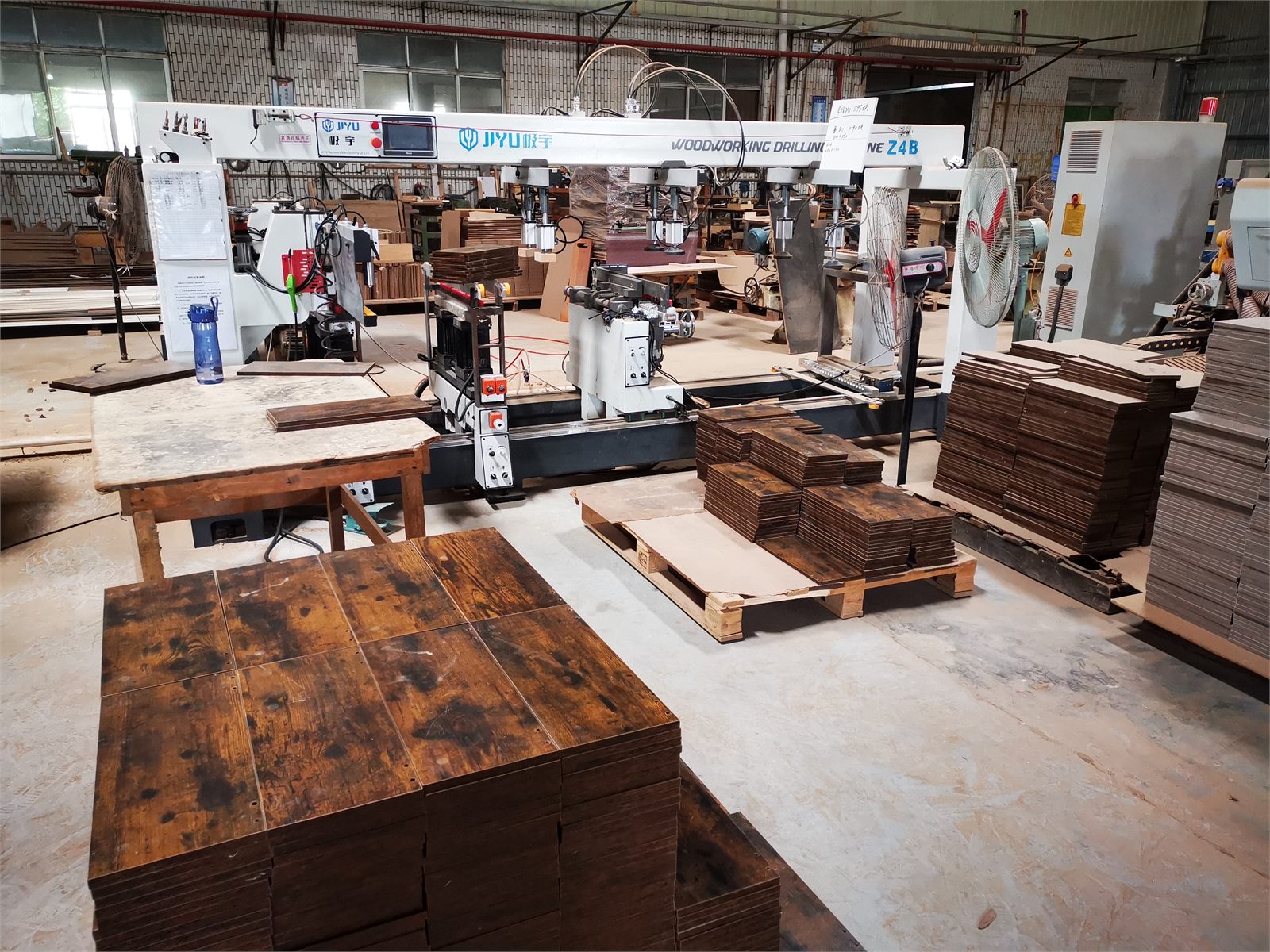
Cutting layouts should be reviewed against the selected board format, part sizes and production plan. Better nesting can reduce offcuts, but the commercial effect depends on the product, material specification and manufacturing plan.
04 / Product Engineering
Flat-Pack Design & Assembly
Flat-pack performance depends on structure, hardware accuracy, clear instructions and the final assembly experience.
Reliable assembly depends on panels, connectors, pre-drilled holes, instructions and sequence working as one documented system.
Validate a complete production-style set before approval to help identify missing hardware, unclear instructions, alignment issues and sequence risks.
05 / Landed Economics
Engineer Cost and Logistics Beyond the Factory Unit Price
Evaluate landed economics across material yield, packed dimensions, weight, fulfillment, storage, handling, damage and returns—not factory price alone.
Material Efficiency
Review geometry and cutting layouts before dimensions are frozen.
Packaging & Delivery
Treat carton dimensions, packed weight and protection as commercial specifications.
Warehousing / Container Utilization
Compare storage, handling and container utilization at range level.
Damage & Returns
Balance carton reduction against protection, assembly clarity and return risk.
Marketplace and fulfillment: Check packaging against the buyer’s actual channels because Amazon, bol.com, OTTO, Allegro and other programs use their own dimensional, weight and handling requirements. A carton that works efficiently in one may receive a less favorable classification in another. Review how packed size and weight affect marketplace fulfillment before approving the final carton.
Marketplace and fulfillment thresholds vary by program, country and date. Check the current rules for the intended channel, then evaluate final packed dimensions and weight before approval.
As an internal engineering review point, HOMVND may evaluate multi-carton packaging when a packed furniture unit approaches approximately 30 kg. The decision depends on the product structure, destination and logistics requirements; this is not a carrier or marketplace threshold.
This helps identify potential logistics disadvantages before product and packaging approval.
06 / Development
From Product Brief to Production Preparation
The grid turns a buyer brief into approved product and packed-unit references for production and QC. For the approval workflow from brief through production release, use the private-label furniture development guide.
- Buyer BriefMarket, channel, references, quantity and constraints
- Product DefinitionFunction, dimensions, range role and target direction
- Material / Construction ReviewComponents, interfaces, finish and cost implications
- Design / EngineeringStructure, assembly, cutting and packaging logic
- SamplingPhysical product and packed-unit development
- Sample ApprovalClose product, hardware, manual and carton revisions
- Production PreparationFreeze specifications, records and checkpoints
- Production ExecutionManufacture and inspect against the approved reference
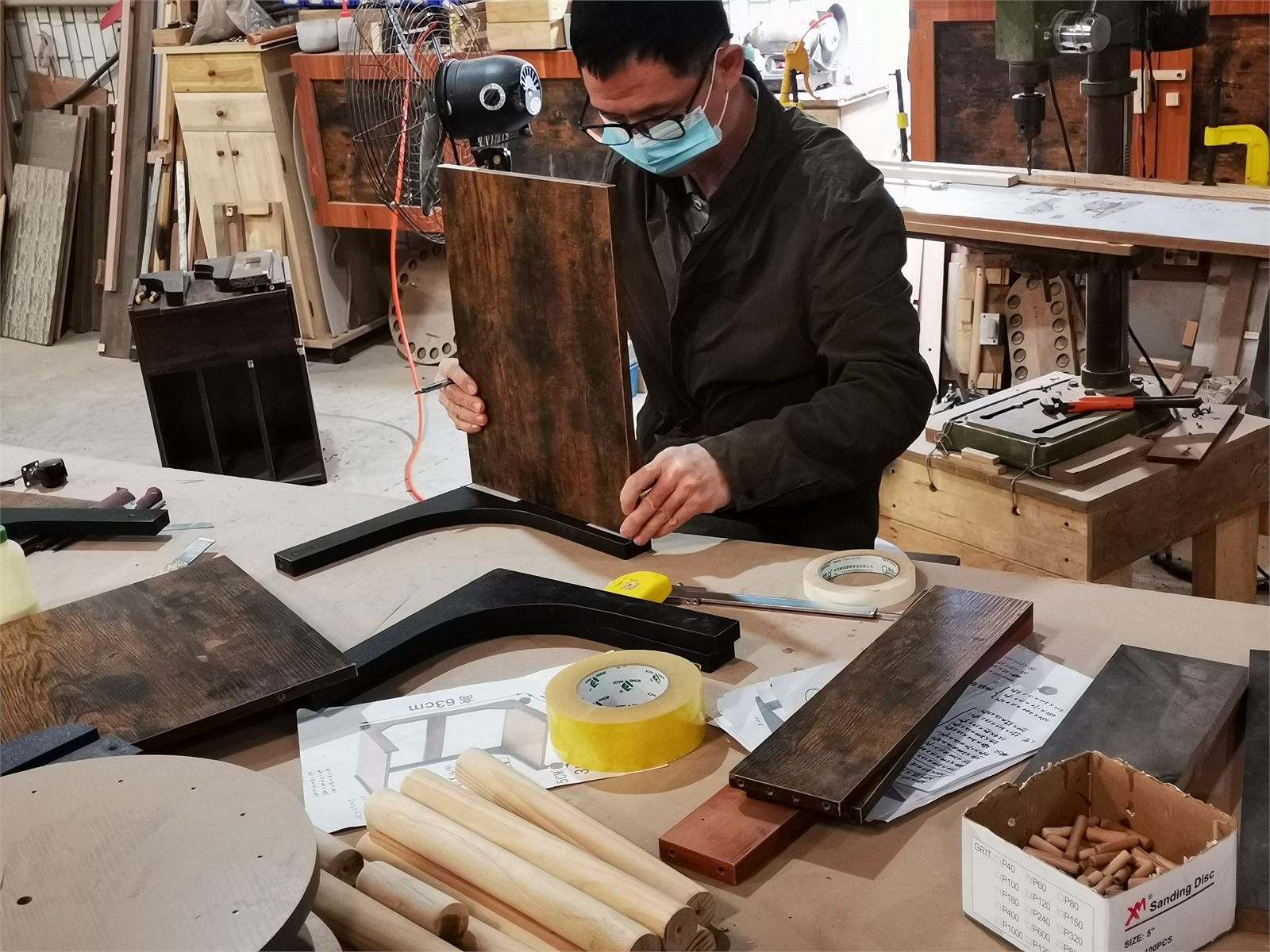
Approval and readiness: Production preparation depends on the approved specification, material availability, product complexity, packaging readiness, change control and confirmed capacity. Close the applicable dependencies before scheduling production.
AI can support research and design review, but final specifications and production approval still require human verification.
HOMVND Engineering Evidence
Real Example: Revising a Furniture Design to Reduce Packed Dimensions
The original KDT75 used a single-piece tabletop. In the first revision, KDT-068BX-V1, HOMVND split the tabletop into two sections so the longest components could fit into a substantially smaller carton. This change also required a joining plate, revised fastener quantities and an updated assembly sequence. Carton volume decreased from 151.97 L to 80.36 L, a calculated reduction of 47.1%.
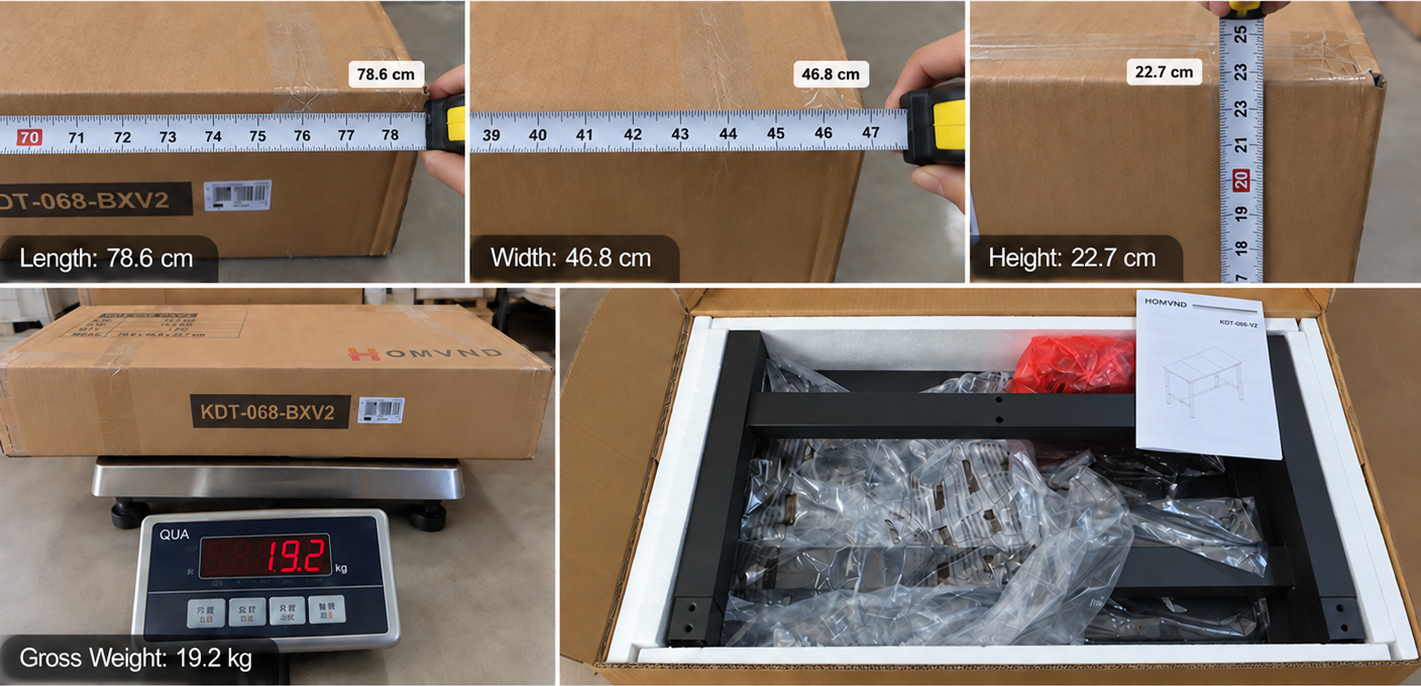
For the current KDT-068BX-V2, the tabletop was divided into three sections to further reduce the carton’s length and width. The joining plate was replaced by wood dowels, and hardware quantities and assembly steps were revised again. Compared with KDT-068BX-V1, the carton became shorter and much narrower, although greater thickness caused total packed volume to rise slightly to 83.50 L. Across the original and current versions, calculated packed volume decreased by 45.1%, while the longest carton side decreased from 130 cm to 78.6 cm.
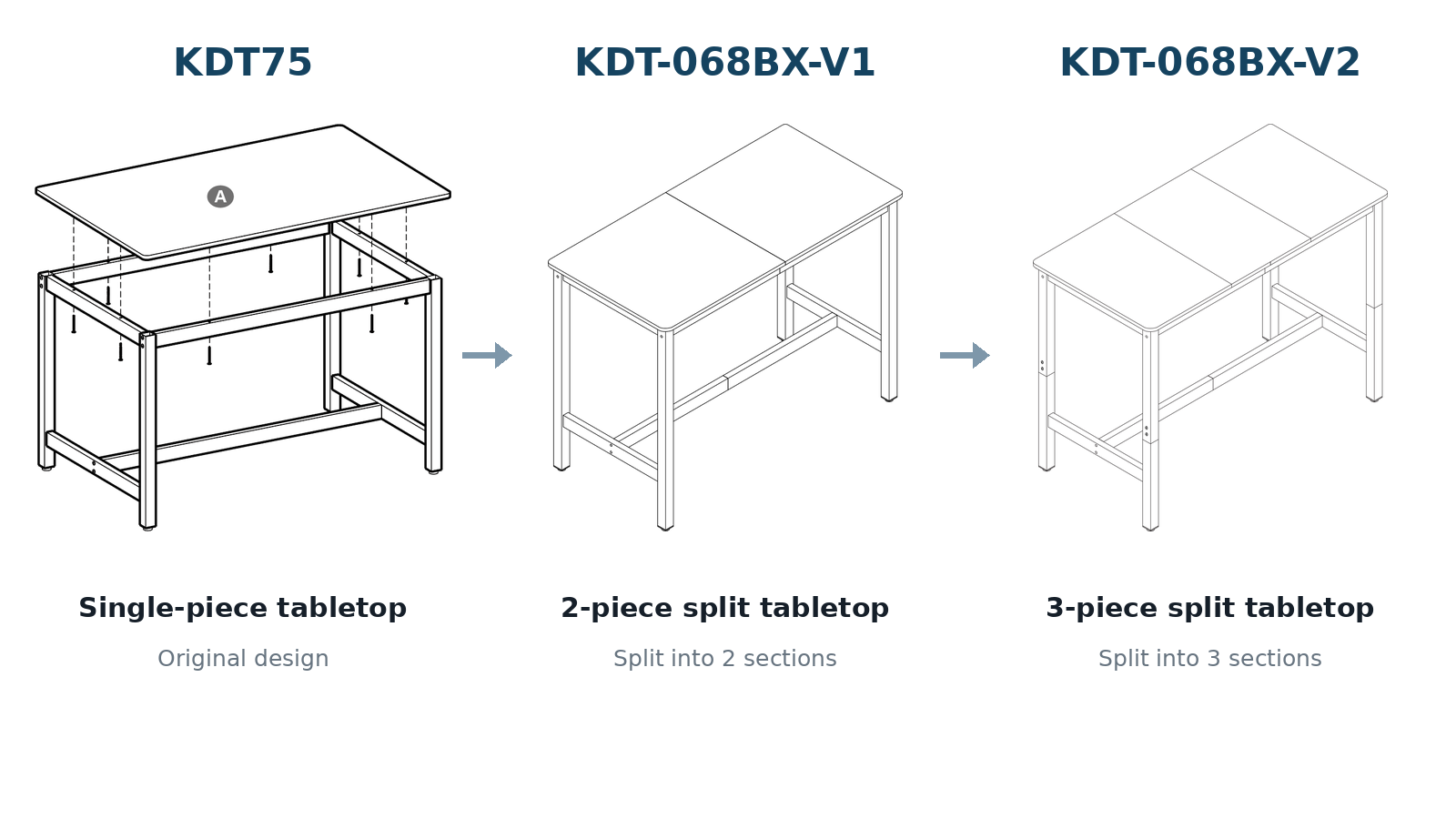
| Version | Tabletop design | Carton | G.W. | Engineering focus |
|---|---|---|---|---|
| KDT75 | Single-piece tabletop (A ×1) | 130 × 83.5 × 14 cm | 20.4 kg | Original design |
| KDT-068BX-V1 | 2-piece split tabletop (A ×2) | 82 × 70 × 14 cm | 19.5 kg | Reduce packed volume |
| KDT-068BX-V2 | 3-piece split tabletop (A ×2 + B ×1) | 78.6 × 46.8 × 22.7 cm | 19.2 kg | Reduce longest and widest sides |
07 / Due Diligence
Evaluate the Supplier’s Ability to Repeat the Approved Program
Use the table to evaluate repeatability of approved product, packaging and quality controls across production and repeat orders. Apply the same evidence standard when platform discovery or manufacturing-location review is part of the process. For repeat orders, use the furniture supplier performance checklist to compare specifications, revisions, QC evidence, packaging and documentation with the approved baseline.
| Evaluation Area | What to Check | Procurement Relevance |
|---|---|---|
| Product development | Brief interpretation, specifications and technical feedback | Provides a documented reference for sampling |
| Sample accuracy | Approved dimensions, materials, finish, hardware and revisions | Records the approved product reference |
| Material consistency | Component definitions, incoming checks and substitution control | Defines components and substitution controls for repeat production |
| Quality control | Incoming, in-process, assembly and packed-unit checks | Provides checkpoints for identifying deviations before shipment |
| Packaging capability | Protection, carton measurements, hardware and labels | Documents protection, carton and labeling requirements |
| Communication | Clear ownership, written changes and exception reporting | Creates a written record of changes, owners and exceptions |
| Delivery reliability | Scheduling, capacity, shipment coordination and repeat-order execution | Reviews scheduling, capacity and shipment coordination against agreed requirements |
08 / Inspection
Build Quality Control Around a Closed Specification
QC should trace incoming materials, in-process checks, assembly and packed-unit verification to the approved sample and current specification.
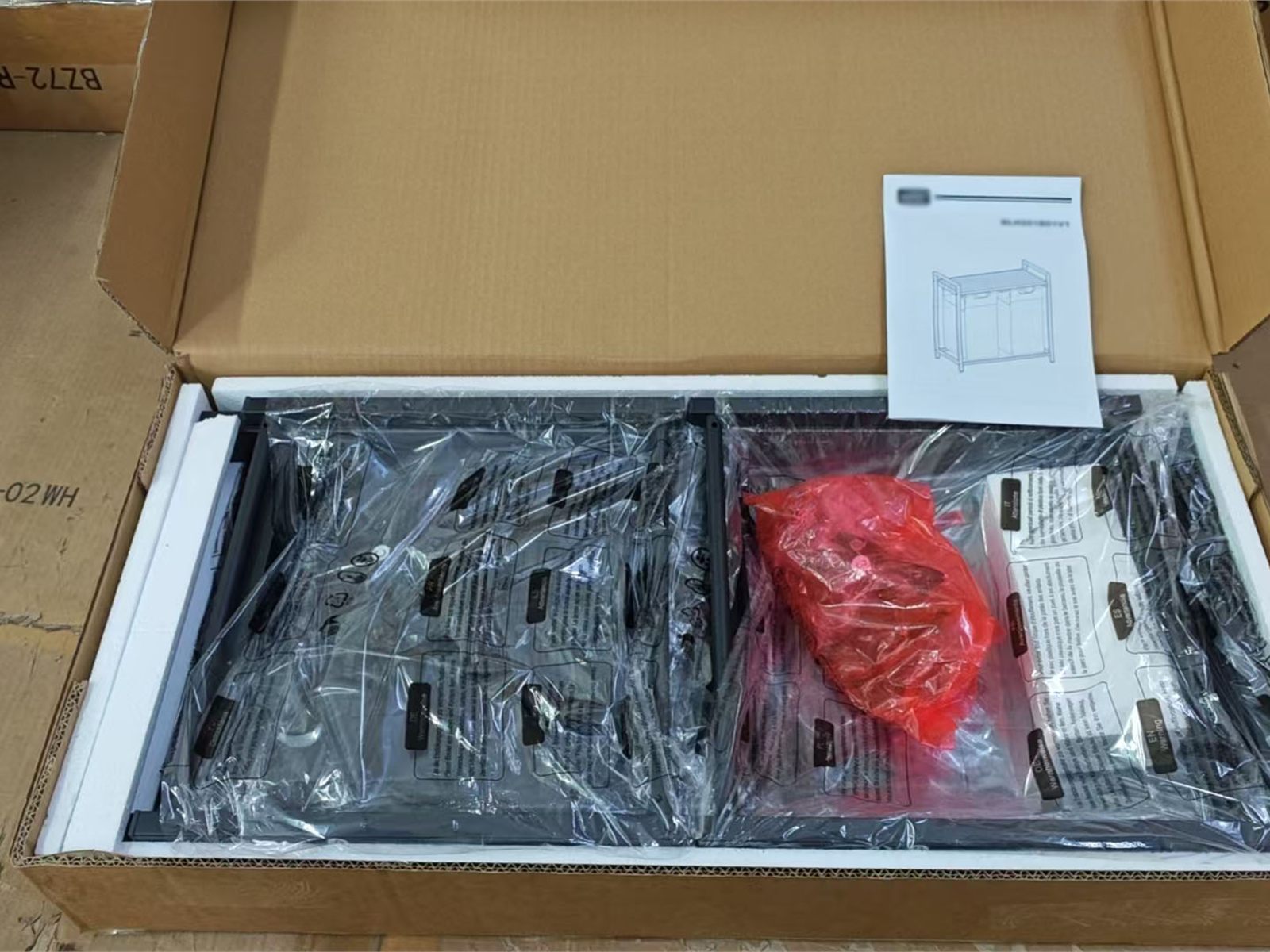
Verify material identity, revision status, dimensions, finish, hardware, function and stability as applicable. Final inspection should check the packed unit against buyer-specific acceptance points.
Use the Supporting Insights below for a deeper inspection framework.
09 / Packed-Unit Engineering
Evaluate Ecommerce Packaging and Carton Design
Packaging must protect the product while controlling volume, weight, fulfillment and assembly. For a focused example, see our Insight on furniture packaging and container-loading optimization.
- Protection versus volume: control movement and high-risk edges while avoiding unnecessary carton growth.
- Dimensions and weight: measure the final packed unit against the buyer’s actual parcel, warehouse and market constraints.
- Warehouse and load planning: evaluate carton footprint and multi-carton choices against storage, handling and container utilization.
- Internal organization: protect surfaces and separate components or hardware where contact can create damage.
- Hardware and manuals: verify counts, identification, tools and instructions against the final product revision.
- Labels: close product, barcode, carton and buyer/warehouse requirements before production.
- Packed-unit verification: inspect and assemble from the production-style carton, not only from loose parts.
Parcel → Pallet → Container: A commercially optimized carton should perform across the buyer’s fulfillment channel, pallet or warehouse system, and export load—not at only one stage.
Parcel: Check marketplace dimensions, packed weight, handling rules and fulfillment classifications. Pallet: Check carton orientation, pallet pattern, surface utilization and warehouse efficiency. Container: Check cartons per load, volume utilization and export handling.
An illustrative carton-on-pallet layout can help compare orientation, unused space and stacking assumptions before approval. The result depends on carton dimensions, pallet format, orientation, layer count and height constraints; it is not a universal utilization result.
HOMVND packaging approach: HOMVND evaluates carton dimensions together with packed weight, product protection, assembly requirements, target marketplace rules, pallet utilization and container/load efficiency before finalizing the packed-unit specification. The final solution remains product-, channel- and destination-specific.
10 / Commercial Planning
Plan Sampling, Approval and Production Timing
Plan sampling and production timing around sample scope, approval status, forecast, packaging readiness and repeat-order requirements.
Sample Scope
Define the product, packaging and documentation scope that the sample must represent.
Approval Status
Record which product, hardware, instructions, labels and carton elements are approved or still open.
Production Timing
Build the schedule around approved specifications, material readiness, complexity and confirmed capacity.
Repeat Orders
Maintain approved references, revision records and change controls for future production.
Current HOMVND project references for MOQ, sample timing and standard production lead time are available through the Furniture Collections page.
11 / Shipment Preparation
Prepare the Program for Export and Logistics Handover
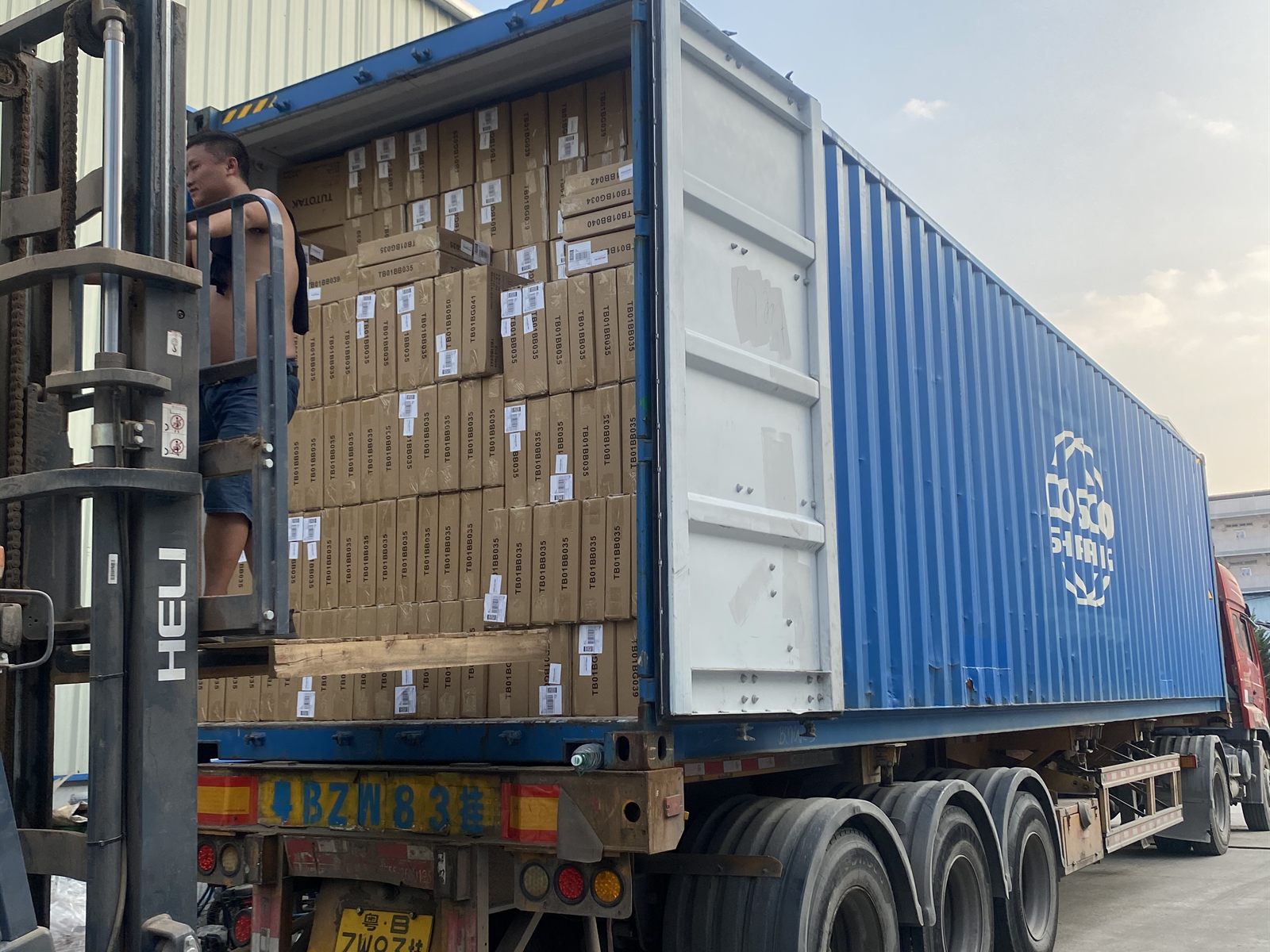
Shipment readiness links the approved packed product to carton identification, packing lists, container planning and buyer requirements.
Define carton marks, identifiers, quantities and labeling, then align the packing list with the shipment and mixed-SKU loading plan.
Close document responsibilities before loading. HOMVND coordinates manufacturing and shipment preparation but is not a customs broker; broader import planning remains a separate buyer workstream.
12 / Decision Support
Buyer Decision Matrix
Use the matrix to match buyer requirements with procurement priorities; it does not set universal specifications.
| Buyer Requirement | What to Prioritize | Procurement Implication |
|---|---|---|
| Marketplace/ecommerce SKU | Parcel protection, packed size and assembly clarity | Validate packed unit and instructions before scale |
| Compact apartment range | Footprint, function and flat-pack efficiency | Balance value with carton and assembly constraints |
| Entry-price furniture | Repeatable construction and controlled component count | Retain stability and QC when simplifying |
| Premium private-label range | Finish consistency and brand specification | Control sampling and approvals |
| Multi-SKU collection | Shared design, components and launch sequence | Control dependencies and changes across SKUs |
| Container-utilization priority | Packed dimensions and range planning | Optimize at range level, not one carton alone |
| Damage/return-sensitive item | Protection, hardware and assembly verification | Add packed-unit and handling checks |
| Mixed-material furniture | Board, metal, fabric and plastic interfaces | Define and verify each component interface |
13 / Execution Path
From Sourcing Brief to Production Readiness
This is a practical sourcing sequence for organizing decisions and records; it is not a universal industry process. Adapt the stages to the product, channel and project.
- Buyer brief
Set market, channel and constraints. - Product/specification review
Align dimensions, function, materials and cost. - Engineering feedback
Review structure, yield, assembly and packaging. - Sampling
Create product and packed-unit references. - Sample and packaging approval
Freeze product, hardware, manual, labels and carton. - Production planning
Confirm timing, responsibilities and change control. - Quality control
Inspect against approved references. - Packing and shipment preparation
Verify cartons, packing list and handover. - Repeat-order improvement
Record approved improvements against the baseline.
14 / Supporting Insights
Go Deeper on Inspection, Importing and Supplier Selection
Use these published HOMVND Insights for deeper inspection, importing and supplier-selection guidance.
Furniture Inspection and Quality Control: A Complete Guide for Importers
Plan inspections around specifications and shipment readiness.
The Complete Guide to Importing Furniture from China (2025–2026 Update)
Review the wider furniture import process.
China vs. Vietnam Furniture Manufacturing: Which is Best for Your Business?
Compare sourcing countries without reducing choice to location.
The Ultimate Guide: Souring Furniture From Alibaba
Use platform discovery with deeper supplier due diligence.
15 / Product Discovery
Explore Furniture Collections
Explore HOMVND categories, then use this guide to define the range, specification, quality and packaging requirements.
Explore Furniture Collections