
How Carton Size and Weight Affect European Marketplace Fulfillment Costs
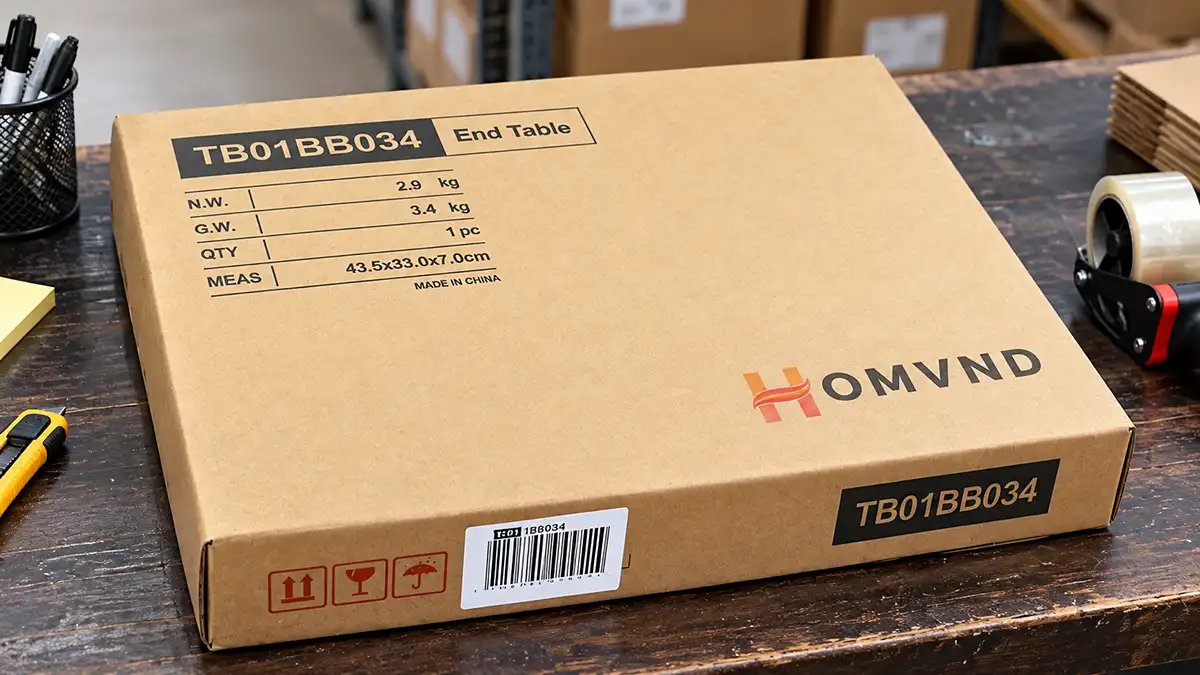
Carton dimensions and gross weight matter because European marketplace and carrier programs classify the finished package—not the assembled furniture. A few centimeters, added protection material, or an extra carton can change eligibility, dimensional or chargeable weight, storage exposure, handling class, delivery route, and return complexity. Buyers should therefore lock final packed specifications during product development, then verify them against the current marketplace program or carrier contract before approving production. The relevant rule depends on the platform, country, fulfillment model, and SKU.
Why the Packed Unit Drives Fulfillment Economics
The final packed unit is what a warehouse measures, a carrier handles, and a fulfillment program classifies. Its external dimensions and gross weight can be commercially important even when the assembled furniture is compact.
Crossing a program or carrier boundary may change eligibility, handling, storage, or delivery routing. The objective is therefore not always the smallest possible carton. It is a packed specification that protects the furniture and fits the buyer's actual channel model.
The Four Measurements Buyers Should Lock
Carton dimensions
Record the sealed external length, width, and height of every carton after the product, protection, manual, and hardware are packed. Protrusions or a bulging panel can change the measured outer envelope.
Gross weight
Gross weight includes the product and every packaging component. Net product weight alone cannot show whether a unit remains within a marketplace, warehouse, or carrier condition.
Packed volume
Packed volume connects carton dimensions to storage space and some fulfillment tiers. In liters, calculate it as:
length × width × height in centimeters ÷ 1,000
Calculate volume for each carton and for the complete sellable unit.
Dimensional or chargeable weight
Some fulfillment and carrier models compare actual weight with a value calculated from package dimensions. The formula, exceptions, and resulting chargeable weight depend on the current program.
Carton count is a related configuration decision. Buyers should record how many cartons make one sellable unit, what belongs in each carton, and how the complete set will be identified, stored, delivered, and returned.
From Packed Specification to Cost Exposure
A packaging change affects fulfillment economics when it changes a measured input or an operational step. The useful chain is:
packed specification → marketplace or carrier classification → handling and storage route → buyer cost exposure
Dimensions may affect eligibility, volume category, dimensional weight, or parcel routing. Gross weight may affect handling or carrier acceptance. Carton count may change labels, scans, delivery events, and return handling. Inventory quantity and dwell time determine how a small per-unit storage difference scales across a program.
Buyers should compare complete packed-unit alternatives under the same protection requirement, not compare cardboard use alone. Review program eligibility, chargeable weight, handling route, storage cube, carton count, and the return path together. A change that improves one input may worsen another—for example, splitting a heavy carton may reduce single-carton weight while increasing combined cube and multiparcel complexity.
Factory measurements are planning inputs, not a guaranteed platform result. Where a warehouse remeasures the received unit, its current method and final classification may control the operational outcome.
How European Marketplace Models Treat the Packed Unit
There is no single European marketplace package rule. Some programs publish structured fulfillment categories. Others leave delivery conditions to the seller and its carrier or freight-forwarder contract.
| Platform | Relevant fulfillment model | What packaging affects | What the buyer should verify |
|---|---|---|---|
| Allegro | One Fulfillment by Allegro | Eligibility, measured-volume category, handling, and storage exposure | Current unit limits, warehouse measurement, packaging route, and account eligibility |
| Amazon Germany | FBA | Size band, actual versus dimensional weight, oversize classification, and storage | Current rate card, exceptions, program eligibility, and SKU calculation |
| bol.com | Logistics via bol, including XL+ where available | Fulfillment decisions based on complete-package dimensions and weight | Current program limits, country/service scope, and seller access |
| OTTO | Seller-dispatched parcel shipping or freight forwarding | Suitability for the selected parcel route or need for a forwarding solution | Actual carrier contract, tracking, multiparcel handling, and return route |
| Kaufland Germany | Seller shipping groups and selected carriers | Package versus hauler routing and carrier-specific options | Marketplace setup separately from the carrier's current limits and prices |
The dated examples below were reverified against official sources on 27 September 2026. Platform rules can change, so buyers should recheck the applicable program before publication or production approval.
Allegro Packaging Threshold Example
The current official One Fulfillment handled-products page lists a maximum of 650 × 600 × 460 mm, 28 kg actual weight, and 179.4 L for one unit with individual packaging. Allegro also states that its warehouse measurement is used to check the received unit.
The current One Fulfillment fee page assigns categories A to G by measured product volume, with a Type F ceiling of 76.8 L.
| Carton | Calculation | Packed volume | Current category implication |
|---|---|---|---|
| Version A | 80 × 40 × 22 ÷ 1,000 |
70.4 L |
Below the current Type F ceiling |
| Version B | 80 × 40 × 25 ÷ 1,000 |
80.0 L |
Moves beyond Type F into G |
This calculation shows how one dimension can cross a current program boundary. It does not establish a fixed saving or mean that a three-centimeter change always has the same result. Final classification depends on the current program and Allegro's measurement of the received unit.
Amazon Germany Dimensional-Weight Example
The official Amazon Germany FBA Rate Card effective 1 July 2026 calculates dimensional weight in kilograms as:
length × width × height in centimeters ÷ 5,000
For applicable parcel and oversize tiers, excluding special oversize and the category exceptions stated in the rate card, Amazon uses the greater of actual unit weight and dimensional weight as shipping weight.
For an applicable non-special-oversize carton measuring 100 × 60 × 50 cm with an actual gross weight of 20 kg:
100 × 60 × 50 ÷ 5,000 = 60 kg dimensional weight
In this context, 60 kg is greater than 20 kg. The example shows why reducing scale weight alone may not change the shipping-weight basis when carton volume remains high. It is not a universal Amazon shipment rule; the seller must verify the current program, category, size band, and SKU-level calculation.
Parcel, Oversize, or Freight: Why Structure Matters
A tabletop, long panel, metal frame, or glass component may determine the longest carton side. Dense panels may determine gross weight. Protection clearance may determine whether a pack crosses a volume or size boundary.
Changing the knock-down orientation, nesting components, or splitting or combining cartons may alter those inputs, but each option also affects protection, carton count, identification, handling, and returns. A one-carton solution can simplify complete-set delivery but become too heavy or bulky. A two-carton solution can reduce single-carton weight while adding scans, delivery events, and missing-carton exposure.
On OTTO and Kaufland, the relevant boundary is especially dependent on the seller's selected carrier or forwarding arrangement. Public marketplace settings do not create one universal carton-size-to-fee table for every seller.
Storage and Returns Begin With the Packed Unit
Storage exposure combines packed cube, unit count, inventory age, and the current program method. Allegro and Amazon both illustrate why a larger packed unit can occupy more billable space and why time in storage matters.
The same configuration affects reverse logistics. Large or multi-carton products may need more collection capacity, clear carton identities, and a way to confirm that a returned set is complete. Packaging can help manage damage exposure, but it cannot guarantee a lower return rate.
Review the Packed Specification Before Production Approval
Compare current marketplace and carrier boundaries before the packed specification is closed. If a potential issue appears, product and packaging changes can be evaluated together without assuming that every redesign produces a commercial benefit.
Protection validation and regulatory compliance remain separate tasks. The Furniture Packaging Optimization and EU PPWR article covers packaging engineering, testing, container efficiency, and the regulation boundary.
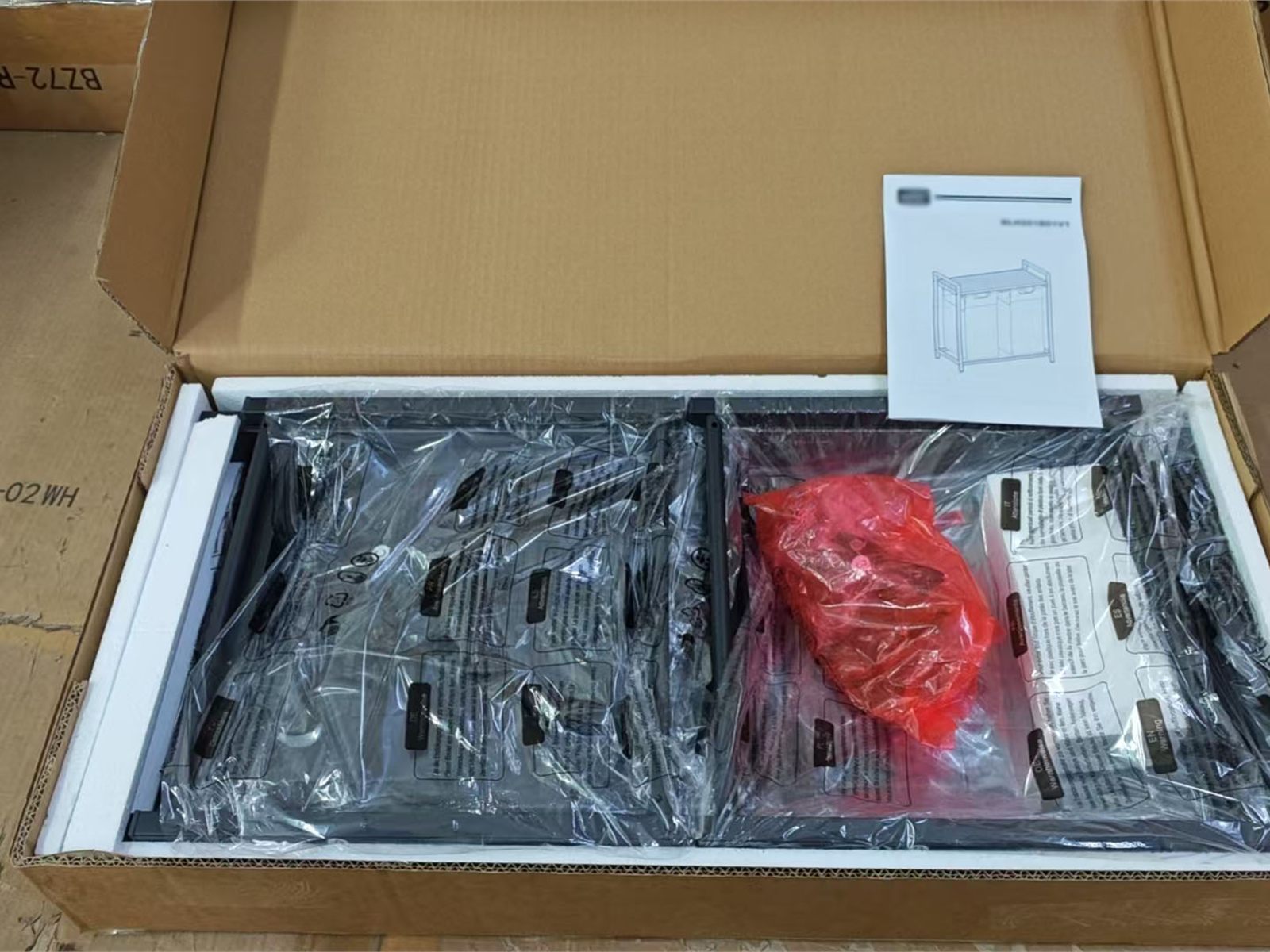
When the buyer's channel requirements are known, HOMVND can review packed dimensions, gross weight, carton count, flat-pack structure, component arrangement, protection, and relevant marketplace or carrier thresholds during product development. Final eligibility, warehouse measurement, carrier pricing, and seller-account decisions remain with the relevant service provider and seller.
Buyer Checklist Before Packaging Approval
| Packed-unit input | What the buyer should verify | Why it can affect cost |
|---|---|---|
Carton L × W × H |
Final sealed external dimensions for every carton | Can affect eligibility, size class, dimensional weight, storage, and route |
| Gross weight | Product plus packaging, hardware, and documents | Can cross program, handling, or carrier boundaries |
| Packed volume | Volume per carton and per sellable unit | Can affect storage space and volume-based categories |
| Dimensional weight | Current formula, divisor, scope, and exceptions | Shipping or chargeable weight may exceed scale weight |
| Cartons per unit | Contents, identity, tracking, and complete-set process | More cartons can add handling, delivery, and return complexity |
| Marketplace / program | Exact marketplace, country, service, and seller eligibility | A platform name alone does not identify the applicable rule |
| Carrier | Selected parcel carrier or freight forwarder and contract | Limits and prices can be contract- and route-specific |
| Parcel / oversize / freight boundary | Current size, weight, and handling conditions | Can change the available delivery route |
| Storage exposure | Packed cube, stock level, inventory age, and current method | Exposure can scale across inventory and time |
| Return route | Collection method, carton identification, and completeness check | Reverse logistics may use different handling assumptions |
| Verification date | Date and official source for every external rule | Terms can change before production or launch |
How This Fits Into Furniture Sourcing
Marketplace packaging economics is one input to a wider sourcing decision, not a replacement for supplier evaluation, sampling, QC, or commercial negotiation. The Furniture Sourcing Guide covers that broader framework.
For a project-specific review, buyers should provide the product drawing or sample, target market, intended fulfillment model, per-carton dimensions, gross weight, carton count, protection requirements, and current seller or carrier constraints. Buyers can also explore HOMVND Furniture Collections once the product and channel requirements are defined.