
Verifying FSC Claims in Furniture Procurement
Check who makes an FSC claim, what the official record covers, and how furniture products and quantities connect to sales and delivery documents.
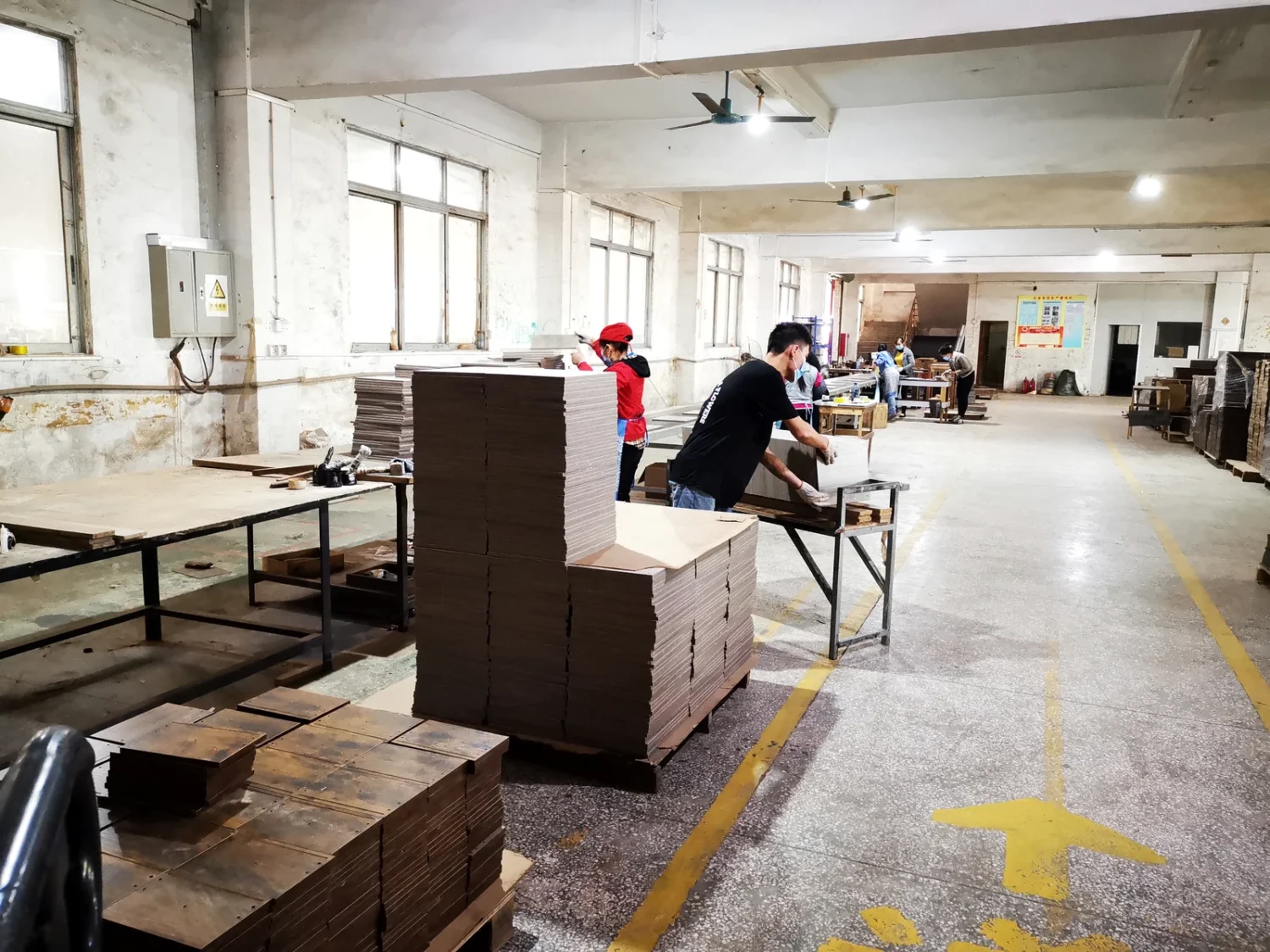
Worker handling a panel beside stacked furniture components.
Verify an FSC claim by connecting the seller, the current certification record, the furniture being purchased and the documents for that transaction. A valid certificate is one part of that check. It does not establish that every product in a supplier’s catalogue, or every shipment from that supplier, is sold with an FSC claim.
Start by writing down what you require: the furniture items, the acceptable FSC claim, whether labelled products are needed, and how you intend to use the claim after purchase. Buying finished furniture for use, reselling it with a transaction claim and promoting it with FSC trademarks are different activities.
1. Identify the Organization Making the Claim
List the quotation issuer, contractual seller, invoice issuer, manufacturer and certificate holder. Use their legal names and addresses, not only a brand name or the salesperson’s email signature. Then ask which organization takes legal ownership of the goods and which will issue the FSC transaction claim.
A factory and a trading company may legitimately have different names. The question is how their roles connect to the certified supply chain. Ask for the seller’s certification reference, any relevant participating-site or outsourcing relationship, and the proposed sales-document route. If that relationship is unclear, obtain clarification from the certificate holder and its certification body rather than accepting a shared logo or group-company statement as sufficient.
FSC UK’s chain-of-custody guidance explains that taking legal ownership and issuing invoices with FSC claims requires CoC certification even when the company never physically handles the goods. An agent arranging a transaction without taking ownership is a different situation. The factory’s certificate does not automatically authorize an independent trader to issue FSC claims.
Keep the actual seller visible throughout the review. A certificate belonging to a board supplier may help explain an input, but it does not resolve the identity or certification status of the organization selling the finished cabinet.
2. Check the Current Official Record and Both Codes
Use FSC Search, rather than relying only on a supplier’s PDF or screenshot. Search by organization name, certificate code or licence code. Open the matching certification record and check the holder, certificate type, status, relevant dates, certification body and the listed scope or product information. Review any relevant site or member information available with the record.
The two identifiers have different jobs:
- FSC certificate code: identifies the certificate and is the certification reference used on sales documents to pass an FSC claim.
- FSC trademark licence code: identifies the licensed trademark user and appears with FSC labels or promotional uses. It is not a substitute for the certificate code required for the transaction.
FSC’s official explanation of claims, labels and codes distinguishes these uses. Both codes can help locate an organization, but finding a promotional licence is not the same as finding a CoC certificate authorizing transaction claims.
Save the record and the date checked. FSC Search offers time-stamped downloads for forest-management and CoC certificate records. Recheck before relying on a later transaction; a certificate copy that was valid when the quotation was prepared may not reflect the current status.
The public record establishes the published certification information. It does not independently confirm that your invoice is authentic, your exact SKU was supplied under the claim, or the claimed quantity was allocated to this shipment. If the record is missing, ambiguous, suspended, expired or inconsistent with the documents, place the claim review on hold and ask the named certification body about the relevant entity, scope and transaction date. A current status alone may not settle a historical transaction.
3. Match the Furniture and Its Version to the Scope
Compare the certificate’s product scope with what you are buying. A reference to panels or sawn wood is not, by itself, evidence that the holder’s scope includes your finished furniture. Ask the supplier to connect the furniture description and proposed claim to the applicable product group and covered activity.
Public product categories may be broader than your model number. An exact retail SKU need not appear in the public search result for the buyer to investigate it. The missing connection should instead be supported by supplier records identifying the ordered model, material or construction version, and the relevant certified output.
For mixed-material furniture, define the forest-based components being covered. FSC’s CoC standard addresses functional forest-based components; a metal fitting is not evidence that the wood portion is certified. Equally, a claim for one purchased panel should not be extended to the whole cabinet without the required product-level chain of custody. Packaging and its contents are separate certification objects, so an FSC mark on a carton does not automatically cover the furniture inside.
Use the furniture panel specification guide to keep the substrate, component and version clear. Those buyer references help establish which goods are under review; they are not a list of mandatory FSC invoice fields.
4. Read the Claim Without Adding Meanings to It
For procurement, the main distinctions are:
- FSC 100%: the relevant forest-based inputs come exclusively from FSC-certified forests.
- FSC Mix: the claim can involve FSC-certified, reclaimed and/or controlled material under FSC’s rules. The word “Mix” does not disclose a fixed physical recipe or a universal recycled percentage.
- FSC Recycled: the relevant inputs are reclaimed material. Do not interpret this as saying that every non-forest component of a furniture item is recycled, or infer a particular post-consumer share from the name alone.
Controlled material is subject to FSC sourcing controls; it is not equivalent to material from FSC-certified forests. A standalone FSC Controlled Wood claim is not a finished-furniture FSC certification claim: its transaction use is restricted to raw or semi-finished products sold to FSC-certified customers.
Transaction wording can also include a percentage or Credit, such as FSC Mix Credit. These relate to FSC’s claim-control systems. A credit claim is an accounting-based output claim, not a statement that a particular percentage of each individual cabinet is recycled. Retain the wording actually supplied instead of converting it into a physical-content claim.
The current FSC CoC Directive, advice 17, also allows products made entirely from reclaimed inputs to be claimed as FSC Mix under the stated provision. Do not reject that combination solely because the claim name sounds inconsistent; check the applicable records. None of these claim names, by itself, establishes furniture strength, low formaldehyde emissions or suitability for a particular use.
5. Connect the Sales and Delivery Documents to the Order
A quotation stating that an FSC option is available is a proposal. Before ordering, agree the intended seller, claim and document route. At shipment or invoicing, verify the actual transaction documents against those agreed requirements.
For the normal sales-document route, FSC-STD-40-004 V3-1, clause 5.1 requires the certified seller’s identity and contact details, customer identification (with an end-consumer exception), document date, product description, quantity, applicable certificate code and a clear FSC claim associated with the covered items or total. A logo in the invoice header does not establish which lines carry the claim.
Compare those entries with the purchase order and received goods. If the invoice contains both claimed and unclaimed products, the distinction should be unambiguous. Keep buyer SKU, supplier model, revision and shipment references in your reconciliation record wherever needed to match the descriptions. These are practical matching aids, not additional universal fields imposed by clause 5.1.
Where sales documents do not accompany the shipment and the information is needed to identify the goods as FSC-certified, clause 5.3 requires the linked delivery documents to carry the relevant information and reference the sales documents. Check the connection rather than treating an unlinked packing list as proof.
There are defined exceptions to the usual document presentation:
- Omitted percentage or Credit wording: clause 5.2 permits certain end-of-chain sales of finished, labelled products to omit this detail. Subsequent organizations cannot reinstate the omitted information. Ask whether the exception applies before declaring a generic “FSC Mix” entry wrong.
- Supplementary documentation: where the seller cannot include the claim or certificate code on its sales or delivery documents, clause 5.7 permits supplementary documentation with its certification body’s permission and clear links to the affected documents and products. An informal letter saying “all our products are FSC” is not an adequate substitute for that linkage.
Have the supplier correct or clarify its own records through the applicable process. Do not type a missing certificate code onto its invoice, add a percentage, copy another company’s claim, or treat a buyer-created worksheet as the supplier’s transaction declaration. If authenticity or scope remains uncertain, send the specific documents and questions to the certification body. The furniture report verification guide explains the broader distinction between an authentic document and one that applies to the product; FSC transaction checks still require the FSC-specific evidence above.
6. Record a Decision for Each Unresolved Link
Use the following working table to keep evidence and follow-up together. It is a buyer review aid, not an FSC certificate or an audit finding.
| Check | Evidence to connect | Action if unresolved |
|---|---|---|
| Seller and certificate holder | Legal entities on quotation, contract and invoice; certificate identity; documented site, agent or outsourcing relationship where relevant. | Ask who owns and sells the goods. Obtain scope clarification rather than assuming different names prove fraud. |
| Official certification record | Current FSC Search record, certificate status and dates, product scope, certificate and licence codes. | Verify unclear identities or status with the named certification body before relying on the claim. |
| Furniture and version | Ordered model and construction reference mapped to the supplier’s relevant product group and proposed output claim. | Hold the affected item; a board certificate or a different SKU is not the missing connection. |
| Transaction and quantity | Claimed product lines and quantities on sales documents, linked delivery records and any authorized supplementary documents. | Request supplier-issued correction or clarification. Keep unmatched lines separate from those already checked. |
| Claim and label meaning | Exact claim wording, the object covered by any label, and the applicable basis for percentage or Credit information. | Do not invent a percentage or extend a packaging claim to its contents. |
| Buyer’s intended claim use | Whether the buyer will simply purchase, pass a transaction claim, apply a label or promote a labelled product. | Confirm the appropriate certification or trademark authorization before using the claim in that way. |
Give each product line one of three review outcomes:
- Checked for this transaction: the required identity, scope and document links are consistent with the evidence reviewed. Record the reviewer, date and documents. This does not turn the buyer’s check into an independent certification.
- Awaiting clarification: identify the missing link, the person responsible and the document or answer needed. Do not treat the requested claim as established while that question is open.
- Cannot currently support the requested claim: the available evidence does not substantiate the requirement. Ask for an eligible supply option or decide how to handle the order without representing the goods as meeting that claim.
A missing document is not automatically evidence of fraud. A valid certificate is not automatically evidence that the review is complete. Keep the decision specific to the transaction and reopen it when the seller, product, claim or relevant certification status changes.
Hypothetical Example: A Factory Certificate and a Trader’s Invoice
This scenario is invented; it uses no real company, certificate number or customer order. A buyer requests a cabinet version with an FSC Mix transaction claim. The quotation arrives from a trading company with a factory certificate attached. The official record confirms a valid factory certificate with a relevant furniture scope. The trader’s invoice, however, lists only the cabinet description and quantity, and a carton photo shows an FSC mark.
The buyer records the factory status as checked, while leaving the transaction claim awaiting clarification. Three questions remain: does the trader take legal ownership and issue the sale, which certified organization is entitled to make this transaction claim, and does the photographed label cover the carton or the furniture?
If the trader is the owner and seller, the buyer requests its relevant CoC evidence and correctly linked transaction documents. If it is only an agent, the buyer checks the contract and actual seller’s documents rather than assuming the agent’s role. Any supplementary-document arrangement is confirmed with the certificate holder and, where required, its certification body.
The buyer does not copy the factory’s certificate code onto the trader’s invoice or treat the carton mark as a cabinet claim. If the seller and document chain cannot be established, the requested furniture claim remains unsupported, even though the factory’s certificate itself is valid. Once suitable evidence is supplied, the buyer rechecks the affected line and records the basis for the new decision.
Keep Purchasing Evidence Separate From Claim-Use Permission
FSC UK’s guidance distinguishes ordinary purchase or resale of finished, labelled goods from issuing FSC claims on sales documents or applying labels. Using FSC trademarks to promote products requires the appropriate certification or promotional licence route. A promotional licence does not replace CoC certification for passing transaction claims.
As of 5 November 2026, FSC-STD-40-004 V3-1 remains the approved CoC base standard used for this guide, read with current FSC advice. The V4-0 consultation draft is not treated here as an effective requirement. For trademark use, FSC’s transition notice confirms that V3-0 of FSC-STD-50-001 became effective on 1 July 2026, with transition through 31 December 2028. Confirm the certificate holder’s applicable arrangements rather than judging authorization solely from a label’s visual design.
FSC evidence also does not replace the separate review of product performance, emissions or applicable legal obligations. The EUDR guide for wooden furniture importers addresses that regulation’s scope and due-diligence responsibilities. For this procurement check, the task is narrower: establish who made the FSC claim, which goods and quantity it covers, and which records support it.