
Furniture Batch Traceability: Linking Products, Components and Shipments
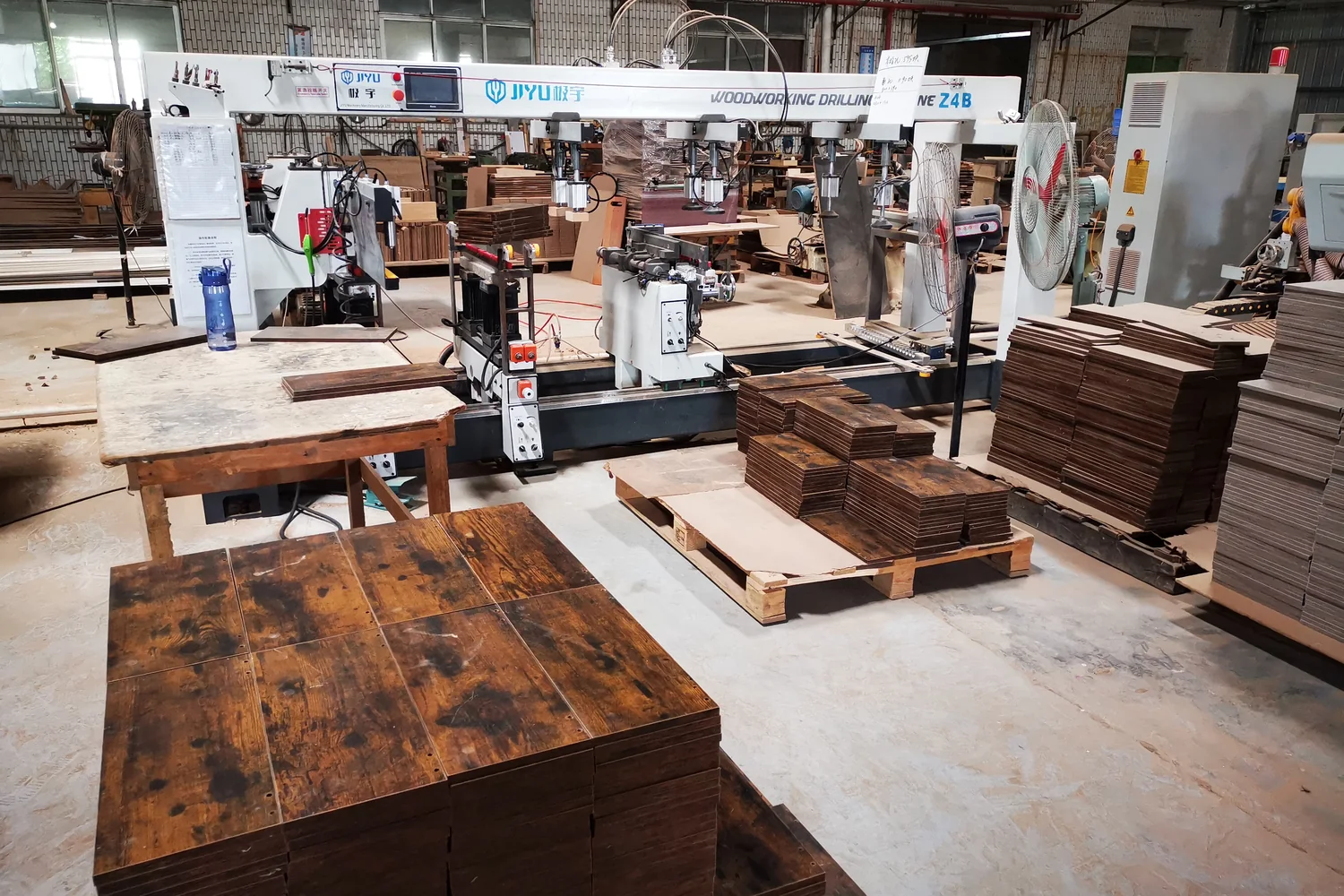
Woodworking drilling equipment and stacks of furniture panels on a production floor.
Furniture batch traceability connects the product ordered to the components used, the finished batches made and the shipments dispatched. When a component is questioned, the buyer needs records that show which products may contain it, how many were made and where they went. A SKU list or a photograph of a barcode cannot answer those questions on its own.
For importers, private-label brands and ecommerce procurement teams, the useful output is a checked set of links, with missing links clearly marked. The steps below are purchasing arrangements to agree with suppliers and receiving teams. They do not prescribe one coding system, software platform or retention period for every furniture order.
1. Separate Product Identity from Batch Identity
Keep these references in separate fields, even when a supplier combines several of them on one label:
- Model or SKU: which product or variant is being ordered. Keep the buyer SKU and supplier model connected without assuming they use the same code.
- Specification revision: which approved drawing, bill of materials (BOM), finish, hardware and packaging references govern the product.
- Finished-product production batch: which defined group of finished products the production records cover. Agree how the group is opened, closed and distinguished from later production.
- Component batch: which received or manufactured lot of an identified part was used. Include the part code and source; a supplier’s lot number alone may not be unique across different suppliers.
- Shipment reference: which dispatch moved a specified quantity to a named recipient and destination.
The same SKU and revision can be produced in several batches. A new component lot does not necessarily change the approved specification, but its use still needs to be recorded. One shipment can contain multiple finished batches, and one finished batch can leave in several shipments.
Furniture product revision control establishes what the product should be. Batch records establish which production used which inputs. Keep both: an approved BOM identifies the intended component, but does not by itself prove which component lot was actually issued.
2. Agree the Links Before Production Starts
Choose the components to track with the supplier and the people responsible for product quality. Consider which part-related questions would require a wider investigation: for example, a connection fitting used across several products or a panel supplied in multiple deliveries. Record the agreed coverage and exclusions; do not describe a partial component record as complete product traceability.
The GS1 Global Traceability Standard distinguishes product-class, batch and individual identification, and describes recording input-to-output and packing relationships. These are useful methods for discussing the required level of detail. This guide does not make GS1 codes, barcodes, serial numbers or ERP software universal conditions of furniture procurement.
| Record link | What the buyer should be able to match | Proposed record owner and check |
|---|---|---|
| Order → approved version | Order line, buyer SKU, supplier model, variant, quantity and applicable specification/BOM revision. | Buyer and supplier confirm the baseline and change approval reference. |
| Component receipt → production use | Part code, source lot, internal lot if different, quantity received and quantity issued to each finished batch. | Supplier materials and production teams record actual use, returns and unexplained balances. |
| Finished batch → QC and rework | Quantity produced, inspection reference and scope, exceptions, reworked subset and final disposition. | Supplier production/QC teams provide records; the agreed decision owner reviews unresolved items. |
| Finished batch → cartons and dispatch | Batch quantities within carton or pallet groups, shipment reference, actual dispatch quantity and destination. | Packing/dispatch team records allocation; buyer checks it against the shipment handover. |
| Receipt → current location | Received batch quantities, shortages, transfers, onward dispatches and stock still held. | Buyer warehouse or fulfillment partner retains the receiving and movement links. |
Record units explicitly: components, finished products, cartons and pallets are different quantities. For a product packed in two cartons, keep the carton-to-product pairing linked to the finished batch. The mixed-SKU shipment planning guide covers complete sets and carton reconciliation; here, the additional question is which batch each dispatched set belongs to.
3. Preserve the History When Goods Change or Split
One component lot used in several batches: keep a separate allocation for each finished batch, including other SKUs that use the same part. Reconcile receipts with use, remaining stock, returns and scrap. A purchase receipt alone cannot establish where the component went.
One finished batch shipped in stages: record the quantity in every dispatch and the balance left behind. A shipment number should point to its batch quantities, not replace their identities. Ask the receiving warehouse to retain those links when stock is transferred or sent onward; dispatch evidence establishes a destination at that event, not necessarily the current location.
Substitution or rework: retain the original component and finished-batch references, identify the affected subset, and connect the replacement part/lot, approval, work record and subsequent check. If only part of a batch was reworked, a note saying “batch reworked” is too broad. Record how that subset can still be identified. Part compatibility belongs in the spare-parts planning agreement; compatibility alone does not establish which units received the replacement.
Repacking: map the old carton or pallet references to the new ones, with quantities and remaining contents. Keep the original production identity available after a label is replaced. If mixed stock can no longer be separated by reliable records or physical identification, record the wider uncertain group instead of assigning batch codes from memory.
4. Test the Records with a Specific Question
Before relying on the arrangement, ask for a small demonstration using records the supplier is permitted to share. Select one finished-batch reference and trace it back to the approved version and component-use records. Then select one component lot and trace forward to every recorded finished batch and dispatch that used it.
FIRA’s Sourcing Furniture Products in the Supply Chain, 2024 V2, chapter 6 discusses linking material batches to finished furniture and checking a selected batch against supporting records. A successful demonstration supports only the records and scope checked; it is not proof that all future orders will be traceable.
Ask for the record references behind the answer, rather than accepting an unsupported total. Check whether quantities close and whether any link depends on an assumption. A nearby production date, the same SKU or a readable barcode is a search clue, not sufficient evidence that other goods are unaffected.
5. Hypothetical Example: One Component Lot, Two Finished Batches, Two Shipments
Hypothetical purchasing scenario — invented references and quantities, not a HOMVND customer case. A buyer orders flat-pack side tables under one SKU and approved revision R2. Each table uses one identified fitting kit. The supplier records a receipt of 500 kits from component lot K17.
- Finished batch T1 contains 200 tables, each using one K17 kit.
- Finished batch T2 contains 250 tables, each using one K17 kit.
- The component balance is 50 unused K17 kits, with no recorded scrap or returns: 200 + 250 + 50 = 500.
- Shipment S1 sends 150 T1 tables to Warehouse A.
- Shipment S2 sends the remaining 50 T1 tables and 200 T2 tables to Warehouse B.
- The supplier still holds 50 T2 tables. Finished-product quantities close at 150 + 50 + 200 + 50 = 450.
A concern is then raised about K17. The documented forward trace identifies 450 tables linked to that component lot: 150 dispatched to Warehouse A, 250 to Warehouse B and 50 still at the supplier. It also identifies 50 unused kits. This establishes recorded exposure to K17, not that every linked table is defective.
The buyer asks both warehouses to reconcile receipts and later movements, hold identifiable suspect stock under their control, and report what has already moved onward. The supplier holds the 50 T2 tables and 50 unused kits pending an authorized decision. The working record distinguishes dispatched quantities from stock actually located.
The gap: another 100 tables in finished batch T3 are still at the supplier. Their fitting-kit issue record is missing. The supplier says T3 used K18, but the same SKU, R2 revision and a later production date do not establish that. Although the K17 ledger balances, its allocations still need support from the underlying records.
Keep those 100 T3 tables in a separate “relationship unconfirmed” group and hold them pending investigation. The provisional finished-product review scope is 550 tables: 450 with documented K17 links plus 100 unresolved, not 550 proven K17 tables or 550 proven defects. Request the T3 issue/return records, K18 receipt and use records, and any reliable physical lot identification. If the missing link cannot be reconstructed, do not mark T3 unaffected merely to close the worksheet.
6. Give Each Open Link an Owner and a Decision
Agree who supplies production and component-use records, who checks the shipment mapping, and who retains receiving and onward-movement records. If a trading company is the seller, identify how it will obtain the relevant factory records and who responds when the original contact is unavailable.
When a concern arises, open a dated investigation record containing the observed issue, starting identifiers, evidence reviewed, quantities, locations and outstanding questions. Use separate outcomes:
- Linked: records connect the goods to the questioned component or batch.
- Excluded from this specific link: affirmative records support a different component allocation or production history; cite that evidence and its limits.
- Unresolved: the association or current whereabouts cannot yet be established. Assign an action owner and response date.
Make held stock identifiable in both the physical storage area and the inventory record, and prevent routine picking while the hold applies. Name the people authorized to decide inspection, rework, release or another disposition, and retain the reason and supporting evidence. A missing link is not proof of a defect, but it is not a basis for declaring goods unaffected. Batch mapping supports the investigation; it does not determine the safety decision or replace applicable corrective-action procedures.
Agree where records are retained, who can retrieve them, the response time and the retention period appropriate to the product, contract and applicable requirements. Preserve earlier versions and dated corrections. A shared spreadsheet can be a useful index when it links to supporting records; an ERP entry is no substitute for a missing allocation.
Before Placing the Order
- Have we distinguished SKU, revision, component lot, finished batch and shipment references?
- Which components and production steps are covered, and which are outside the agreed scope?
- Can labels on the goods or packaging be matched to the records after receiving or repacking?
- Will split shipments, substitutions and reworked subsets retain their original links?
- Who supplies, checks and retains each record, and who can authorize a stock disposition?
- Can we run one backward and one forward trace, reconcile quantities and list unresolved links before relying on the arrangement?
The purchasing decision is whether the agreed records can answer a specific batch question with evidence. Define that question before production, then keep the links intact through dispatch and receiving.