
Furniture Shipping Damage: Receiving Evidence and Supplier Handover
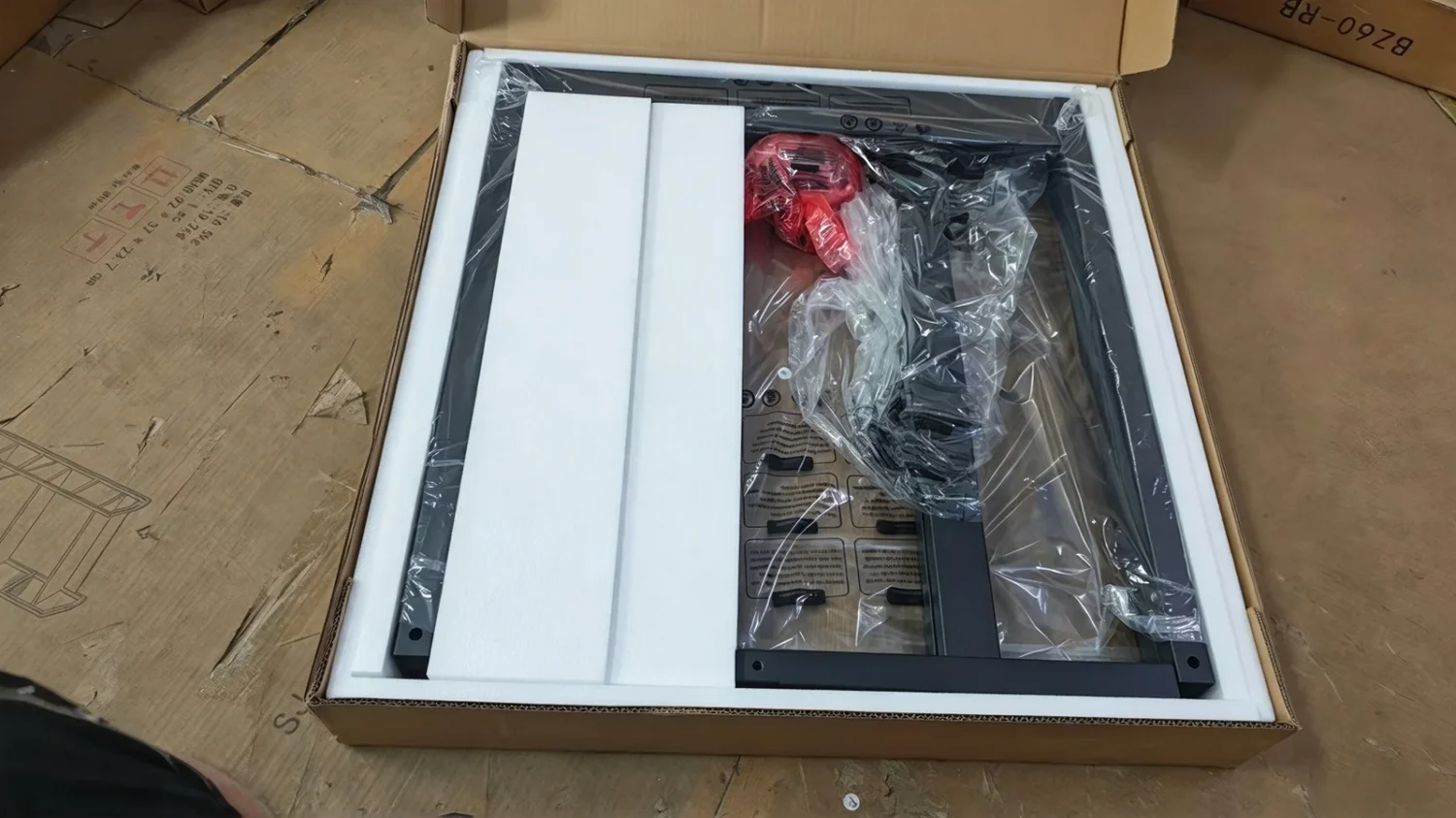
Open furniture carton with wrapped metal components and foam inserts.
When furniture arrives with suspected shipping damage, record what was received before the evidence changes, connect each finding to identifiable goods, and notify the relevant parties with the facts available. Keep adding evidence as the inspection develops. Do not wait until every carton has been opened before reporting a concern.
For furniture importers, private-label brands and ecommerce purchasing teams, the first useful output is a receiving record that a warehouse, supplier and transport provider can investigate together. It should show what was observed, when it was discovered, which quantities are involved and what remains unknown. It is not, by itself, a finding about who caused the damage or who must pay.
1. Record the Delivery Before Moving or Opening the Goods
Assign a receiving-incident reference and record the delivery date, time, location and receiving staff. Connect it to the purchase order, delivery or transport document, packing list and carrier or forwarder reference. Add container, vehicle, pallet and seal identifiers where they apply; do not invent a seal record for a delivery where none was observed.
Photograph the delivery as it is accessible: the overall load, pallet arrangement, wrapping or straps, carton faces and labels, and any visible crushing, punctures, wet areas, opened seams or displaced cargo. Take a wider view before a close-up so the location remains understandable. Record expected and physically counted quantities separately, including any counting limits while cartons are still stacked.
Describe exceptions on the available delivery or handover record as accurately as the process allows, and retain a copy. If the driver or operator cannot acknowledge an exception, record that fact and send the observation through the appropriate written channel. A receipt signature and a later contents check are different events. Do not assume that signing always prevents a claim or that every damaged carton must automatically be refused; check the actual contract and receiving instructions.
Keep people clear of unstable loads or sharp, broken parts. If goods must be moved to prevent further damage or make the area safe, record who moved them, when, why and where they were placed. Preserve the available before-and-after evidence without delaying necessary protective action.
2. Link Each Carton to the Product Inside
Give each photographed carton a reference that follows it through opening and inspection. Match the shipping label to the buyer SKU, supplier model, batch and packaging revision where those records exist. If a revision or batch cannot be established, mark it unconfirmed and request the supplier’s mapping; a model number alone does not identify the packaging version.
For products supplied in several cartons, retain the set relationship. Keep “carton 1 of 2” connected to the correct product, variant and companion carton. The mixed-SKU shipment guide explains how the dispatch records should identify complete sets. At receiving, use that mapping to distinguish:
- Cartons with external abnormalities: boxes observed with a specified condition, whether or not their contents have been checked.
- Products with observed damage: distinct furniture units or defined sets with a documented damaged component.
- Damaged components: individual panels, fittings or other parts, counted by part identity and unit.
- Uninspected or unconfirmed quantities: goods whose contents, identity or condition are not yet established.
Two damaged panels in one cabinet are two components and one affected cabinet, not two products. A missing companion carton is a set-completeness issue even if the carton received looks sound. For uncertainty extending across batches or shipments, use the batch traceability records to investigate the scope rather than assuming all goods with the same SKU share the same condition.
3. Capture the Opening Sequence and Preserve the Evidence
Record visible damage at delivery separately from damage first discovered after opening. For the latter, retain both the delivery time and discovery time, who opened the carton, and any storage or handling between those events. An exterior with no visible damage does not establish that the contents are undamaged; carton damage likewise does not prove that the product inside is damaged.
Use a consistent sequence for the cartons selected for examination:
- Photograph the carton reference, label, closure and exterior before opening.
- Show the internal arrangement as each layer becomes visible, including inserts, separators, wrapping and the position of parts and hardware bags.
- Photograph the identified product or component as a whole, then the damaged area with enough context and scale to locate it. Describe the condition, such as a chipped corner or bent rail, rather than naming an unverified cause.
- Record relevant accessories, missing items or loose pieces, and link them to the carton and parts list.
Retain original photo and video files with their available capture information. Add annotations to copies and keep a simple image index connecting filenames to carton, part and observation references. Do not move a part back into a box and describe the resulting photograph as its original delivery position. If the first opening was not recorded, state the gap; later photographs can show current condition, but cannot recreate an unobserved sequence.
Keep the relevant packaging, labels, inserts and damaged contents identifiable and available for investigation. Log any further handling, inspection, repacking or transfer, including the people and times involved. As a specific parcel-service example, UPS’s U.S. claims guidance asks users to retain damaged contents and packaging. Its supporting-document guidance requests views of the damaged item and its packing, the shipping label and the exterior, and notes that physical inspection may be needed. Those are UPS requirements for that process, not a universal claim checklist for every transport mode.
4. Send an Initial Notice, Then a Controlled Evidence Pack
Tell the buyer’s procurement or quality contact promptly, and identify who will notify the contracted carrier or forwarder and any cargo insurer. Check the contract, transport documents and applicable notification requirements immediately. Notice deadlines, claim-submission requirements and the person entitled to submit can differ by service and route.
Maersk’s current damage-or-loss FAQ directs its customers to notify their local office right away. Its published Cargo Claims Handling Guide separates initial contact, document collection and a quantified claim. For a containerized shipment, the guide’s transport references, container identification, photographs and cargo documents are useful examples of investigation inputs. Confirm the procedure for the actual booked service; this article does not adopt the guide’s stated deadlines or settlement timings.
The first notice can identify the shipment, delivery and discovery times, observed condition, provisional quantities, available images and where the goods are held. Mark estimates and unknowns explicitly. Ask whether a survey or inspection should be arranged before further unpacking, repair, disposal or repacking, while taking necessary action to prevent further loss.
| Evidence group | What to hand over | Who provides or checks it |
|---|---|---|
| Delivery and exceptions | Transport/delivery reference, time and place, counts, carton/pallet condition, handover record and initial photographs. | Receiving team records observations; buyer’s logistics contact checks the shipment identity and notification route. |
| Goods and damage mapping | SKU, batch where known, carton/set reference, packaging revision, component identity, separate carton/product/part counts and inspection coverage. | Receiver supplies findings; buyer reconciles quantities; supplier clarifies product and packing references. |
| Opening and later handling | Original files, image index, opening sequence, preserved packaging, storage location and dated movement or repacking log. | Warehouse retains evidence and access details; appointed inspector or surveyor confirms any examination arrangements. |
| Origin and transport records | Applicable pack-out specification, dispatch/QC records, loading photographs, packing list and available transport handover records. | Supplier provides origin records; forwarder/carrier supplies or clarifies records for the transport stages it handled. |
| Actions and claim status | Open questions, investigation responses, authorized treatment, actual costs where relevant, notices, submission receipts and reference numbers. | Buyer coordinates decisions; the designated claimant confirms carrier/insurer requirements and submission status. |
Date each update and show how the counts changed. Keep four activities distinct: the initial notice reports a concern; supplementary evidence adds facts; the supplier investigation checks product and packing records; a formal claim follows the relevant carrier or insurer process with the required documents and loss calculation. A supplier’s reply or replacement offer does not establish that a carrier or insurer has received or accepted a claim.
5. Hypothetical Example: Six Damaged Cartons Do Not Mean Six Damaged Cabinets
Hypothetical receiving scenario — invented quantities, not a HOMVND incident or claim. A delivery contains 40 cabinets, each packed in two identified cartons: 80 cartons in total. The receiver counts all 80, matches the pairs and records crushed corners on six cartons belonging to six different cabinets. The remaining 74 cartons have no visible exterior abnormality at that check.
The buyer sends an initial notice reporting six cartons with exterior damage, with contents still being checked. The team then opens both cartons for each of those six cabinets: 12 cartons examined. Two cabinets each have one chipped panel. No product damage is observed in the other four cabinets during the recorded examination.
A separate packing station opens both cartons of a seventh cabinet whose exterior had no visible abnormality and finds one cracked panel. Its set identity is retained, but the inner packing was discarded before photographs, and the opening time was not logged.
- Exterior findings: six cartons with recorded crushing; this count does not increase merely because concealed product damage is later found elsewhere.
- Contents examined: 14 cartons covering seven cabinets. Three panels in three cabinets have observed damage; four cabinets have no damage observed within that examination.
- Contents not yet examined: 66 cartons covering 33 cabinets. Their exterior check is not a contents inspection or release decision.
The buyer supplements the notice with the three product findings, keeps the affected sets on hold and requests directions for the remaining inspection. The supplier is asked to compare the relevant packing version and dispatch records; the transport parties receive the delivery observations and handling history.
The unresolved point: the seventh cabinet’s damaged panel is documented, but its original internal arrangement and exact discovery time cannot be established from the available records. The team retains the remaining evidence and asks the operator for a clearly labelled later account. It does not reconstruct a photograph or classify the damage as supplier-caused simply because the outer cartons looked intact. Equally, crushed cartons on the other sets do not prove when or by whom the panel damage was caused.
6. Record the Investigation and the Disposition Separately
For each finding, distinguish observed fact, possible cause requiring evidence and proposed action. “Panel corner chipped when unpacked” is an observation. “Impact during a particular transport leg” remains a hypothesis unless supporting records establish it. A proposal to replace the panel is a treatment decision, not proof of liability.
Keep affected or uncertain goods identifiable and out of routine sale or picking until the designated decision-maker has reviewed their status. Agree who can authorize further inspection, a stock hold, replacement parts, rework, return or disposal, and record the exact scope, reason, approval and completion evidence. Coordinate actions that could alter evidence with the relevant investigating parties. Do not treat potentially unsafe goods as normal saleable stock while their condition remains unresolved.
If replacement parts are selected, use the spare-parts planning guide to confirm model, revision, part identity, quantities and supply terms. If the investigation leads to a production or packaging correction, the furniture QC corrective-action record provides a separate way to document that action and its evidence.
Close the operational record with what was inspected, held, repaired, replaced or otherwise handled, and what is still pending. Keep claim status separate from stock disposition. Delivery terms may help identify contractual roles, but they do not by themselves establish the physical cause, insurance coverage or final responsibility. A useful handover preserves enough facts for those questions to be investigated without presenting a proposed explanation as a proven result.