
Cat Tree Quality Control: What Buyers Should Inspect
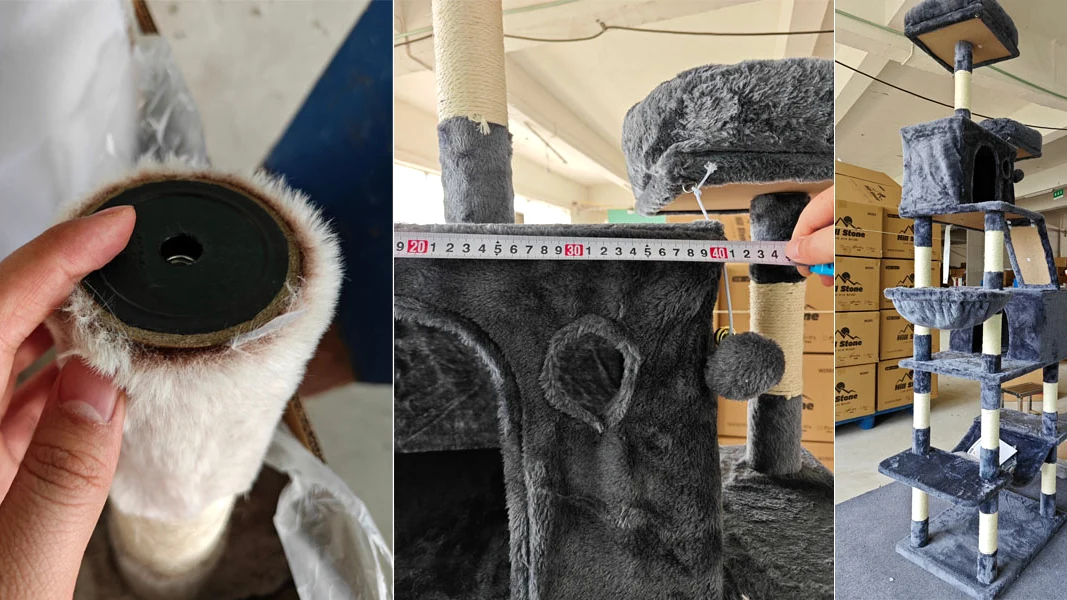
A cat tree QC plan should start with the approved sample and documented specification, not with a generic pass/fail list. Before production approval, the buyer and project team need one current reference for dimensions, component identities, finish, hardware, assembly information and packing. Before shipment, representative production units should be checked against that same reference.
This matters for flat-pack cat trees because the final result depends on several interfaces: boards and platforms must align with posts; inserts and bolts must engage correctly; coverings must be finished around holes and edges; and the packed set must contain the parts, hardware and instructions needed to reproduce the approved assembly. QC should document what was inspected, what differed and who accepted any deviation. It should not turn one sample, one measurement or one test into a product-line guarantee.
Start QC with the Approved Sample and Specification
The inspection reference should be closed before production units are judged. At minimum, identify the approved sample or sample revision, the current drawing or product specification, component or BOM definitions, finish and covering references, hardware list, assembly-manual revision, packaging specification and approved change record. If two documents show different part codes or dimensions, that conflict should be resolved before an inspector decides which version is correct.
Verbal instructions are difficult to trace across sampling, production and final packing. A dated revision record turns changes—such as a platform position, post length, fabric color, hardware finish or carton layout—into inspectable requirements. It also prevents an earlier sample from becoming the accidental production reference after a later change has been approved.
The broader Cat Tree Sourcing Guide explains how materials, structure, packaging and supplier documentation fit into the full sourcing decision. This article stays with the narrower QC question: what to compare and what evidence to retain.
Check Materials and Components Before Assembly
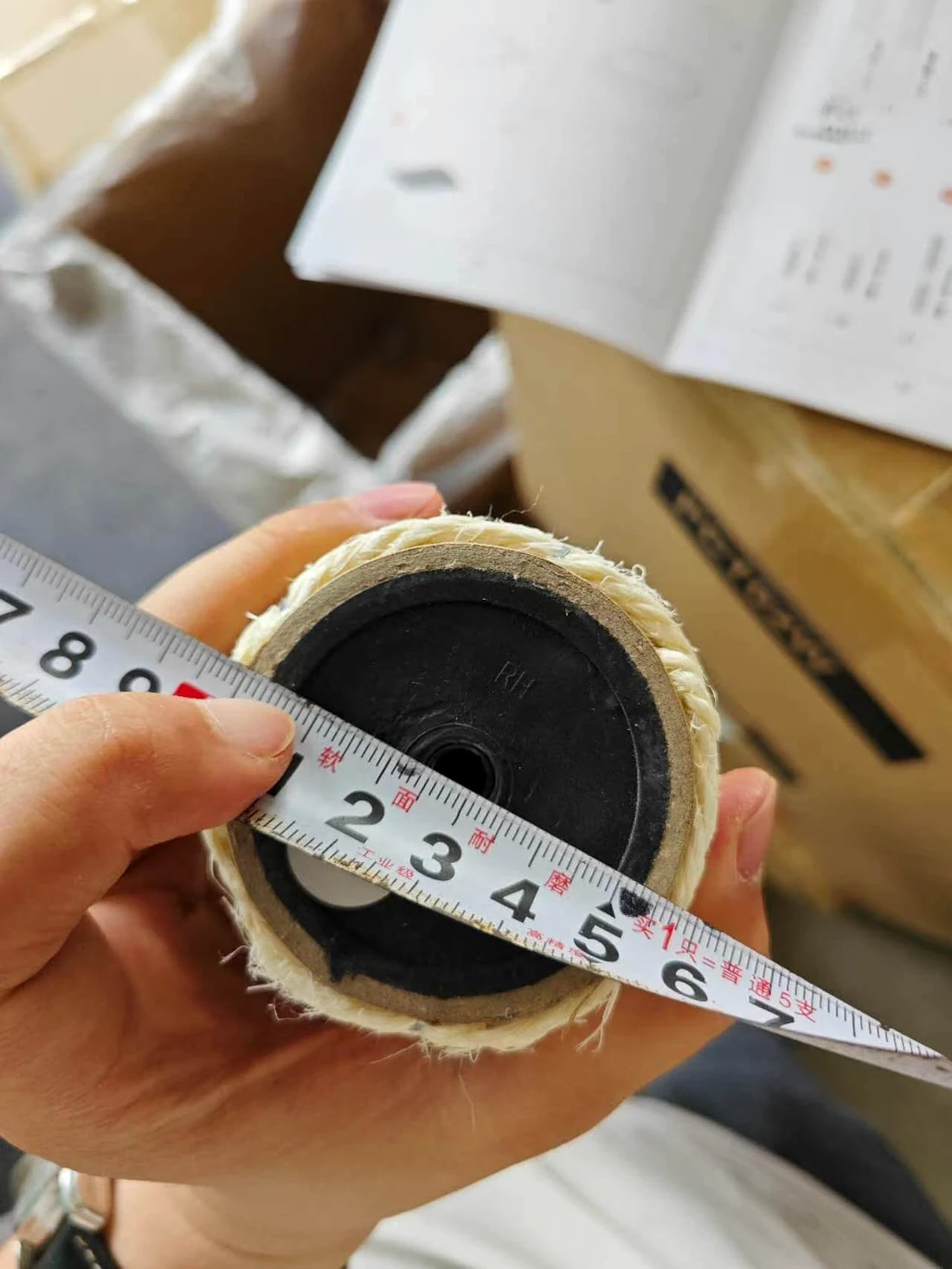
Component inspection is most useful while the flat-pack set is still separated. For boards, platforms and bases, confirm the part identity, specified dimensions and thickness where applicable, edge and surface condition, hole positions and finish reference. A panel can look acceptable by itself yet create an assembly problem if its hole pattern, insert position or orientation differs from the approved drawing.
Posts, sisal and textile-covered parts need their own definitions. Check post identity and dimensions, rope coverage and attachment, covering color and texture, seams, finished edges, and the treatment around openings and hardware interfaces. This is not a reason to impose one rope or textile specification on every model. The inspection question is whether the production component matches the approved reference for the named project.
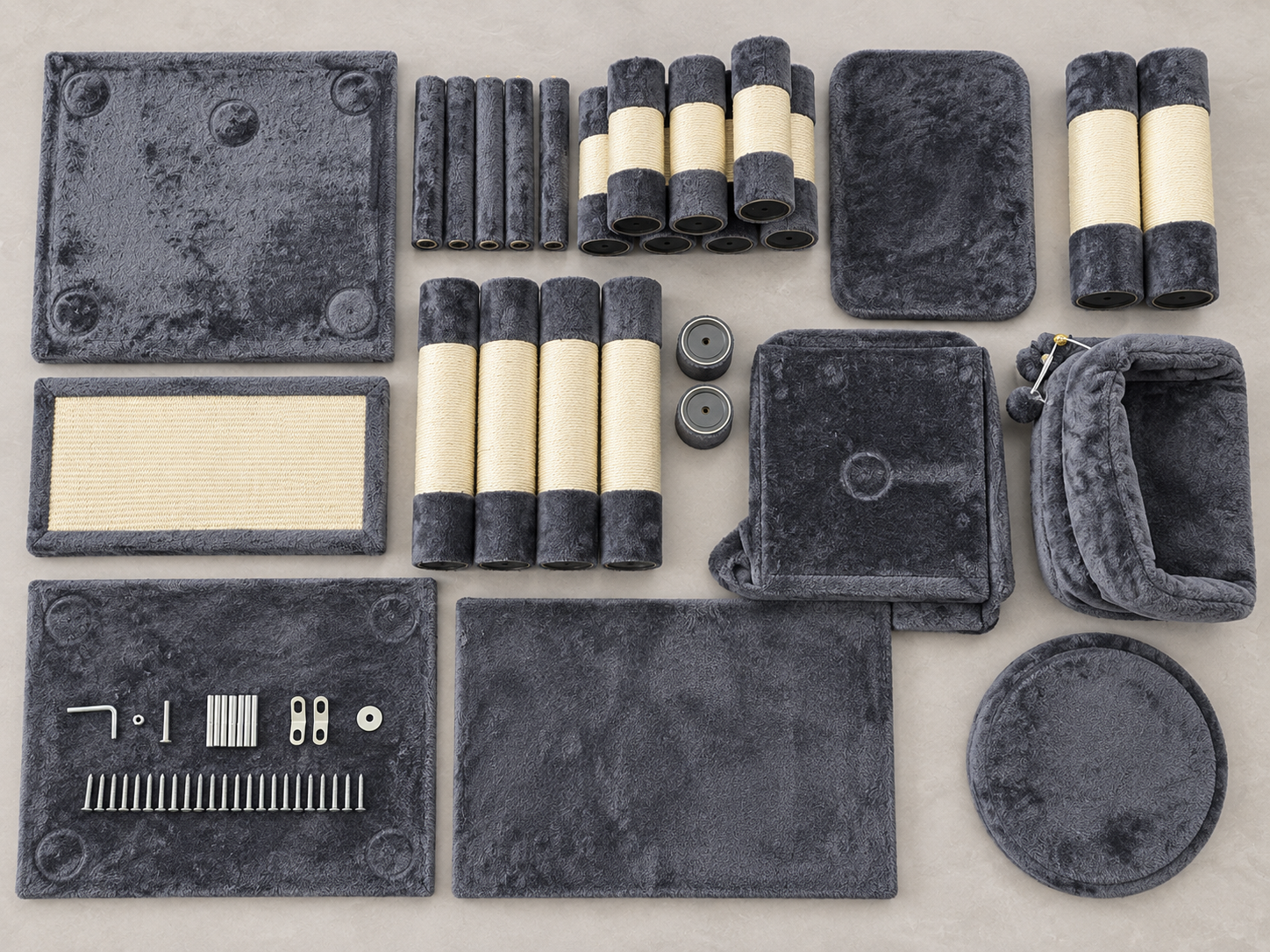
For bolts, threaded inserts, brackets, washers and tools, compare identity, finish and count with the current hardware list and manual. Substitute fasteners can affect tool fit, connector engagement or the order of assembly even when they appear similar. If spare parts are required, the SKU or project record should state which part and quantity rather than relying on a general expectation.
Review Structure and Assembly as One System
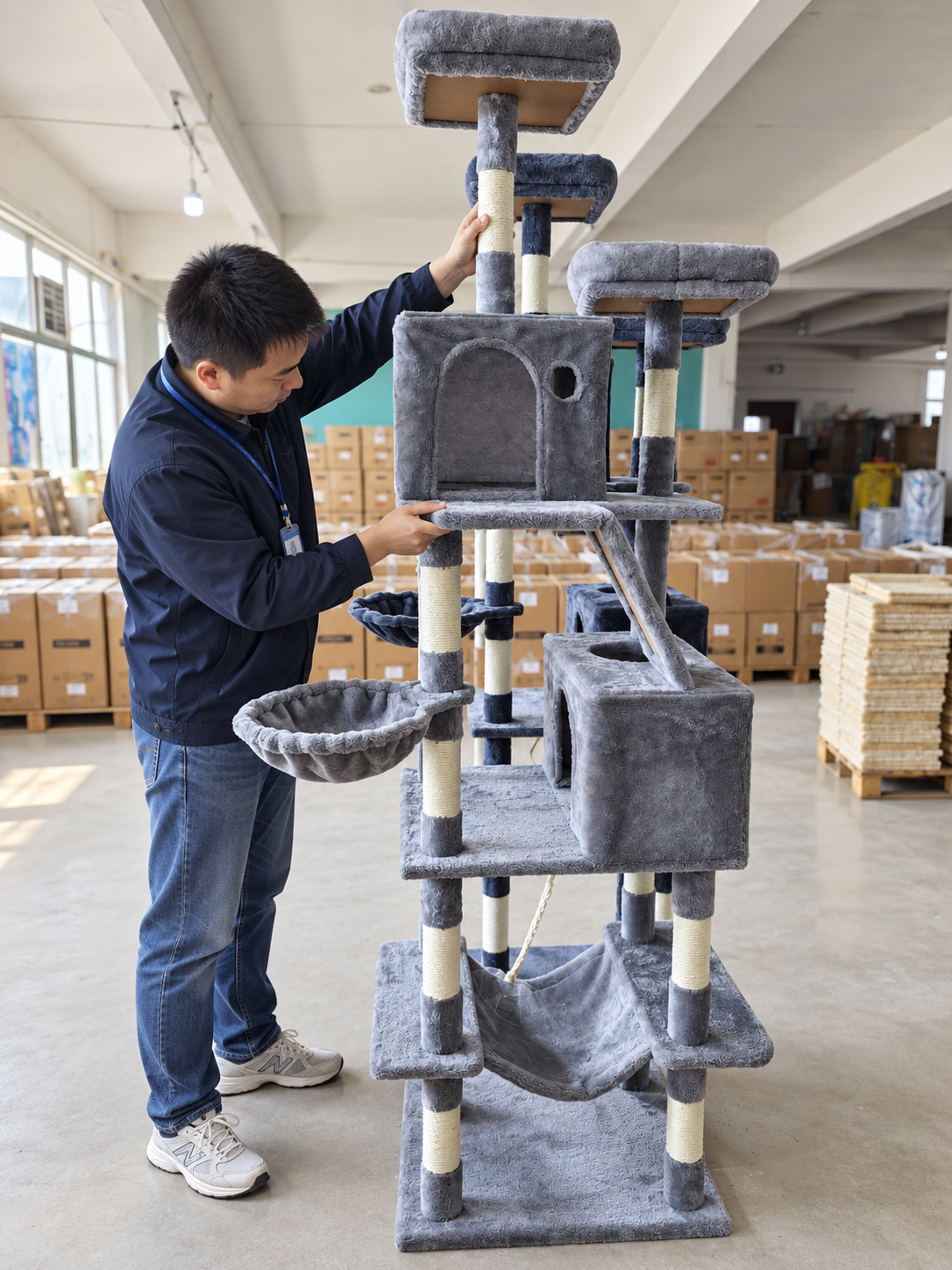
An assembled review should use the same method and checkpoints applied to the approved sample. Start with the base on the intended flat surface. Confirm that it sits flat, then review the relationship between height, base and platform layout; post-to-board connections; supported and cantilevered areas; hole alignment; and connector engagement. Wobble is an observation to investigate, not a stand-alone claim that a product is safe or unsafe.
The assembly sequence can expose problems that a finished showroom sample conceals. Note any forced alignment, incorrect part, missing component, blocked hole, loose insert, tool mismatch or step that does not agree with the manual. When a model includes a wall-fixing or anti-tip component, check its identity and instructions against that model’s approved specification. Do not generalize the presence or performance of that feature to other models.
One showroom sample cannot represent all packed production units. The final plan should define how representative units are selected and which checkpoints are repeated. An assembled-unit record is more useful when it identifies the unit, specification revision, assembler, date, findings and disposition. Photos should show the relevant connection or alignment point, not only a distant view of the finished product.
Inspect Hardware, Parts Identification and Assembly Information
Flat-pack QC needs to treat the hardware pack, component labels and manual as one information system. A correct bolt is still a packing failure if it is omitted, placed in the wrong bag or identified with a code that does not match the manual. Check the hardware-bag identity, count, label, specified tool and packing position. Look for missing items, unexplained duplicates and mixed fasteners that are difficult to distinguish during assembly.
Component identification should follow the same codes across the part list, labels and assembly steps. Post length or connector position may be more important than visual similarity when several covered posts look alike. The final manual revision should show the same parts and sequence as the packed production set, including any approved change introduced after sampling.
HOMVND’s approved knowledge records that, for applicable SKUs, hardware-pack weighing, extra fasteners or spare parts, and component labels may be used to reduce missing-part, wrong-part and assembly-error risk. That is a scoped practice, not a promise for every order. The applicable SKU, weighing method, spare quantity and label method still need project evidence.
Check Appearance and Finish After Assembly
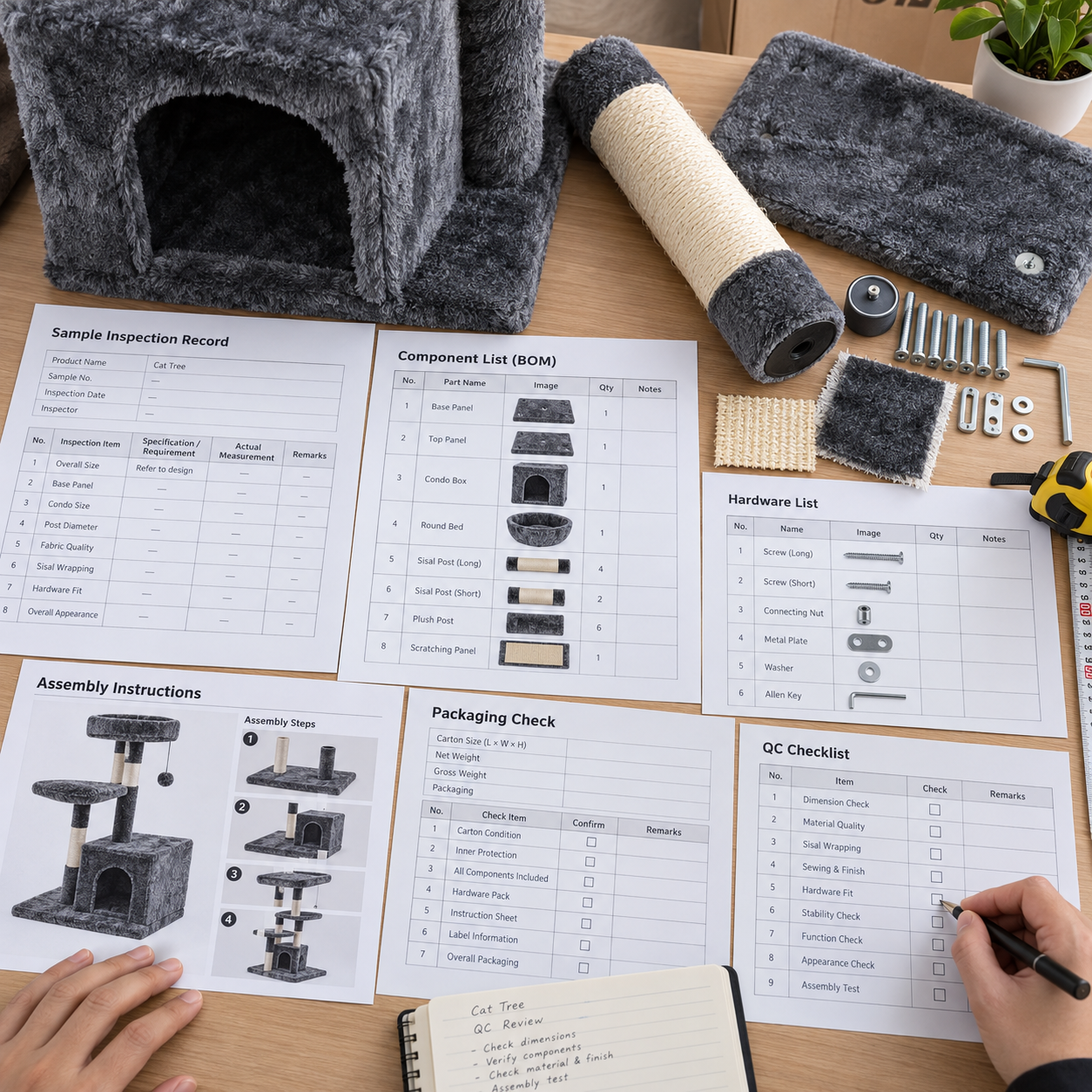
Appearance inspection should be performed after assembly as well as at component level. Assembly can reveal panel misalignment, compressed coverings, seams that rotate into visible positions, exposed edges, marks around bolt locations and inconsistent finishing at openings or platform boundaries. Review all customer-visible surfaces under consistent lighting and compare color and texture with the approved reference.
Record scratches, stains, adhesive residue, loose threads, uneven rope transitions, distorted fabric, visible hardware and gaps between connected parts. The objective is production consistency against the approved sample, not a consumer-style opinion about whether the design looks attractive. If a visual tolerance is important, define it in the project documents rather than asking the inspector to invent one during final QC.
Where several finishes or private-label variants share a structure, separate their references. Approval of one fabric color or label position does not approve every variation. Photos should identify the inspected variant and include close views of any accepted or rejected deviation.
Treat Packaging as Part of Final QC
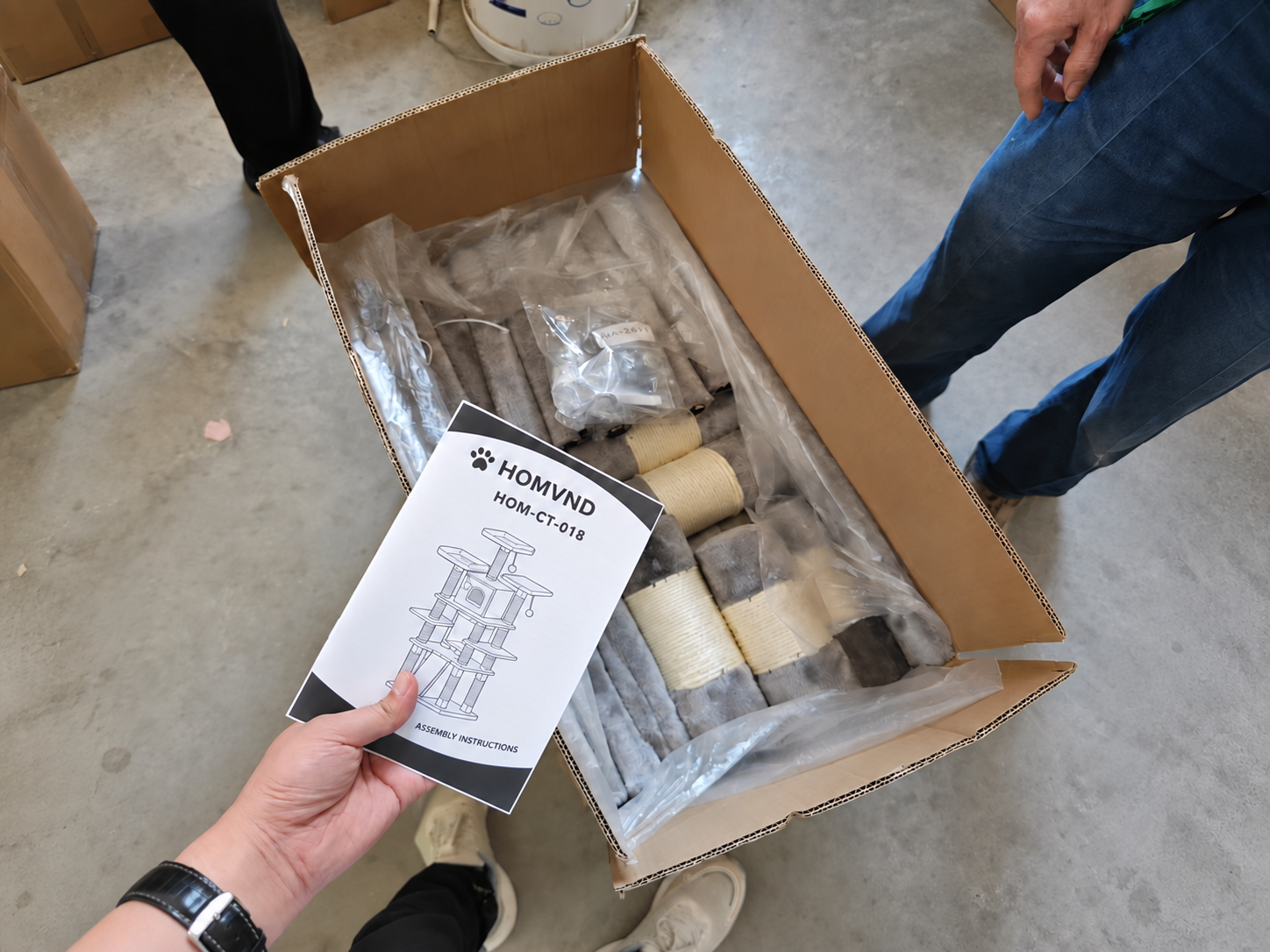
For a knock-down cat tree, final QC is incomplete until the packed set is reviewed. Confirm that the carton contains the correct boards, platforms, posts, covered parts, hardware pack, current manual and required labels. Check the packing order, internal protection, separation of surfaces and whether components can move in ways that may create contact or abrasion. Record carton condition, and verify carton dimensions or packed weight when the project requires those values.
A useful packed-unit check connects packing back to assembly: select a final packed set, verify its contents and assemble it using the included hardware, tool and instructions. This can identify revision mismatches or missing parts that an open-display sample would not reveal. The sampling plan and acceptance criteria remain project-specific.
Packaging checks should not be rewritten as guarantees of crush resistance, moisture protection, vibration performance or damage-free delivery unless the exact packaging configuration and test evidence support those statements. Packaging optimization may consider protection, carton dimensions, gross weight and handling constraints, but a methodology is not proof of a fixed shipping outcome.
What QC Evidence Should Buyers Receive?
Inspection evidence should make the decision reviewable after the inspector leaves the site. Depending on the project, useful evidence may include measurement records, component and hardware photos, an assembly checklist, packed-unit photos, a nonconformity record and proof that an agreed correction was completed. Not every order requires the same document set; the buyer should define the required outputs in the QC plan.
| QC area | What to check | Useful evidence |
|---|---|---|
| Reference control | Approved sample, specification and current revisions | Reference list, dated approval and change record |
| Materials and components | Part identity, specified dimensions, finish and interfaces | Inspection record, labeled photos and measurement record |
| Hardware and information | Identity, count, labels, tool and manual match | Hardware checklist and packing photos |
| Assembly | Fit, alignment, sequence, connector engagement and missing parts | Assembled-unit photos and completed checklist |
| Structure | Base flatness, connections, platform support and documented wobble review | Named checkpoint record with close-view photos |
| Appearance | Visible surfaces, seams, edges, marks, color and exposed hardware | Variant-identified photos and defect record |
| Packaging | Components, protection, labels, manual, carton and required packed values | Packed-unit photos, packing checklist and measurements when specified |
| Deviations | Nonconformity, correction, recheck and approval owner | Deviation record and corrective evidence |
A photo without a part code, measurement or inspection reference may be difficult to interpret later. Evidence should connect each finding to the named SKU, unit or sample, the document revision and the acceptance decision. If a deviation is accepted, record the scope of that approval so it does not silently become a new standard for unrelated products.
Buyer QC Checklist Before Shipment
Use this checklist as a starting point, then replace broad items with the critical dimensions, components and evidence requirements for the actual SKU or project.
- The approved specification and drawings are current.
- The approved sample or revision reference is identified.
- Materials and components match approved definitions.
- Critical project-specific dimensions are checked.
- Hardware identity, count and tool are checked.
- A representative production unit is assembled.
- Connections, support and wobble checkpoints are reviewed.
- Visible finish and appearance are reviewed after assembly.
- The manual matches final parts and assembly sequence.
- Packing, internal protection and labels are reviewed.
- Deviations and corrective evidence are documented.
- The responsible approval owner is confirmed.
A shipment decision should be based on the agreed acceptance plan and the recorded findings, not on unsupported claims about universal safety, stability or logistics performance. When a requirement is missing or contradictory, close the document gap before treating the unit as the production reference.
For current cat tree and pet furniture product directions, use the commercial collection after completing the QC review.
Explore Pet Furniture & Cat Trees