
Cat Tree Supplier Evaluation: What Buyers Should Verify
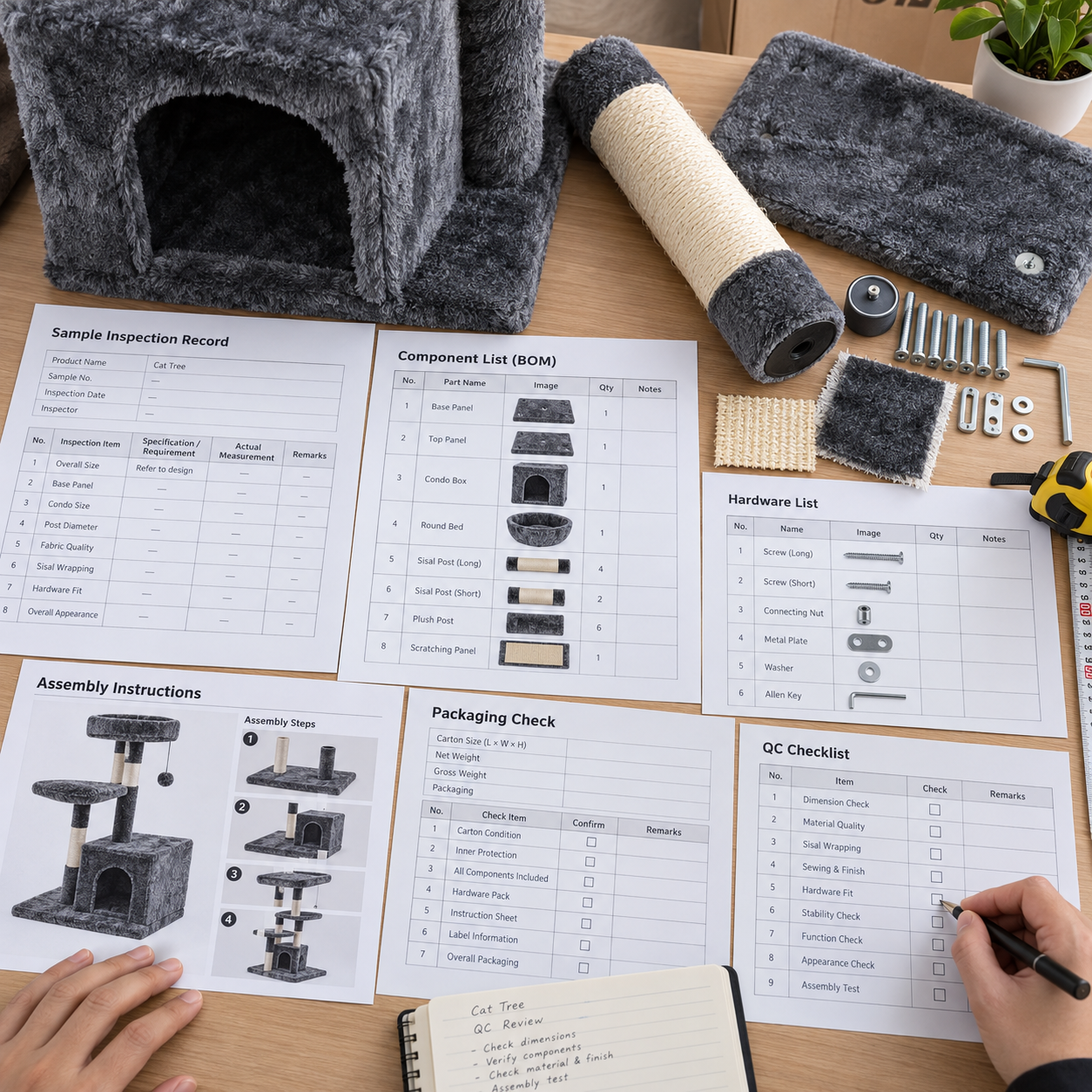
A supplier comparison should begin with evidence, not claims. Two suppliers can quote products that look similar while using different references for the sample, boards, platforms, posts, coverings, hardware, assembly manual, carton and labels. The difference becomes visible when the buyer asks which document production will follow, how revisions are approved and what happens when a component or schedule changes.
For a flat-pack cat tree program, due diligence should connect the commercial offer to the product that will actually be sampled, packed and produced. The review is not a search for one impressive certificate or one perfect sample. It is a check of whether decisions remain identifiable from the approved sample through representative production units, QC evidence and shipment handover.
Start Supplier Evaluation with Evidence, Not Claims
Begin with a request for the current working records. At minimum, the buyer should be able to identify the product specification or drawing, approved sample status, component or BOM definitions, hardware list, assembly-manual revision, packaging specification, revision history, QC evidence and production-timing assumptions. The exact document names may differ, but the references should describe the same product and the same project stage.
A quotation is commercial evidence, not production evidence. It can show price, quantity basis and terms, but it does not show whether a post length, platform position, fabric reference, bolt finish or carton layout is controlled. Marketing statements such as “high quality” or “fast delivery” are also incomplete until they are connected to a specification, approval record, schedule assumption or inspection output.
- Supplier claim: “We can make this model.” Evidence request: current specification, sample scope and revision status.
- Supplier claim: “The packing is ready.” Evidence request: packing specification, packed-unit photos, hardware list, manual revision and label requirements.
- Supplier claim: “The order can ship on time.” Evidence request: production window, material and packaging readiness, buyer approval dependencies and exception-reporting method.
The Cat Tree Sourcing Guide covers the broader product, material, structure, packaging and sourcing sequence. This article stays with the narrower question of what evidence buyers should compare between candidate suppliers.
Quality: Can the Supplier Work from a Controlled Specification?
The quality review starts before final inspection. Ask how the initial brief becomes a current specification and how the supplier records sample comments. If a buyer changes a platform position, post length, covering color, hardware finish or carton arrangement, the change should be visible in the current sample and document set. An earlier drawing or manual should not remain the accidental production reference.
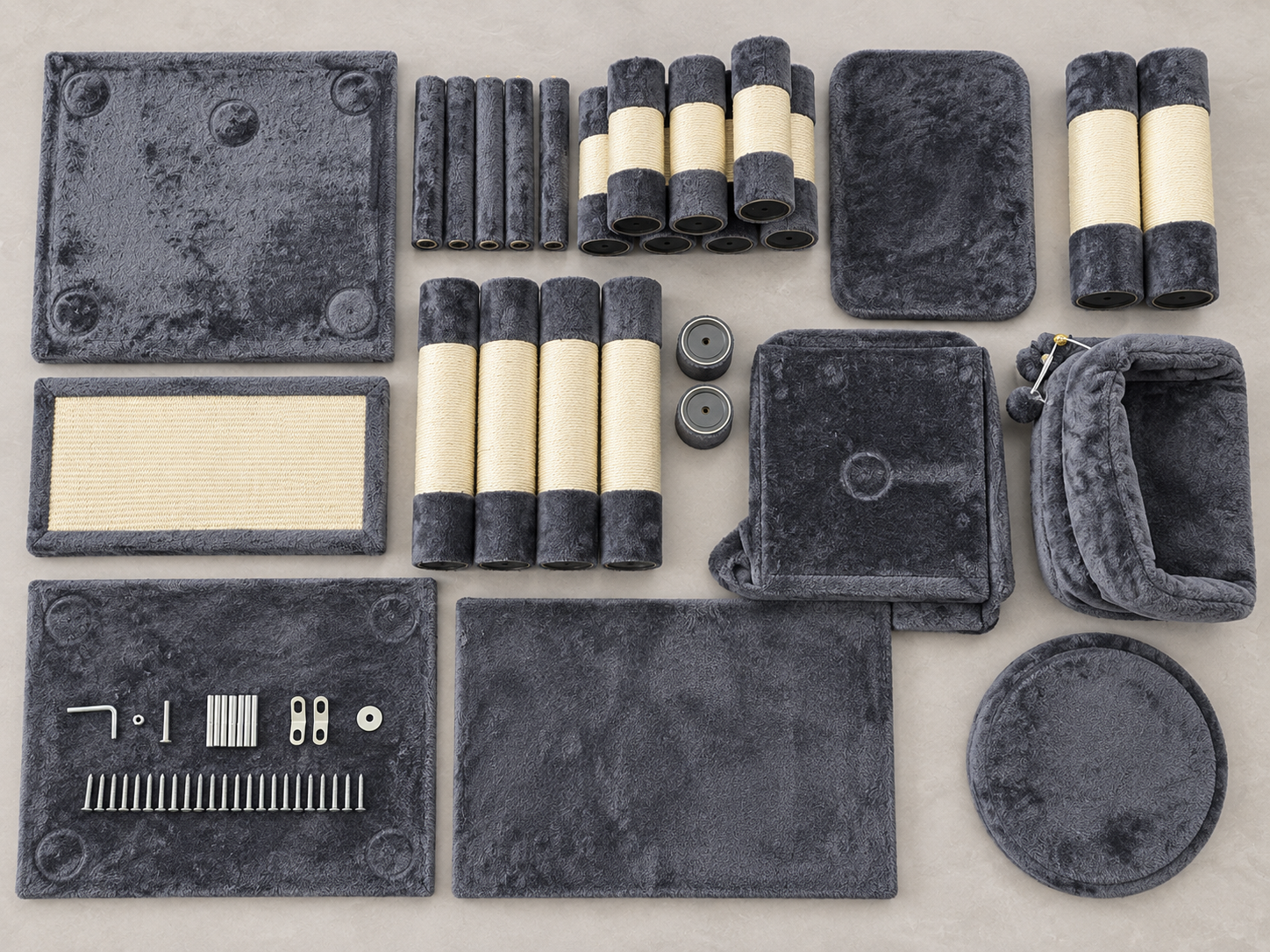
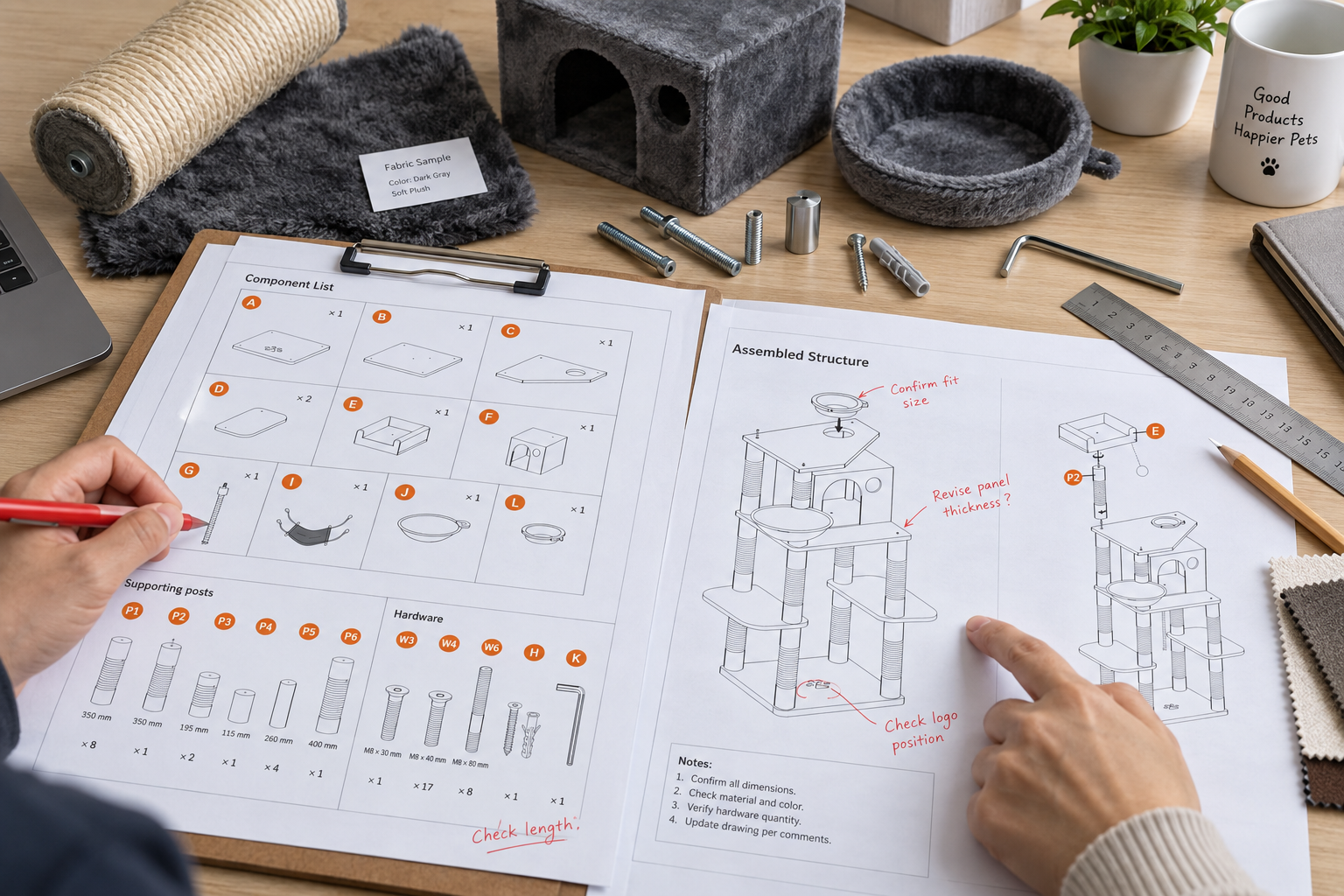
Component identity matters because similar-looking parts are not necessarily interchangeable. Boards and platforms need named dimensions, finish references, hole positions and connection details where relevant. Posts, sisal and textile-covered parts need their own identifiers and project-specific references. Hardware records should identify the fastener, count, finish and tool. The assembly manual should use the same part codes and reflect the approved sequence.
Ask how substitutions are handled. A change in board, covering, rope, insert, bolt, label or internal protection should not be treated as equivalent merely because the finished product looks similar in a distant photo. The supplier should be able to show what requires buyer approval, which record is updated and how the approved change reaches sampling, production, packing and inspection.
Representative production evidence is different from sample evidence. A sample can close the intended reference; it cannot by itself show what happened across production. Buyers should define which production units are reviewed, which checkpoints are repeated and how deviations are recorded. For inspection detail, use the focused Cat Tree Quality Control article rather than turning supplier evaluation into a second QC checklist.
Cost: Compare the Commercial Assumptions Behind the Quote
Two unit prices are comparable only when they describe the same product, packing scope, included components and commercial terms. A quote may change with the number and configuration of boards, platforms and posts; the type and coverage of sisal or textile; the hardware count; the number of cartons; carton dimensions and packed weight; internal protection; assembly complexity; spare-parts requirements; and the extent of requested revisions.
Record the quotation basis beside the product definition. Useful fields include MOQ or quantity basis, included packaging, label and manual scope, sample or tooling assumptions where applicable, payment terms, shipment terms and the period for which the quote is valid. If one quote excludes a packing component, manual update or requested finish, the lower figure does not represent the same scope.
Material price questions should be handled as change-control questions rather than relationship claims. Ask which materials or components are price-sensitive, how long the quote remains valid, whether a price change can trigger a substitution proposal and how any change will be communicated before production. The objective is not to predict a fixed future price; it is to prevent an unrecorded commercial change from becoming an unrecorded product change.
Delivery: What Controls Support the Agreed Schedule?
A delivery date should be reviewed together with the assumptions that support it. Ask whether the sample and specification are approved, whether materials and packaging are ready, which buyer decisions remain open, when changes must stop and which production window has been reserved. A schedule based on unresolved artwork, manual, label or packaging decisions is not equivalent to a schedule based on closed approvals.
The supplier should state which dates depend on buyer feedback and how exceptions will be reported. If material readiness, a sample revision or packaging approval changes the plan, the record should identify the issue, expected effect, decision owner and next checkpoint. This gives the buyer something more useful than a general promise of punctual delivery.
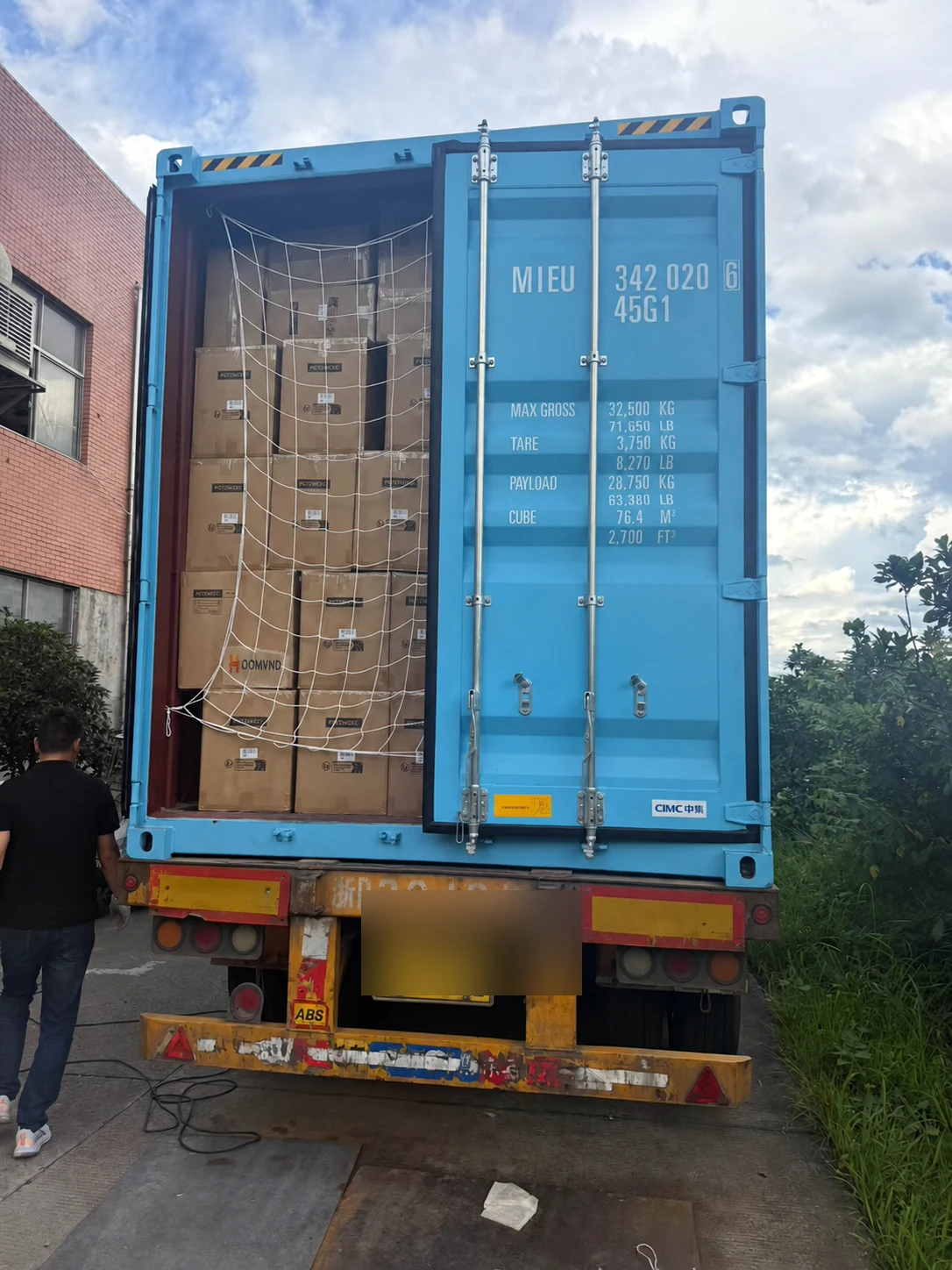
Shipment coordination is the final handover, not proof that earlier controls were completed. Before handover, confirm the final packed scope, required shipment documents, carton and label references, responsible contacts and any open deviation. Where substitutions could affect timing, ask what requires approval before a substitute is used and how the resulting document revisions will be closed.
Service: Can the Supplier Keep Decisions and Changes Visible?
For a B2B cat tree project, service is visible in the record of decisions. Confirm who owns commercial communication, specification questions, sample feedback, production exceptions, inspection findings and shipment documents. One contact may coordinate several roles, but ownership should be clear enough that an unresolved item does not disappear between teams.
Written confirmation is especially important when the product changes. A useful record shows the original requirement, requested revision, affected parts or documents, approval status and effective version. Sample feedback should close with an answer or a documented exception. Repeat orders should also identify whether the product, hardware, manual, packaging or labels changed from the previous approved version.
Problem handling should be evaluated in the same way. Ask how a claim or deviation is identified, what evidence is requested, who proposes the disposition and how the outcome is recorded for the next order. This does not guarantee that problems will not occur. It shows whether the supplier can keep the issue, decision and follow-up visible.
What to Verify During a Factory or Video Review
A factory or live video review can help a buyer observe how product references and components are handled, but appearance alone does not prove quality, capacity or delivery performance. A tidy area or a maintained machine is an observation, not a conclusion about the finished order. Use the review to ask for evidence at the points where work and documents meet.
- Follow the product flow from component identification through assembly and packing.
- Ask where the current specification and approved sample or reference are available.
- Check how similar boards, covered posts, hardware packs and labels are identified or separated.
- Review how sample changes and production substitutions are recorded.
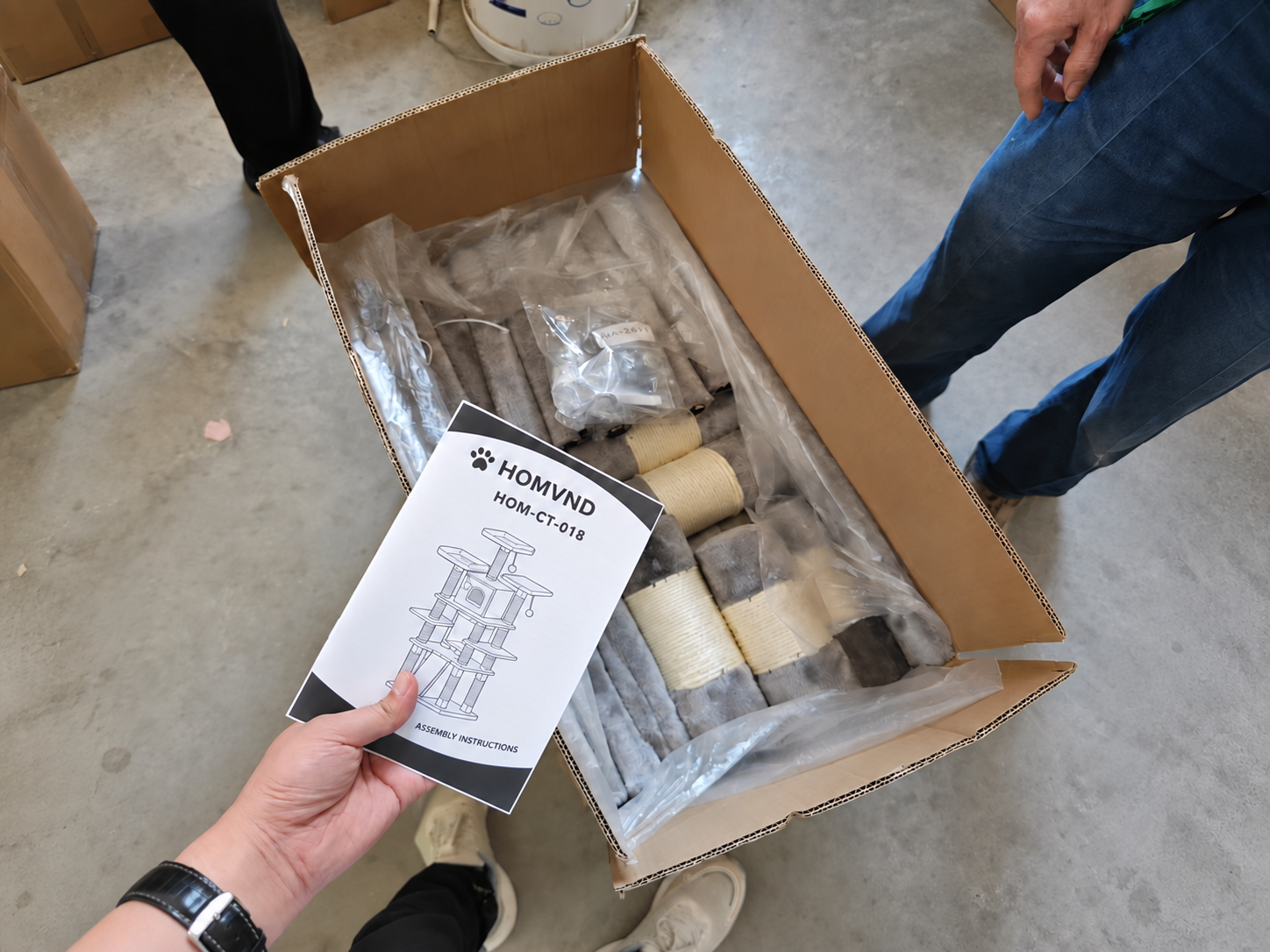
- Observe the hardware, manual and packing checks for the named project.
- Ask to see relevant QC, deviation and corrective records rather than relying on general statements.
A remote review can focus on the same evidence: dated views of the relevant area, close views of part codes or records, and a clear link to the named sample or production unit. Neither a visit nor a video verifies every supplier statement. It adds observable context to the document review.
Buyer Due Diligence Checklist for Cat Tree Suppliers
Use the following eight checks as a comparison sheet. Replace general wording with the actual SKU, project documents, approval owners and required evidence.
- Confirm the product, specification and quotation scope.
- Review the approved sample status and revision evidence.
- Review component identity and substitution controls.
- Review QC, assembly, hardware and packaging evidence.
- Confirm price, quantity, packing and commercial assumptions.
- Confirm schedule assumptions and buyer dependencies.
- Confirm change, deviation and exception communication.
- Review shipment documents and handover responsibilities.
What Evidence Should Buyers Request?
The evidence request should be specific enough that two suppliers can answer against the same project. Not every supplier will use the same document format, and not every project needs every record. What matters is that the answer can be connected to the named cat tree, current revision and decision point.
| Question | Evidence to request | Why it matters |
|---|---|---|
| What specification will production follow? | Current specification, drawing or component/BOM reference | Establishes the production reference. |
| How are sample revisions recorded? | Revision log, approval record and current sample status | Keeps approved changes visible. |
| How are substitutions controlled? | Substitution request and buyer-approval record | Prevents an undocumented component or material change. |
| How are hardware and instructions checked? | Hardware list, part codes and current manual | Connects the packed set to the assembly reference. |
| How is packaging approved? | Packing specification, packed-unit photos, labels and required measurements | Connects the final packed set to project and channel requirements. |
| What assumptions support the schedule? | Production timeline, readiness status and approval dependencies | Clarifies delivery planning and open decisions. |
| How are production deviations reported? | Exception, nonconformity or corrective record | Makes the issue, disposition and recheck visible before shipment. |
Documents should agree with one another. A current specification paired with an obsolete manual, or a packing photo with no SKU or revision reference, leaves the buyer to guess which version applies. Close those conflicts before treating the evidence set as the production reference.
How This Fits into a Cat Tree Sourcing Program
Supplier due diligence is one part of a cat tree program. Product requirements still need to become a specification; the sample needs an approval and revision record; QC needs project-specific checkpoints; packaging needs a defined packed scope; and production readiness depends on closed approvals and visible responsibilities. QCDS helps organize the comparison, but it does not replace those project records.
After the supplier-evidence review, return to the broader sourcing framework for material, structure, packaging and production questions. When the next step is product or commercial discovery, use the current collection rather than turning this article into a manufacturer or quotation landing page.
Review current cat tree and pet furniture product directions after completing the due-diligence comparison.
Explore Pet Furniture & Cat Trees