
Flat-pack bookshelves and bookcases for wholesale, ecommerce and private-label furniture ranges.
Bookshelves and Bookcases for Wholesale and Private Label
Choose the storage architecture before treating a bookshelf as a colour variation. A stackable shelf, adjustable bookcase, ladder unit, rotating design, glass display frame and tree-format bookcase each create a different footprint, access pattern, component set and assembly brief. HOMVND works with professional furniture buyers to define the selected format, dimensions, materials, finish direction, hardware, packaging and approval criteria for a project.
Start with the Bookshelf Format, Not the Tier Count
The same number of shelves can produce very different furniture. Define what the range needs to store, how users reach it and how the unit relates to the room before comparing finishes.
Straight and Adjustable Bookcases
A conventional open bookcase gives buyers a familiar rectangular format. Adjustable shelf positions can help a selected model accommodate different item heights, but the available positions and usable dimensions must be confirmed for that model.
Stackable or Reconfigurable Formats
A format designed around connected sections changes the configuration, joining hardware and instruction sequence. Document the approved arrangement and overall dimensions; do not treat stackability as a feature of every bookshelf.
Ladder and Mixed-Storage Units
Graduated shelves create different display depths from top to bottom. A removable fabric drawer adds concealed storage and another material/component group to the project specification.
Display-Led Metal and Glass Bookcases
An open metal frame with glass shelves serves a different display task from a panel bookcase. Frame finish, glass-shelf dimensions, supports, component separation and packing details belong to the named project.
Rotating and Shaped Bookcases
Rotating or tree-format designs use the surrounding space differently. Record the overall footprint, maximum span, required operating clearance, component orientation and intended storage task before sample approval.
Compare Current Bookshelf and Bookcase Formats
These six published models show distinct storage architectures within the current 20-product bookshelf/bookcase family. Every size, material and colour below belongs only to the named model.
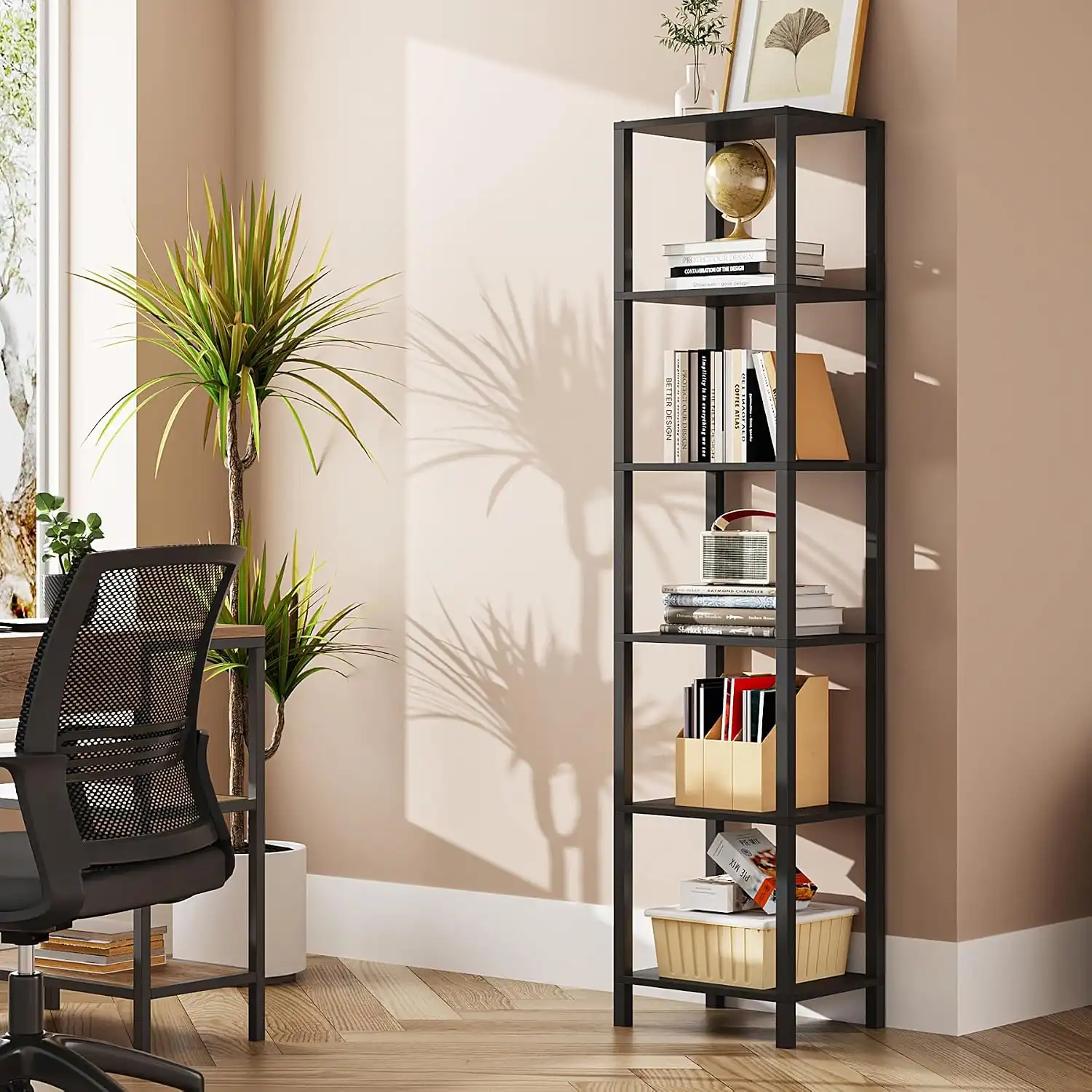
6-Tier Stackable Bookshelf for Compact Spaces
- Model
- BS01BK006
- Recorded size
- 27 × 37 × 166 cm
- Material
- Particleboard and MDF
- Colour
- Black
The connected-section format can be evaluated as a tall vertical arrangement or as the configurations documented for the selected project. Confirm the approved arrangement, connections, shelf proportions and instruction sequence before quotation.
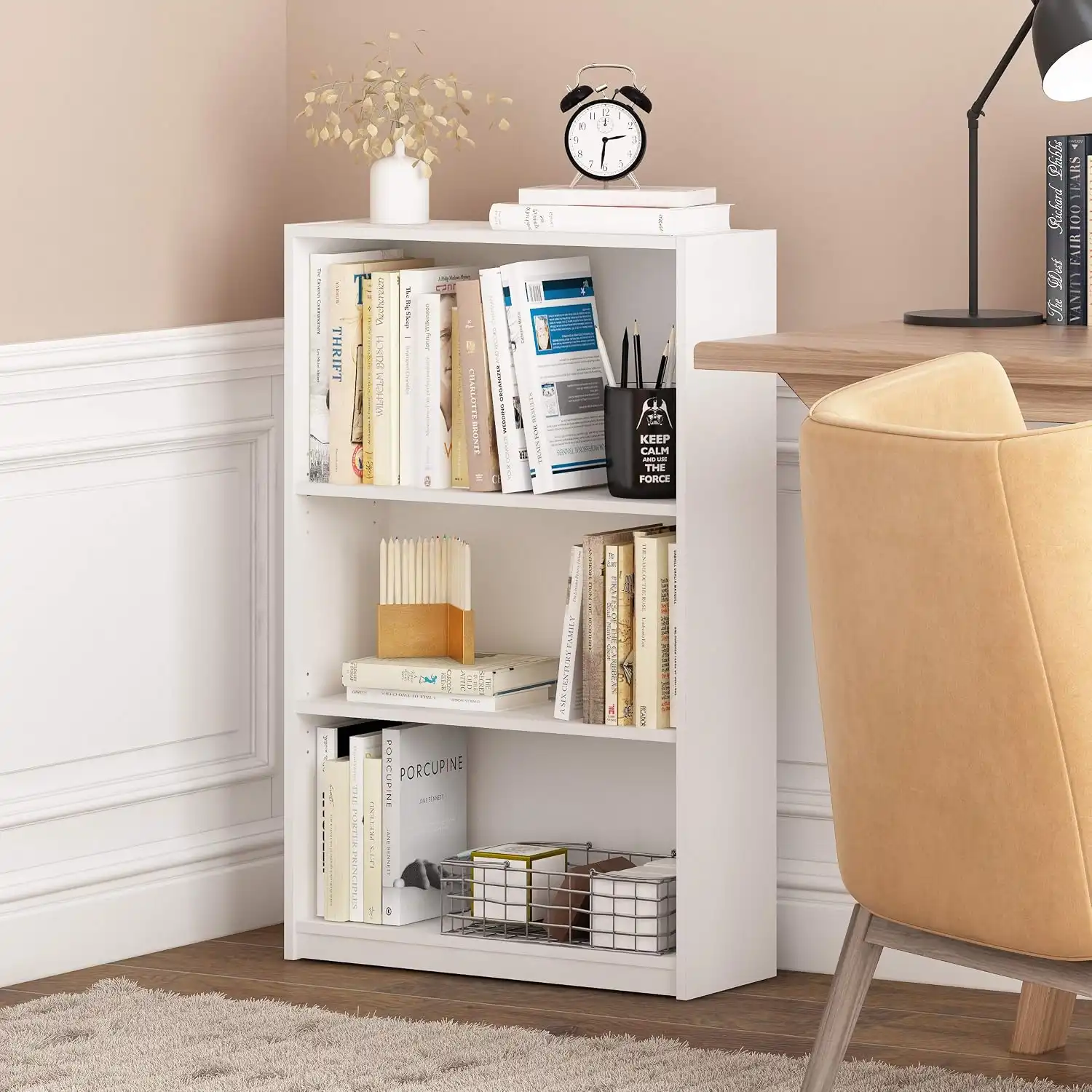
3-Tier Adjustable Bookcase for Home Office
- Model
- HOM-BC-01WH001
- Recorded size
- 62.2 × 24.1 × 102.4 cm
- Material
- Engineered wood
- Colour
- White
This shallow open bookcase uses adjustable shelf positions to support a mixed display of books, folders or objects. Define required usable shelf heights and confirm the approved positions instead of assuming unlimited adjustability.
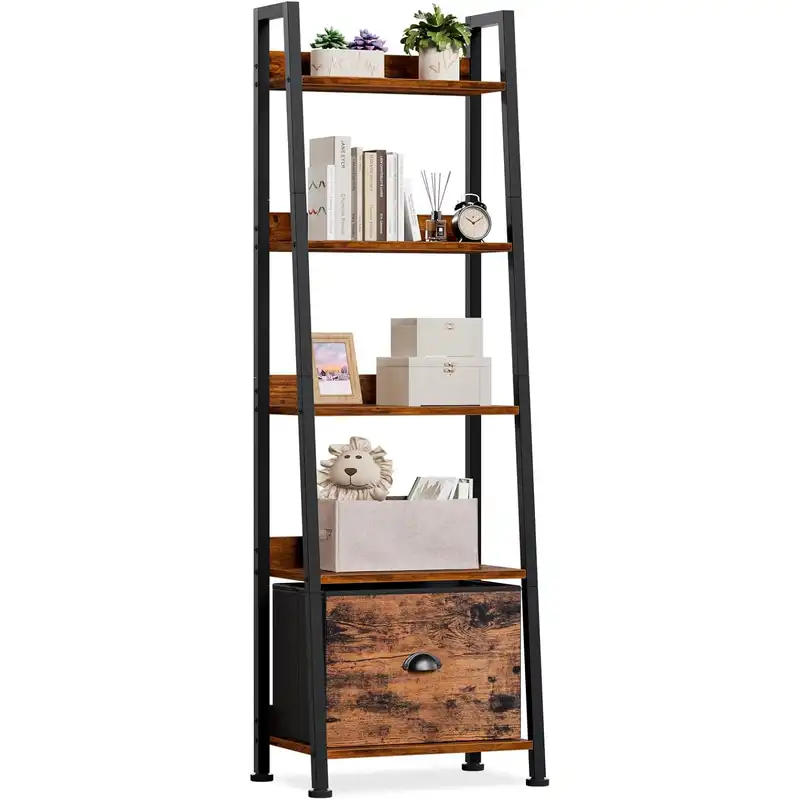
5-Tier Ladder Bookshelf with Removable Drawer
- Model
- HOM-BS-03RB001
- Recorded size
- 42 × 29 × 141 cm
- Material
- Particleboard, black metal frame and fabric drawer
- Colour
- Rustic brown with black frame
Graduated shelves create different display depths, while the removable fabric drawer adds concealed storage. The panel sizes, frame finish, drawer specification and assembly position labels should remain aligned in the project record.
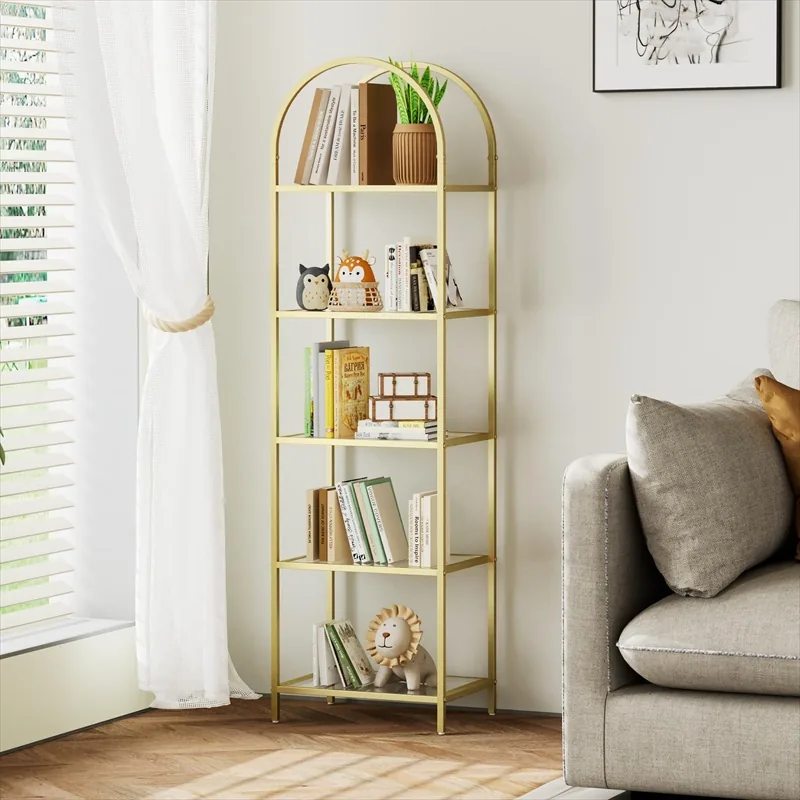
Arched Five-Tier Glass Bookcase
- Model
- HOM-BS-571G
- Recorded size
- 35.1 × 30 × 145 cm
- Material
- Metal frame and tempered-glass shelves
- Colour
- Golden
The arched metal frame and transparent shelves make this a display-led format rather than an enclosed storage cabinet. Confirm shelf dimensions, supports, frame finish and component protection for the approved model.
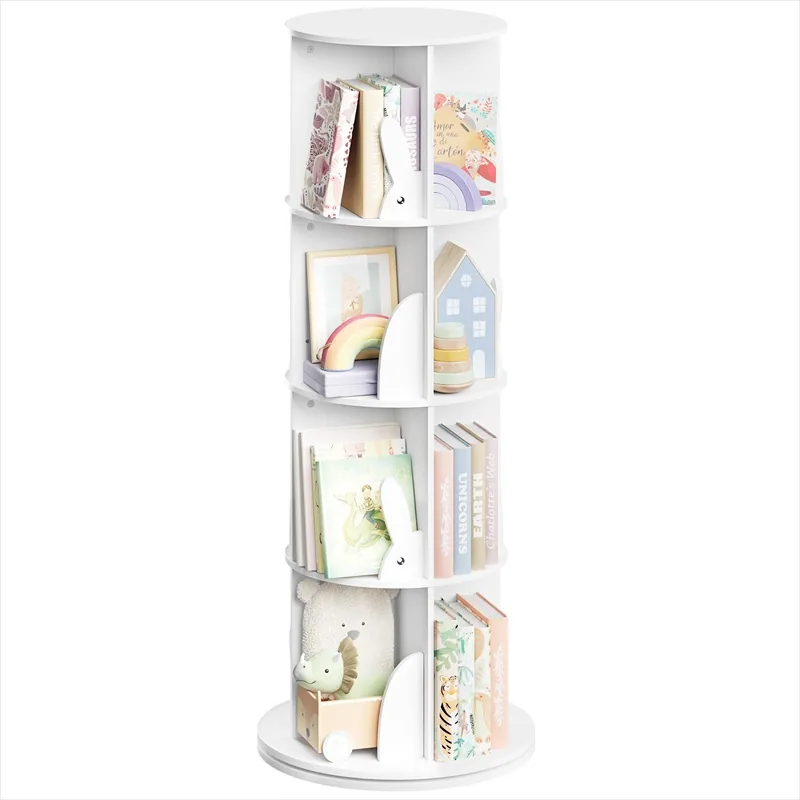
Four-Tier Rotating Bookcase with Bunny Panels
- Model
- HOM-BS-0124W
- Recorded size
- 50 × 50 × 128 cm; circular base
- Material
- MDF and metal swivel plate
- Colour
- White
The rotating circular arrangement provides access to compartments around the unit. Buyers should specify the intended user group, item dimensions, operating clearance, panel details and destination-market requirements without inferring a family-wide suitability claim.
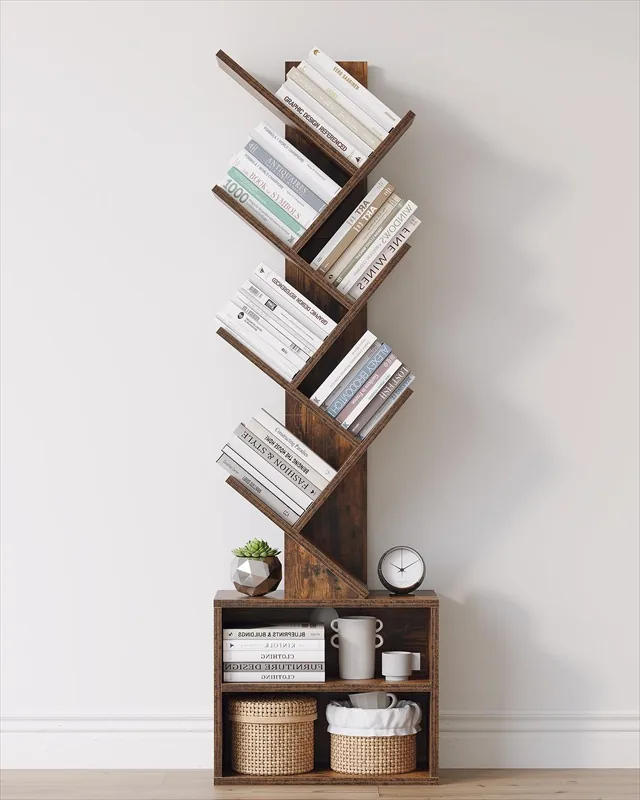
Tree Bookcase with Open Base Storage
- Model
- HOM-BS-474R
- Recorded size
- 37.1 × 20.1 × 120.4 cm
- Material
- Engineered wood
- Colour
- Brown
Angled shelves divide books into visible groups, while the open base provides a second storage zone. Define the intended book dimensions, lower-compartment layout, panel finish and part identification for the approved configuration.
Six Starting Formats for Range Planning
| Model | Format | Recorded size | Recorded material | Recorded colour | Buyer decision focus |
|---|---|---|---|---|---|
| BS01BK006 | Connected / stackable six-tier format | 27 × 37 × 166 cm | Particleboard and MDF | Black | Approved configuration, connections and vertical footprint |
| HOM-BC-01WH001 | Three-tier adjustable open bookcase | 62.2 × 24.1 × 102.4 cm | Engineered wood | White | Usable shelf spacing and mixed-item storage |
| HOM-BS-03RB001 | Ladder shelves with removable drawer | 42 × 29 × 141 cm | Particleboard, metal frame and fabric drawer | Rustic brown and black | Graduated display depth and concealed storage |
| HOM-BS-571G | Arched metal frame with five glass shelves | 35.1 × 30 × 145 cm | Metal and tempered glass | Golden | Display use, supports, finish and component protection |
| HOM-BS-0124W | Four-tier rotating circular format | 50 × 50 × 128 cm | MDF and metal swivel plate | White | Operating clearance, intended users and compartment access |
| HOM-BS-474R | Tree shelves with open base storage | 37.1 × 20.1 × 120.4 cm | Engineered wood | Brown | Angled-shelf item dimensions and lower storage layout |
Use this table to choose a starting architecture. It does not establish load capacity, stability, suitability, restraint requirements, packaging performance or compliance for another model.
Define the Bookshelf Project Before Quotation
Stored-Item Dimensions and Access
Describe the books, folders, toys or display objects the range is intended to hold, using relevant dimensions rather than a promised item count. Identify the required access pattern and storage type.
Footprint, Height and Clearance
Provide target width, depth and height together with any maximum shelf span, rotation clearance, drawer clearance or wall relationship. A base footprint and the widest upper shelf are not always the same measurement.
Configuration and Installation Context
State whether the selected model is floor-standing, connected, wall-related or rotating. Restraint, anchors, wall substrate, instructions and destination-market requirements are model- and project-specific.
Materials, Surfaces and Visible Edges
Specify material and surface requirements by component, including frame or panel colour, glass or fabric components, visible-edge treatment and any approved sample reference.
Hardware, Joining and Assembly
Record the selected joining system, mating components, hardware identity, orientation, quantity and instruction revision where applicable.
Packaging and Product Identity
Confirm the SKU and revision, carton identity, verified packed fields, component layout, separation/protection needs, hardware organisation, labels and current manual.
Quantity, Channel and Approval
Share the target market, sales channel, expected quantity and the criteria the sample must satisfy. Final terms depend on the selected model and approved project.
Build a Bookshelf Range Around Meaningful Differences
A useful assortment does not need every shelf count in every colour. It can combine formats that solve different storage tasks: a shallow adjustable bookcase, a narrow tree shelf, a ladder unit with concealed storage, a display-led glass frame or a rotating compartment design.
For a private-label project, define which differences are intentional and which fields must stay consistent across the range. Dimensions, materials, finish references, component naming, hardware, instructions, packaging and labels should be controlled for each model and revision. Shared styling does not prove shared construction or shared packaging.
For material decisions, review MDF and particle board and TFL and HPL surface systems. For the controlled product-definition record, use the furniture product specification sheet.
From Range Brief to Approved Bookshelf Specification
- Define the Buyer TaskConfirm the target market, sales channel, intended stored items, room context, footprint, access pattern and expected quantity.
- Select a Starting ArchitectureChoose a current adjustable, stackable, ladder, glass-display, rotating or tree-format model and record the exact SKU.
- Develop the Project SpecificationAlign component dimensions, materials, surfaces, visible edges, hardware, assembly information, labels and packaging with the brief.
- Review the Sample and ReferencesCheck the sample against the agreed dimensions, storage access, finish, hardware, assembly, documents and packaging criteria. Sample approval does not by itself prove mass-production conformity.
- Confirm Production PreparationFinalize the approved model, revision, quantity, packaging and documentation before standard production planning begins.
For the broader supplier-evaluation and procurement framework, review the Furniture Sourcing Guide.
Commercial Planning Baselines
MOQ
Furniture MOQ starts from 200 pieces.
Samples
Samples typically take 7–10 days.
Production
Standard production generally takes 35–45 days after specification and approval confirmation.
Project-Specific Confirmation
These are furniture-program planning baselines. Final terms depend on the selected model, specification, packaging, quantity and approval status. They are not fixed terms for every SKU and do not confirm mixed-SKU acceptance.
Bookshelf Sourcing FAQ
What should a buyer send for a bookshelf quotation?
Send the target market and channel, intended stored items, required overall dimensions, usable shelf or compartment needs, selected starting model, material and finish references, installation or operating-clearance context, expected quantity, packaging inputs and sample-approval criteria. Keep unknown fields open instead of estimating them.
Do all HOMVND bookshelves use the same material or construction?
No. The mapped current models include engineered-wood, particleboard/MDF, particleboard/metal/fabric, and metal/tempered-glass constructions. Material, hardware, configuration and packaging facts remain attached to the named SKU and approved project.
What are the planning terms for a bookshelf project?
Furniture MOQ starts from 200 pieces, samples typically take 7–10 days, and standard production generally takes 35–45 days after specification and approval confirmation. Final terms depend on the selected model, specification, packaging, quantity and approval status.
Planning a Bookshelf or Bookcase Range?
Share the target market, sales channel, starting format, intended stored items, required dimensions, finish direction, quantity and packaging needs. HOMVND can review a current model or a defined private-label brief and confirm the next specification step.
For office-context discovery, browse home office shelving and storage.