
Furniture Sets, Multipacks and Multi-Carton Products: What Private-Label Sellers Should Specify
Distinguish a two-stool multipack, a fixed table-and-stool set and one table shipped in two cartons. Use a procurement comparison and purchase-order example to align sales units, product data and warehouse handling.
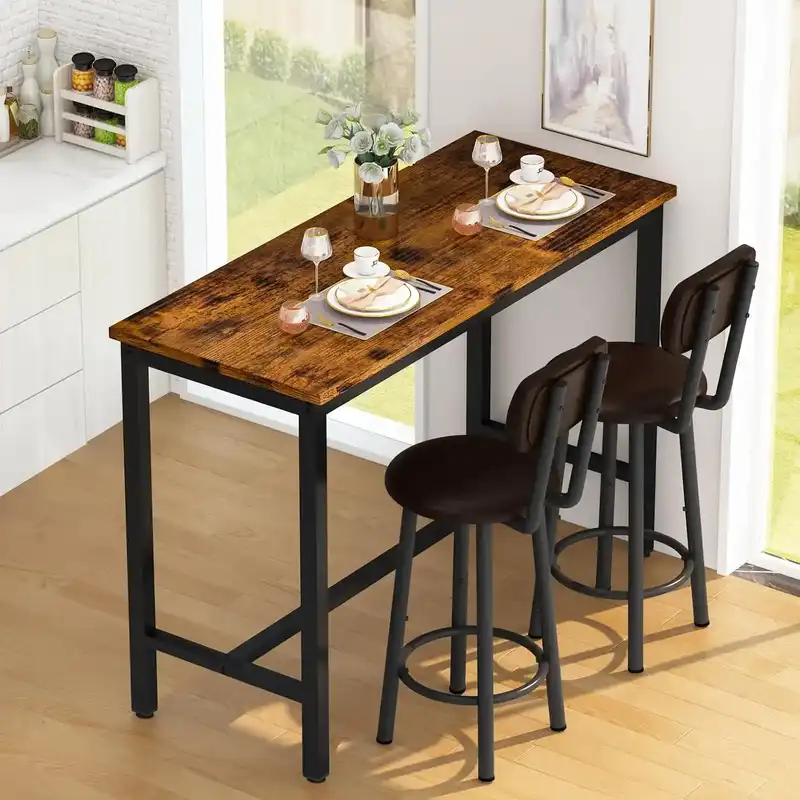
A customer orders a pair of stools. Your purchase order says “100 units.” The supplier counts individual stools, while your warehouse expects 100 complete pairs. The order can look consistent until someone asks what one unit actually contains.
Before ordering furniture for a private-label range, define three things separately: what the consumer buys, how the supplier packs it, and how the warehouse recognises a complete sales unit. This matters whether you plan to sell on bol, Allegro or your own store. A product identifier alone does not explain the carton contents or the warehouse picking rule.
Three Configurations That Need Different Instructions
A multipack contains repeated items: two identical stools sold together as one pair. A fixed furniture set contains an agreed mix: one bar table and two stools sold together. A multi-carton product is one furniture item split across transport cartons: for example, one flat-pack table with its components in two boxes. These are practical purchasing distinctions; a marketplace may classify offers differently.
The first two describe the composition of the offer. The third describes its packing. A multipack or fixed set could also use several cartons, so “set of two” and “two cartons” are not interchangeable.
For concrete composition examples, HOMVND’s public product pages identify HOM-BS-01RB001 as two matching counter stools and HOM-BT-LIPH-47 as one bar table and two stools. These pages establish the furniture included. They do not establish the shipping-carton count, assigned GTINs or availability on bol or Allegro. Confirm those separately for the proposed order.
Procurement Comparison: From Sales Unit to Complete Delivery
Use this comparison to distinguish the sales composition from the shipping arrangement. Confirm the packing details for the named models with the supplier before ordering.
| Configuration | What the customer buys | Shipping cartons |
|---|---|---|
| Two-stool multipack | One pair of matching stools | Confirm cartons per pair |
| Fixed table-and-stool set | One table and two stools | Confirm cartons per set |
| One table in two cartons (hypothetical example) | One complete table | Two cartons, both required |
A multipack and a fixed set describe the sales composition; multi-carton describes the shipping arrangement, so either sales configuration can also be multi-carton.
For a fixed table-and-stool set, agree the carton-to-contents mapping and release one complete set only when it accounts for one table and two matching stools. A table alone or two stools alone remains incomplete for that offer.
Also ask whether a transport master carton contains several complete sales units. A master carton holding several pairs is different from the carton or cartons needed for one pair. Record sales units per master carton and cartons per sales unit in separate fields. State whether the supplier ships a ready-to-dispatch sales unit or whether an agreed warehouse kitting step is needed.
A Purchase-Order or Supplier-Handover Example
The following wording uses the confirmed two-stool composition. The buyer SKU and order quantity are illustrative, and the unresolved packing fields are intentionally left open. Replace the placeholders and obtain approval before releasing the affected packaging or label work.
Order quantity: 100 PAIRS | Price basis: per PAIR | Total: 200 stools
Buyer SKU: EXAMPLE-STOOL-PAIR-RB. Supplier model: HOM-BS-01RB001. Variant and product revision: [insert approved reference].
Sales unit: One PAIR contains two identical stools of the approved version. The order is for 100 pairs, not 100 individual stools or 100 cartons.
Supplier packing unit: [confirm ready-packed pair, multiple pairs in a master carton, or components requiring agreed kitting]. Shipping cartons per pair: [supplier to confirm]. Pairs per master carton, if used: [confirm / not applicable].
Per-carton record: [carton type/number, contents and quantities, sealed dimensions with units, gross weight, packaging revision and pack-out reference].
Product data: sales unit = one pair; included furniture = two matching stools. Buyer sales-unit GTIN = [buyer to confirm]; any separately sold single-stool identifier = [confirm / not applicable]. No identifier is authorised for printing by this example.
Carton artwork: show the buyer SKU, supplier model, applicable variant/revision, contents, and the agreed carton or master-carton quantity. If a pair is split across cartons, add carton number/total and the agreed linkage reference. Artwork file/version and final approver = [complete]. Platform or carrier labels = [separate approved instruction].
Warehouse rule: receive and dispatch one PAIR only against the approved contents and carton mapping. Record shortages against the missing stool, component or carton type; do not release a partial pair as a complete sales unit. Warehouse acceptance of the packing and identification method = [name/date/reference].
For the fixed table-and-stool set, change the unit to SET and write “one table plus two stools per SET”; keep its carton count awaiting confirmation. For the hypothetical two-carton table, use TABLE as the unit and specify one carton 1 plus one carton 2 per TABLE. The numerical carton total alone cannot express either rule.
Keep Product Identifiers, Carton Identifiers and Inbound Labels Separate
Sales-product identity. Agree exactly what each buyer SKU and GTIN represents. A pair should not silently use an identifier whose product record describes a single stool. GS1’s GTIN Management Standard treats a fixed physical assortment as a trade item and requires a new GTIN when its defined item composition changes. Distinguish a manufactured furniture set from a seller-created bundle; do not assume the stools or table have separately saleable product records just because they are listed as set components.
Transport-carton identity. A box may contain a complete sales unit, several sales units, or only part of one. GS1’s General Specifications, Release 26.0, sections 1.3.1.12 and 3.9.6, provide an Individual Trade Item Piece identifier, AI (8006), combining the complete item’s GTIN with a piece number and total count for a piece that is not traded independently. This does not call for a separate product GTIN for every partial-product carton. Agree any machine-readable implementation with the receiving system; an ordinary “1 of 2” carton mark is not itself an ITIP barcode.
A GS1 SSCC identifies a logistic unit, such as a parcel, case or pallet. It serves a different purpose from the GTIN describing the trade item. A master case traded as its own packaging level also needs a separate identification review. Ask which identifier the warehouse expects to scan and what record that scan opens.
Platform inbound and shipping labels. These connect physical stock or packages to a particular fulfilment workflow. They do not determine what the consumer bought. For Logistiek via bol inbound shipments, bol instructs sellers to match the items and barcodes to the pre-advice and leave only one scannable article barcode visible. Its shipment process also specifies shipping labels for the delivery packages or pallets. Keep article identification and shipment labelling as separate instructions.
Bol’s bundle policy has additional conditions concerning GS1 registration, component offers, content and brand permission. Confirm whether your proposed offer is a standard furniture set, an identical-item bundle or another bundle type before choosing the listing route. A supplier’s “set” description does not establish platform acceptance. These bol rules are not Allegro rules; sellers using Allegro should check the current category and selected fulfilment service separately. Neither named HOMVND product is presented here as approved or listed on either channel.
Product composition and cited GS1/bol sources checked on November 10, 2026. Check the current requirements for the actual offer and delivery route before finalising labels or sending stock.
Make the Same Decision Visible in Three Places
- Purchase order: name the order unit, contents per unit, quantity and price basis, packing unit and any pending pack-out decision.
- Product data: link the buyer SKU and confirmed identifier to the exact sales composition. Make the title, included-item fields, images and manual consistent with that offer. Keep shipping-carton count separate.
- Cartons and warehouse handover: specify contents, carton types/counts, quantity basis, traceability and the receiving/picking rule. Agree how to handle an incomplete delivery or return.
For a two-carton item, verify that the warehouse can distinguish carton types and compatible revisions, rather than merely record two scans. Require one carton 1 and one carton 2; two cartons marked “1 of 2” do not make a complete table. Hold an unmatched carton from complete-order dispatch. If it needs an instance-level link to keep a particular pair of cartons together, define that reference and its use before dispatch. A GTIN or buyer SKU alone identifies a product type, not a particular physical set of boxes.
Use the product data handover checklist for the wider listing pack, the one-carton versus two-carton guide to assess packing options, and private-label development to control SKU-specific artwork approval. The decision here comes first: define one sale, then make the purchasing, product and warehouse records describe that same complete unit.
For a furniture quotation, send the model reference, the contents of each sales unit, the number of sales units to order and your destination warehouse’s packaging requirements.