
Record Player Stand Sourcing Guide
Compare record-player stand layouts, check equipment and sleeved-record clearances, and define the drawing a supplier should quote.
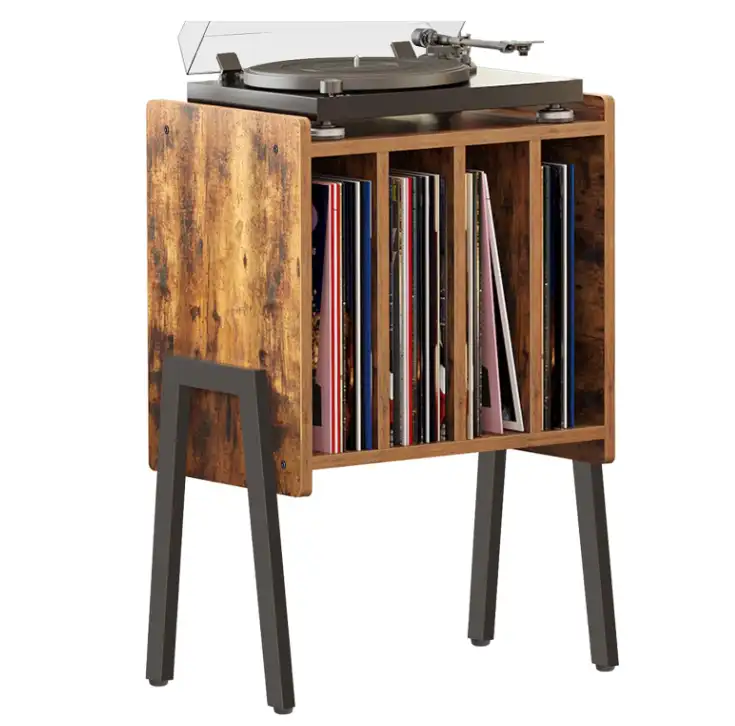
Compare the equipment platform and upright-record storage as separate fit tasks, then ask suppliers to quote the same drawing and configuration. Overall furniture dimensions alone do not establish whether a turntable’s feet, open dust cover, connectors or sleeved records will fit.
Start with the layouts below. For the wider assortment, browse the Living Room Furniture Collection.
Compare four record-player stand layouts
These examples show different ways to divide the space between equipment and records. Players, accessories and albums in the photos illustrate the layouts; they do not establish equipment compatibility, album capacity or tested performance. Confirm the proposed supplier, model version and drawing before treating a reference as the specification for an order.
Compact two-tier stand
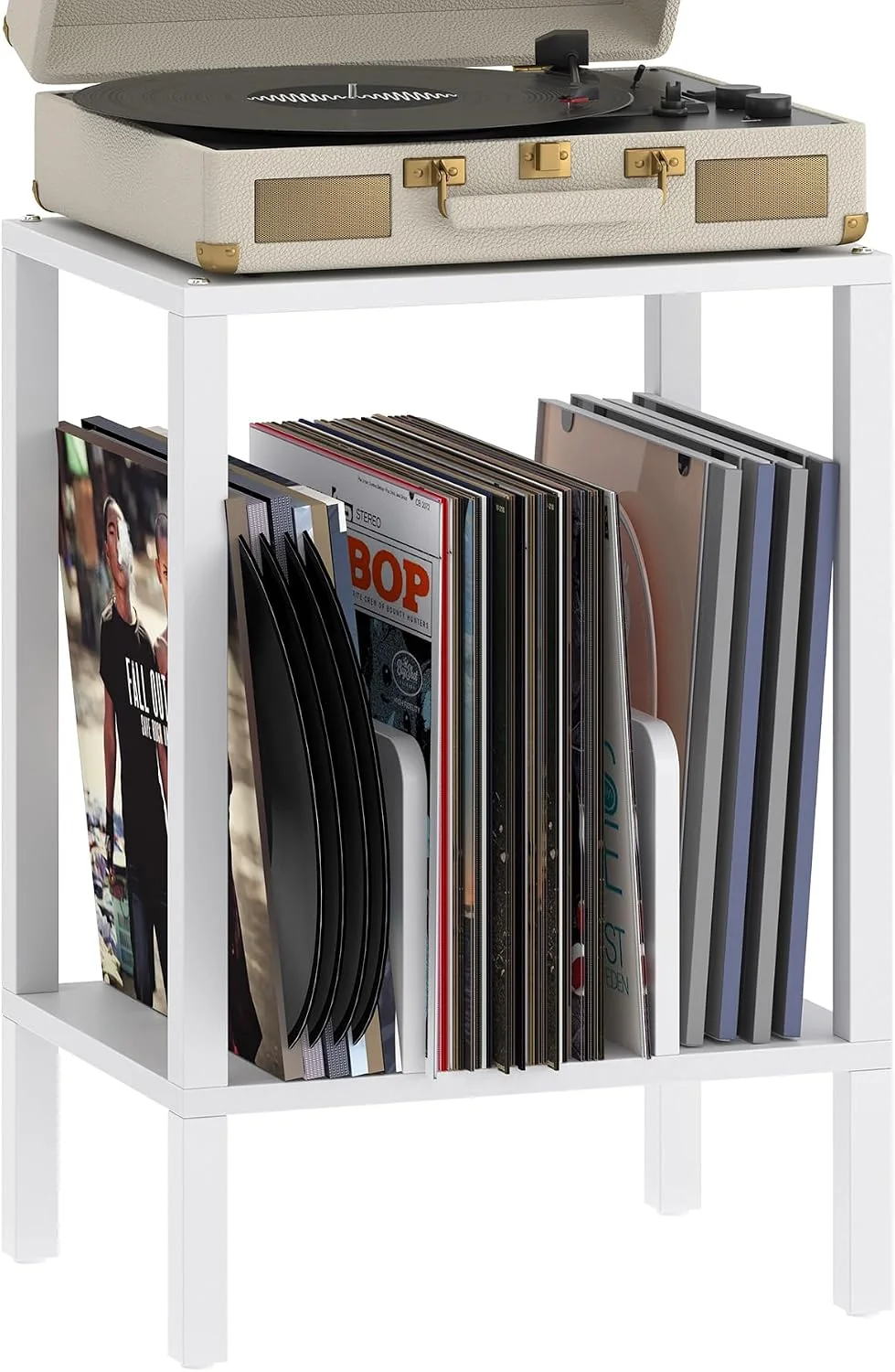
A top platform sits directly above the record shelf, with no intermediate equipment shelf. The source record identifies detachable lower dividers. This layout is worth comparing when the player and records are the main storage tasks; identify where any separate amplifier or accessories will go.
The available size graphic and recorded dimensions do not agree, so no footprint or clearance is treated as confirmed here. Ask for a drawing of the exact version, including the divider arrangement. This TUTOTAK model is shown as a structural reference; its display does not confirm that HOMVND manufactures or supplies that exact model.
Three-level open stand
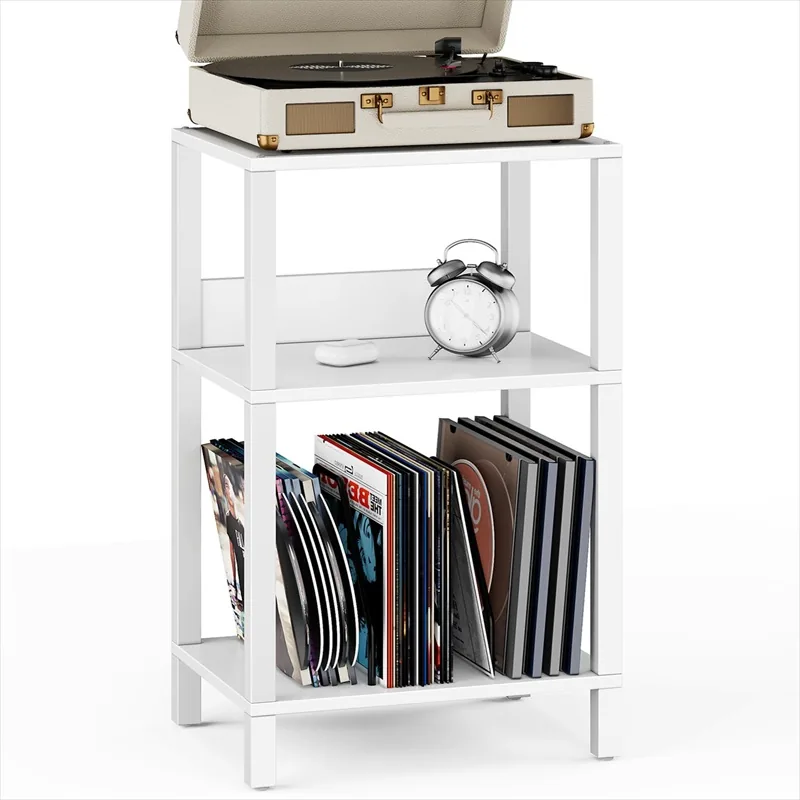
The middle shelf creates a separate position for accessories or appropriately sized equipment, above the lower record section. The current product record lists engineered-wood panels; it does not specify a particular panel substrate or grade.
Dimensions for the illustrated version remain unresolved: the size graphic and the earlier source fields differ, and the current catalogue size field is blank. Request overall dimensions, usable platform size and both shelf openings before evaluating fit. An extra level does not by itself establish enough height or ventilation space for an amplifier.
Legged record-storage cabinet
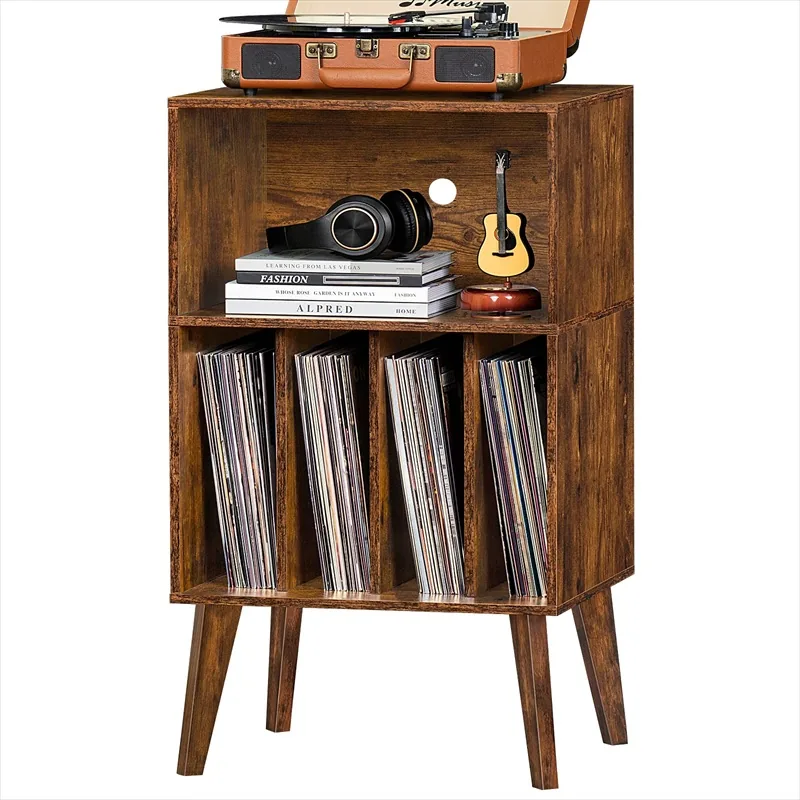
The cabinet combines a top platform, an open middle compartment and divided lower record bays. Solid-wood legs are recorded for this model; that component description does not identify the cabinet-panel material. A rear opening provides a cable route through the middle compartment.
Its recorded overall assembled size is 46 cm W × 39.9 cm D × 86.9 cm H. These are the complete furniture dimensions, not the usable top or internal bay dimensions. Confirm each opening, divider spacing and the cable-hole position and clear diameter for the quoted version. Cabinet sides and a back panel make these checks different from checking an open stand.
Record player stand with divided vinyl storage
The top equipment platform and the four divided record bays serve separate tasks. Vertical dividers mark distinct storage positions, while the black metal leg frame supports the cabinet layout. Measure the player platform and each record bay independently.
For selection, confirm the player’s foot positions, the usable top area between obstructions, each bay’s clear dimensions, and space for the open dust cover and rear cables. Use a version-labelled drawing for the quoted model’s dimensions; equipment shown in the photo is not a fit test.
Check the player, its feet and its operating space
Measure the intended player’s body and the positions of its support feet separately. Ask for the stand’s usable top width and depth, including any raised edges, posts or other obstructions. Overlay the foot positions on that surface drawing: a body that appears to fit can still put a foot outside the supported area. Check both the body outline and the support points rather than approving overhang from a photo.
Record the dust cover’s movement from closed to fully open, including its rearward sweep and highest point. Compare that movement with the wall, shelves and other equipment in the planned location. A closed-player measurement cannot answer an open-cover fit question.
Check the rear space with the intended connectors inserted. Include plug bodies, cable routing and access for connection or removal, following the equipment manufacturer’s instructions. For a cabinet cable hole, verify that the connector can pass through it and that the route reaches the correct compartment. A visible hole does not establish its clearance. If equipment will occupy the middle shelf, also check its manufacturer’s ventilation and access requirements.
Check records upright, including their sleeves
Give the supplier the actual outer dimensions of the records as stored, including protective sleeves, gatefolds or box sets. Compare these with the unobstructed height, depth and width of each bay. Do not substitute the stand’s overall height or the nominal record format for those measurements.
Check the route into the compartment as well as the final storage position. A record may stand inside a bay yet be awkward to insert or remove past a shelf edge or divider. Use the intended sleeved records during sample review and check the space needed to grip and withdraw them.
Specify whether dividers are fixed or removable, how they attach, and the clear width of each resulting bay. Ask suppliers to identify the configuration they have allowed for. A removable divider changes the storage layout; it does not establish load capacity or how many albums can be stored. No album-count, load or anti-vibration rating is assumed for these examples.
Ask for dimensions that make quotations comparable
Request one version-labelled drawing with the same measurement groups from every supplier. Keep confirmed dimensions separate from proposed changes and items awaiting sample checks.
| Drawing group | What the supplier should provide |
|---|---|
| Complete stand and equipment platform | Overall assembled W × D × H; base footprint; usable top outline and height; any projections or obstructions affecting the player’s feet. |
| Operating space | Open-cover envelope for the stated player; rear connector and cable allowance; cable-hole size and location; usable middle-shelf opening where applicable. |
| Record storage | Clear bay width, depth and height; insertion opening; divider positions, thickness and attachment; clearances for the intended sleeved records. |
Ask the supplier to mark any dimension it cannot yet confirm. An unresolved opening, a different divider layout or a different panel specification means the quotations are not yet for the same scope. A room-fit drawing also does not replace the load, stability or performance evidence required by your project.
Prepare a short enquiry brief
Copy this list into your enquiry and add your measurements and references. There is no need to invent values for fields that still require supplier confirmation.
- Equipment: Player model, body dimensions, support-foot positions, dust-cover movement and connector details; include any equipment intended for a middle shelf.
- Room and access: Available footprint, wall and outlet positions, cable route and access needed to operate the player and remove records.
- Records: Actual sleeve or box dimensions, preferred grouping and fixed or removable divider requirements.
- Furniture reference: Preferred layout, model reference, finish, material requirements and requested changes. Ask the supplier to confirm the proposed supply scope and version.
- Quote and sample scope: Drawing revision, quantities, destination market and distribution route; list unresolved dimensions and the fit checks to complete with the sample.
Use the furniture product specification sheet to keep the drawing, material requirements and approval record together. Use the flat-pack furniture RFQ guide for quotation scope and the furniture packaging requirements guide for the separate packed-unit and protection brief.
Share your equipment and storage brief to discuss a proposed record-stand project. Any model-specific changes or supply arrangement need confirmation against the quoted version.