
Solid Wood and Natural-Branch Cat Trees
A B2B Buying Guide
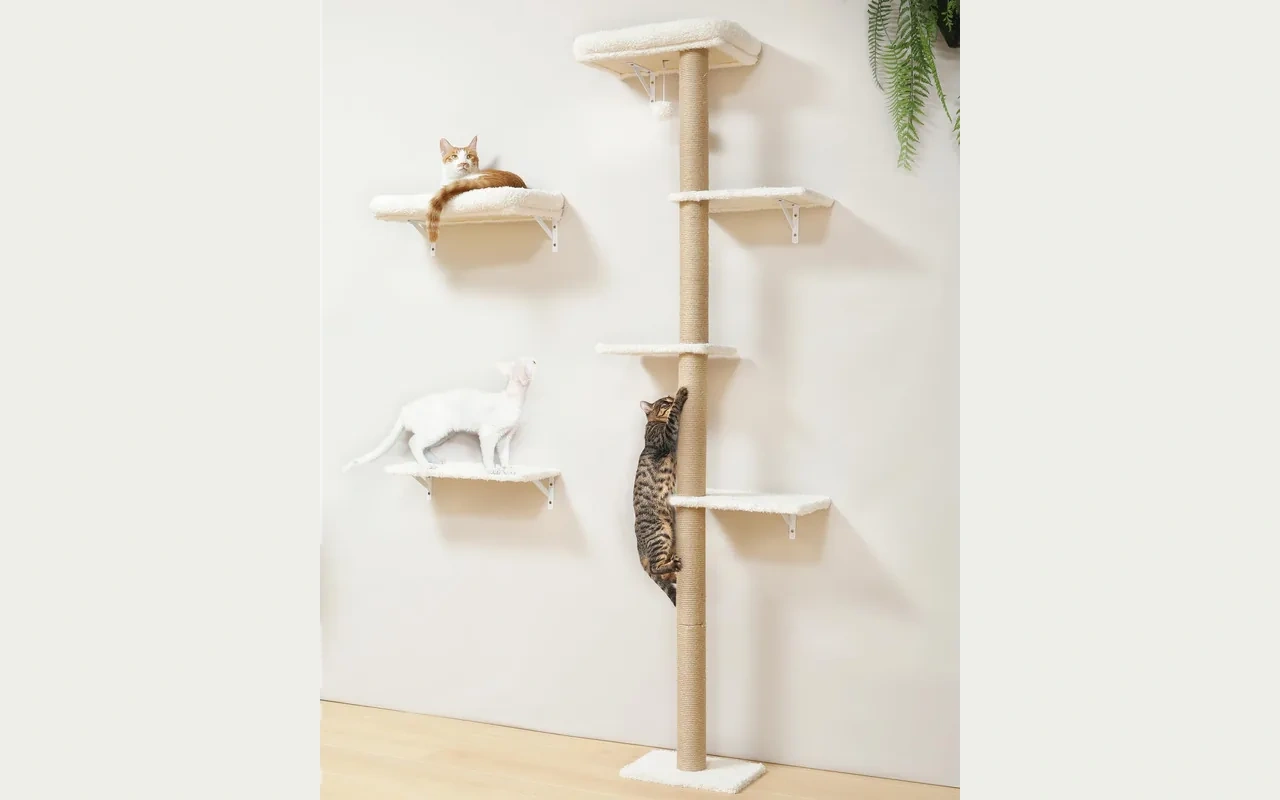
HOMVND cat furniture shown for category context.
A solid wood cat tree label should identify which parts are solid timber. A natural-branch description points to the form of particular trunks or branches. A wood-look finish describes appearance and does not establish the material underneath. One cat tree can combine natural branches, machined solid-wood parts and engineered boards; these descriptions are not mutually exclusive construction categories.
For importers, wholesalers, e-commerce assortment buyers and private-label procurement teams, the useful question is therefore: what is each component made from, and what must remain consistent across the order? Start there before comparing silhouettes, samples or quotations.
Read the Construction by Component
Separate the supporting trunk or post from the base, platforms, resting surfaces and connecting parts. Ask the supplier to identify the material of each named component, including anything hidden by rope, fabric or a decorative surface. Where a species is stated, establish which part it applies to.
For example, a solid-timber post does not identify the platform material. A natural branch does not establish the base construction. A visible grain pattern does not establish a solid-wood core. Keep those distinctions in the product specification rather than relying on a whole-product label.
Our Cat Tree Materials and Component Specifications guide covers the detailed component fields. Here, the focus is how to choose a construction and define an order when natural pieces can differ.
What Named Manufacturer Examples Actually Show
GMTPET: Natural Trunks Can Be Part of a Mixed Structure
GMTPET’s 105-44013 product listing states “Multilayer wooden boards + natural trunk + sisal columns” as its main materials. The example makes a specific point: a product described as a natural-trunk cat tree can also contain manufactured board components.
A buyer comparing this type of construction should identify which parts use the listed boards, which use natural trunks, and what lies beneath each scratching covering. The material list alone does not resolve every component or establish the construction of another model.
Pet Fun: A Post Statement Does Not Define Every Panel
In its manufacturing description, Pet Fun states that its sisal trunks are made from solid wood. Its base-plate options separately include birch multiplex. Read those statements at their stated component and option level, and confirm the selected product version rather than treating a solid-wood trunk statement as a specification for every panel.
These are third-party construction examples. They illustrate how to read a supplier’s description; they do not establish HOMVND’s materials or supply range.
Agree the Scope of Natural Variation
Natural variation needs a defined scope. Grain, visible contour and branch shape may be acceptable differences, but the buyer and supplier should agree where those differences can occur. “Every piece is unique” is not a complete batch specification.
Polish maker Kocia Chatka’s Natural range explains that natural trunks and branches mean no two pieces are identical. It says branch arrangement, wood shape and small details can differ while the commissioned item follows the chosen model’s style and construction. This is a named maker’s made-to-order approach, not a universal rule for bulk supply.
For a wholesale program, translate the intended design into two sets of requirements:
- Items to define: assembled width, depth and height; connection locations; platform and resting-area positions; usable resting space; access openings; and the intended functional layout.
- Variation to agree: branch contours, visible grain, color variation and any permitted changes in branch orientation or arrangement. State whether a change requires review before production or shipment.
Decide these boundaries for the selected design. Do not invent a universal dimensional tolerance or assume that a different branch can be substituted while all other requirements remain satisfied.
Define the Sample Approval Scope
A sample is one physical item. Before approval, agree whether it represents the exact appearance to reproduce, the selected materials and connections, or an example within an accepted range of natural variation. Those are different approval scopes.
Kocia Chatka describes sending detailed photographs of the finished item before dispatch so its customer can review the result and request small changes. That process belongs to its individual custom-order business. It does not establish that every unit in a wholesale order will receive the same photo review.
For batch procurement, agree separately how the references work together. A drawing can record dimensions and connection positions; an approved sample can show the selected assembly and finish; photographs can illustrate acceptable natural differences. Mark whether each image shows the approved sample, a variation example or an actual finished unit.
Also agree who reviews an unrepresented variation and at what stage. Use the Cat Tree development guide for the broader brief-to-sample workflow and the Cat Tree QC guide for inspection and deviation handling.
Compare Quotations on the Same Basis
Ask each quotation to identify the component materials, selected construction, configuration and agreed variation scope. Include the accessories, assembly hardware and instructions that form the complete sales unit. Compare those details before interpreting a price difference.
Packaging and delivery scope also need alignment. Establish whether the product is supplied assembled or disassembled, how projecting branches and platforms are accommodated, and what packing information belongs to the quoted version. Confirm the stated delivery basis and included transport scope rather than assuming the quote reaches your destination warehouse.
Use the same-scope quotation comparison method for the commercial comparison and the Cat Tree Sourcing Guide for packing-plan review. Natural appearance alone establishes neither higher quality nor a better margin.
Discuss Your Cat Tree Construction Brief
Explore the HOMVND Cat Tree Collection or compare existing layouts on our Modern Cat Tree page. For a project discussion, send construction references, required component materials, quantity by configuration, target market, acceptable variation and packaging or destination requirements.
HOMVND can review those inputs for project feasibility. The third-party examples in this guide do not establish that HOMVND supplies those models or a complete natural-branch range.