
Coffee Table Sourcing Guide
Compare coffee-table configurations, distinguish overall size from usable space, and define the version a supplier should quote.
Choose the storage and movement configuration first, then specify the tabletop and frame materials separately. A fixed shelf, a lift-top compartment and a nesting table set solve different room-use tasks. Glass describes a material choice; it does not replace the decision about tiers, storage or movement.
For importers, retailers and private-label buyers, the useful comparison is what each design lets the user do, which dimensions define that function, and what the supplier still needs to confirm before quoting the same scope. This guide turns those choices into a coffee-table brief. Browse the Living Room Furniture Collection for the wider assortment, or use the Furniture Sourcing Guide for supplier evaluation and the overall sourcing process.
Compare configurations against the intended use
The models below are references from the current product catalogue, not a promise that every proposed version is available. Dimensions and material descriptions are the listed catalogue specifications checked for this guide. Use a matching drawing, component specification and sample to confirm the version being quoted; the listings do not establish load ratings, mechanism performance or manufacturing identity for a particular order.
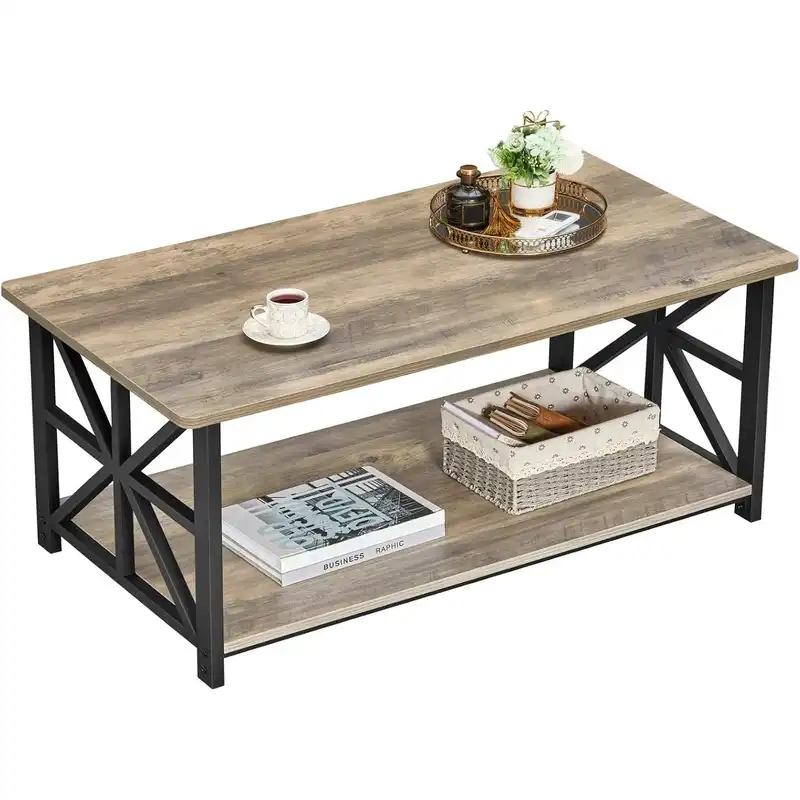
Two-tier coffee table
HOM-MVD-CT02GY001
A main tabletop and an open lower shelf, with rounded corners and X-shaped sides.
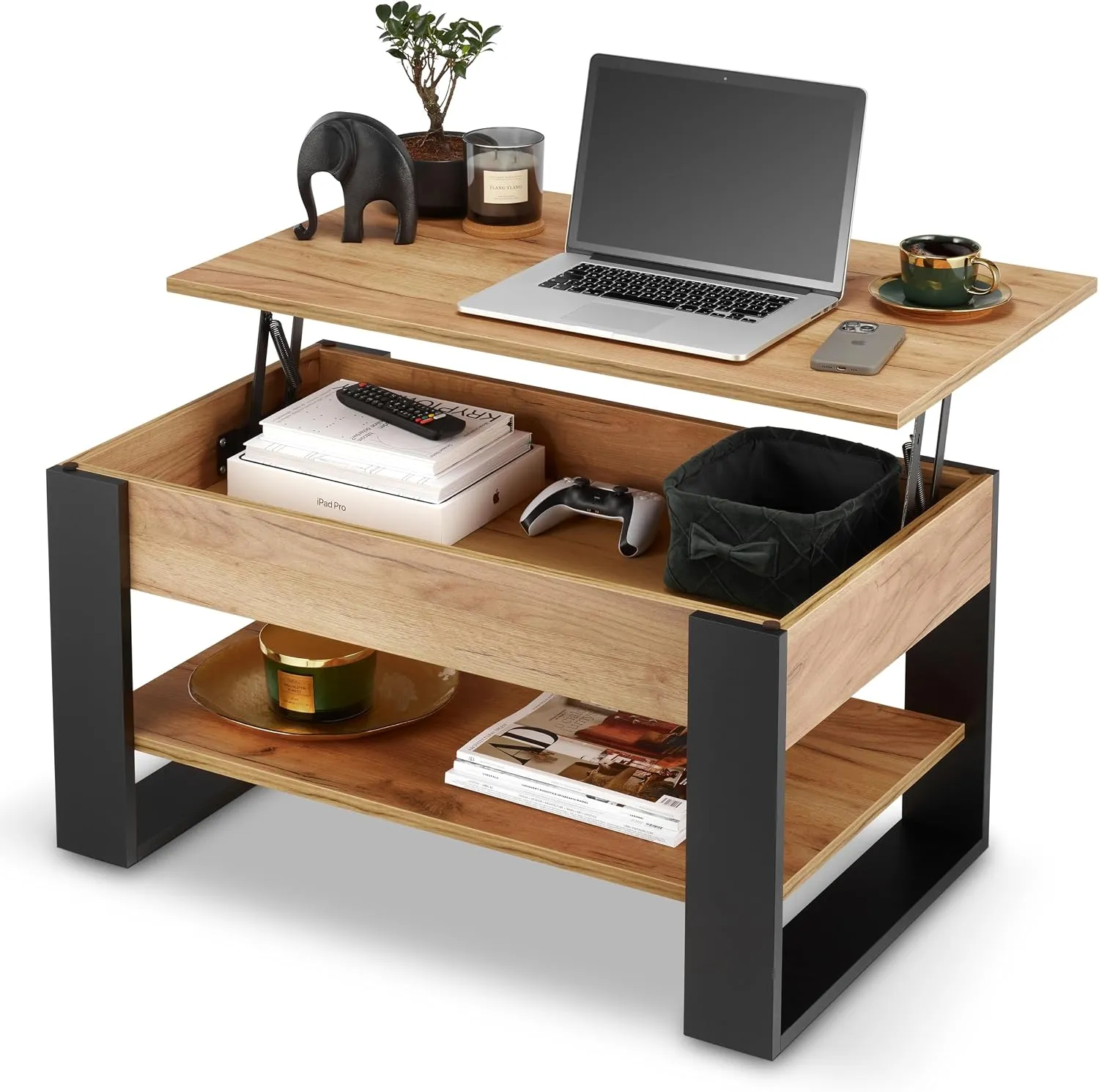
Lift-top storage coffee table
HOM-CT-LF021
A moving top covers a concealed compartment, with an open shelf below.
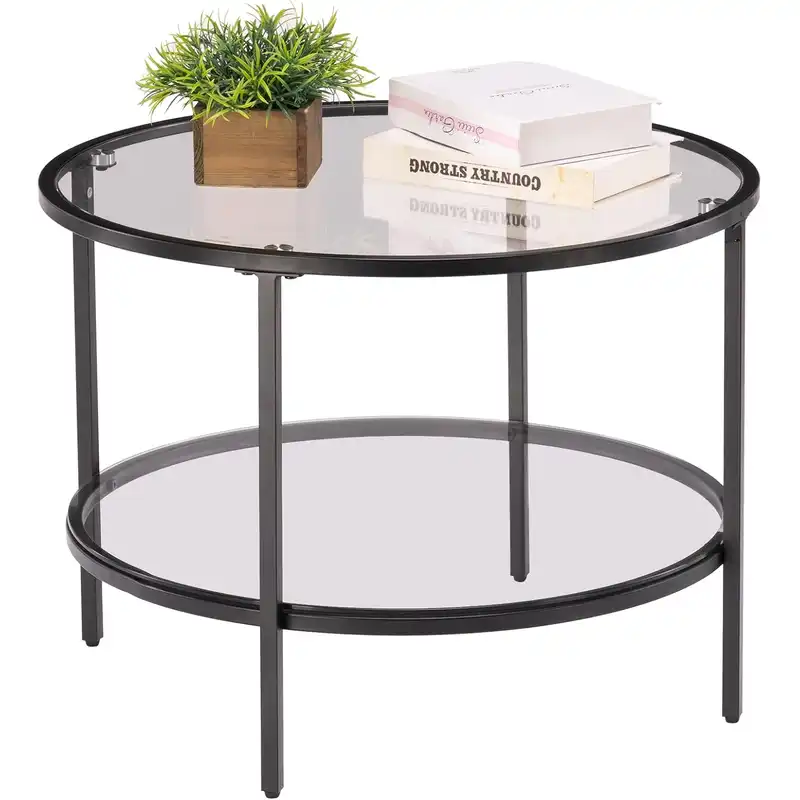
Round glass coffee table
HOM-CT-03BK001
Two clear, round surfaces keep the lower display level visible.
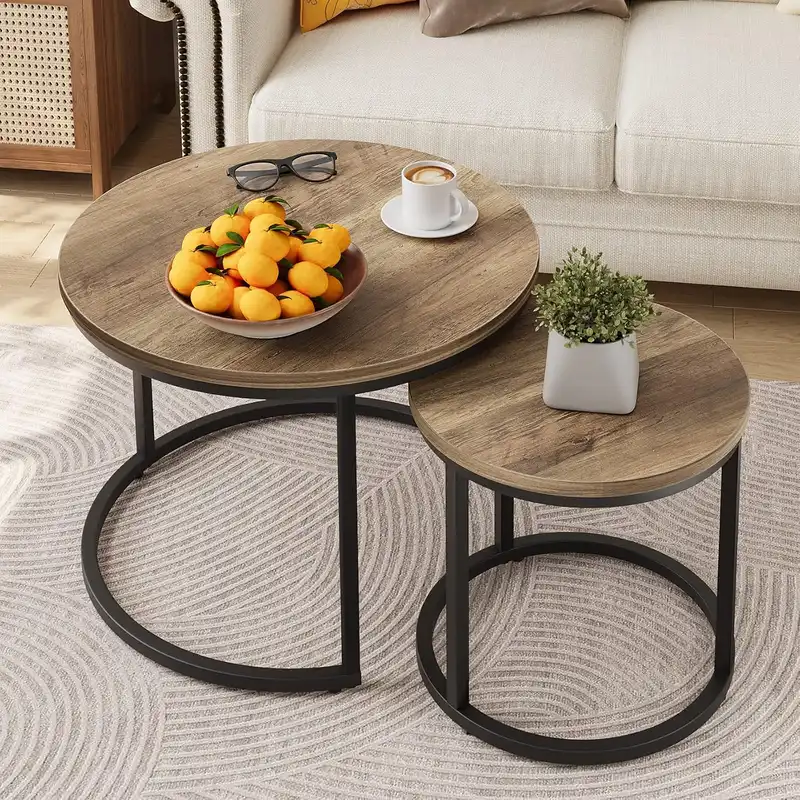
Round nesting table set
HOM-CT-04NT001
Two separate round tables can be grouped in a nesting arrangement or used apart.
| Configuration | Listed dimensions | Listed material | Buyer checks before quotation |
|---|---|---|---|
| Fixed two-tier | Assembled: 100.1 × 52.0 × 47.5 cm. | Particleboard / engineered wood with a metal frame. | Confirm the usable shelf opening and access past the side frame. Define tabletop geometry and base footprint separately from overall size. |
| Lift-top storage | Assembled size field: 51 × 92 × 47 cm; axis order needs a drawing. | Particleboard. | Confirm the mechanism and mounting version, raised position, full travel and usable compartment. The assembled size does not define the open-position envelope. |
| Glass two-tier | Listed overall size: 65.0 × 65.0 × 48.0 cm. | The catalogue specifies tempered glass and a metal frame. | Confirm each glass panel’s dimensions, thickness, edge treatment and support or retention. Overall width does not establish the panel diameter. |
| Nesting set | Large: approximately Ø60.0 × H45.0 cm. Small: approximately Ø39.4 × H39.9 cm. | Particleboard tops with steel legs. | Confirm each table’s base footprint, the nested arrangement and intended separated layout. Request the insertion path and leg clearance; individual sizes do not define a combined footprint. |
A glass coffee table can also be a fixed two-tier design, as the third example shows. Likewise, a wood-look surface does not identify its substrate or make a set a nesting design. Keep structure, material and appearance in separate fields when comparing proposals.
Define five different dimension objects
A single length × width × height entry cannot answer every fit question. Ask the supplier to label the axes, measurement points and operating position on the same drawing.
- Overall assembled envelope: the outermost dimensions of the complete table in a stated position. For a lift top, record closed and fully open positions separately.
- Tabletop dimensions: the actual top outline, including thickness, radii and any separate moving section. A frame or leg may project beyond the top, so overall dimensions are not a substitute.
- Base footprint: the outer floor-contact or base dimensions. This helps define where feet and surrounding furniture can sit; it may differ from the tabletop outline.
- Usable storage clearance: the unobstructed internal space and the opening through which an item must pass. Identify shelf supports, braces, lift hardware and other intrusions. External height is not compartment height.
- Movement and use envelope: the space occupied throughout lifting or nesting, plus the intended user’s access space. Review the route of movement, not only the end positions. Walking and seating space are additional room-layout inputs.
For HOM-CT-04NT001, the two diameter-and-height entries describe individual tables. They are neither the combined set dimensions nor a measured nested footprint. Adding the diameters would not describe a specific arrangement without stating how far apart the tables sit. For HOM-CT-LF021, the listed 51 × 92 × 47 cm field gives no raised height or forward travel, and its axis order should be confirmed rather than silently relabelled.
Review the interfaces that make the configuration work
Fixed shelves: access matters as much as another tier
Choose an open lower shelf when visible, directly accessible storage is the objective. Before comparing storage claims, supply the intended basket, book or accessory dimensions. Ask for the clear shelf height, usable width and depth, and the access opening past the frame. On HOM-MVD-CT02GY001, the X-shaped sides are part of the visible design; their appearance alone does not establish a load rating or stability result.
Review the top-to-frame and shelf-to-frame connections on the proposed assembly drawing. Request part identification, orientation and access for the specified tools. Do not assume two visually similar fixed tables share connectors, holes or assembly instructions.
Lift tops: specify the complete moving assembly
A lift top coffee table can combine a changing surface position with concealed storage. For a project based on HOM-CT-LF021, request the exact mechanism reference and revision, its mating brackets and fasteners, mounting locations, and the top and body parts to which it attaches. Ask whether the mechanism arrives installed or is fitted during customer assembly.
Request a drawing or demonstration showing the full movement, final top height and reach, and the space needed beside the intended seating. Confirm how the mechanism occupies the compartment and whether stored objects can interfere with travel. Ask the supplier to document the intended loading conditions, operating instructions and the applicable assessment of pinch points and stability. No soft-close function, lift assistance, cycle life, safe load or pinch-point protection is established by the reference listing.
Nesting sets: review the path, not just the overlap
For a nesting table set, specify which piece passes beneath which, the intended overlap, and whether each table is intended for independent use. A height difference alone cannot confirm that the smaller table passes between the larger table’s legs: the underside of the top, support rails, leg positions and the smaller top all matter.
Ask for a plan and elevation of the nested position, each table’s base footprint, and the clearance along the insertion and removal path. For HOM-CT-04NT001, this closes a different question from simply restating the two table sizes. Request a sample demonstration with the final tops, legs and feet; changing a leg or panel thickness should trigger a fit review.
Glass surfaces: confirm panel identity and retention
HOM-CT-03BK001 illustrates a glass-and-metal version of a fixed two-tier table. Its clear surfaces support a visible display task rather than concealed storage. Confirm the glass specification and evidence for the proposed version, including any treatment claimed, as well as thickness, outline and edges. A photograph cannot establish glass treatment, material composition or test results.
Request the support, spacer or retaining arrangement and the assembly sequence for each panel. Include handling and care instructions in the sample review. Neither transparency nor a metal frame establishes impact resistance, stability or a load limit.
Put materials and finishes into a versioned specification
Separate the top, lower shelf, body, frame, feet and moving hardware. For each relevant part, record the proposed material, dimensions or thickness, surface construction, finish reference and edge treatment. “Oak-look” and “natural wood-look” describe appearance; they do not mean solid oak or solid wood. A catalogue description of particleboard does not establish the board grade, thickness or decorative surface system for a new version.
A documented historical example shows the level of detail that a panel description can carry. ASHOP-STO-1103TT was recorded at 108 × 50 × 42 cm, with 18 mm P2/PB double-sided melamine-faced panels, matching PVC edging on all edges, and edge joints located at the semicircular ends. Those details belong to that named historical configuration. They are not the specification of HOM-MVD-CT02GY001 or the other current catalogue references, and they do not establish a current supply offer. “Melamine-faced” is retained as recorded; it should not be silently changed to TFL or HPL.
The historical ASHOP-STR-1101TT / 1218OK nesting-table record separately identifies a large table at 800 × 500 × 320 mm and a small table at 750 × 300 × 360 mm. These are two individual-table records, not a combined set size, and they are not dimensions for HOM-CT-04NT001. The names “large” and “small” do not by themselves define which table passes under the other; request the actual arrangement and clearance drawing.
For a private-label version, identify the requested changes to dimensions, finishes, storage layout, frame details or hardware, then ask for feasibility review. Keep the approved top, mechanism, connections and packaging references aligned. For the wider document structure, use the furniture product specification sheet guide; for surface terminology, see TFL versus HPL.
Match assembly and packaging to the selected configuration
Before sample approval, request the relevant configuration checks below. These are review questions, not claims that the reference models have passed a particular test.
| Configuration | Assembly and function review | Packaging record to request |
|---|---|---|
| Fixed panel-and-frame | Check panel orientation, frame connections and shelf access against the selected drawing and manual. | Show how panels, rounded edges, frames and loose hardware are separated and protected. |
| Lift-top | Show mechanism installation, full travel, storage intrusion and the applicable operating instructions. | State the mechanism’s packed position and how the moving assembly and loose fittings are secured. |
| Glass two-tier | Identify each panel, its supports or retainers, and the handling and installation sequence. | Show panel separation, surface and edge protection, and separation from metal parts and hardware. |
| Nesting set | Identify the parts for each complete table; demonstrate the final nesting path and intended separate use. | Define the complete sellable set, carton count and contents of each carton; do not confuse a table count with a carton count. |
For every proposed version, ask for sealed external carton dimensions and gross weight per carton, a contents list and the packaging revision. Confirm whether the sample uses the same product and packing configuration as the quotation. Do not carry a carton value from a different table, finish or mechanism version into the comparison. The flat-pack furniture packaging requirements guide covers the full packaging record and approval responsibilities.
Send a brief that produces comparable coffee-table quotations
Give each supplier the same base configuration and ask it to separate requested alternatives. Use the following coffee-table fields alongside your commercial RFQ:
- Intended use: main room surface, open display, concealed storage, raised surface or separate tables beside several seats. Provide the target seating and room-layout constraints.
- Reference and changes: model URL or drawing; what should stay and what may change. State whether the reference is design direction or a request for a matching configuration.
- Dimensions: target overall envelope, top dimensions, base footprint, required storage opening and internal clearance. For lift or nesting designs, add operating positions and movement-space limits, with labelled axes and units.
- Materials and appearance: component-level material requirements, finish references, edge details, and which alternatives may be proposed. Mark any undecided field explicitly.
- Mechanisms and connections: the requested lift function or nesting relationship, hardware identification, assembly format and the function evidence to be reviewed with the sample.
- Sellable unit and packaging: one table or a complete set, expected carton configuration, delivery route, protection needs, labels and instructions. Ask the supplier to identify proposed packing assumptions.
- Commercial comparison: destination market, sales channel, quantities by version, delivery destination and quotation basis. Ask suppliers to show exclusions and differences in hardware, material and packaging scope rather than presenting unlike versions as equivalent prices.
If one quotation includes an assembled lift mechanism and another assumes customer installation, resolve that difference before comparing price. If two nesting-set quotations use different table sizes or carton counts, record those differences as separate alternatives. For the full commercial fields, sample scope and quotation handover, use the flat-pack furniture RFQ guide.
Discuss a coffee-table configuration
Share your reference, intended use, target dimensions and unresolved configuration questions. HOMVND can review a private-label development brief; proposed changes and the quoted version remain subject to model-specific feasibility review and sample approval.