
Furniture Factory Audit Checklist for Importers: What Buyers Should Verify
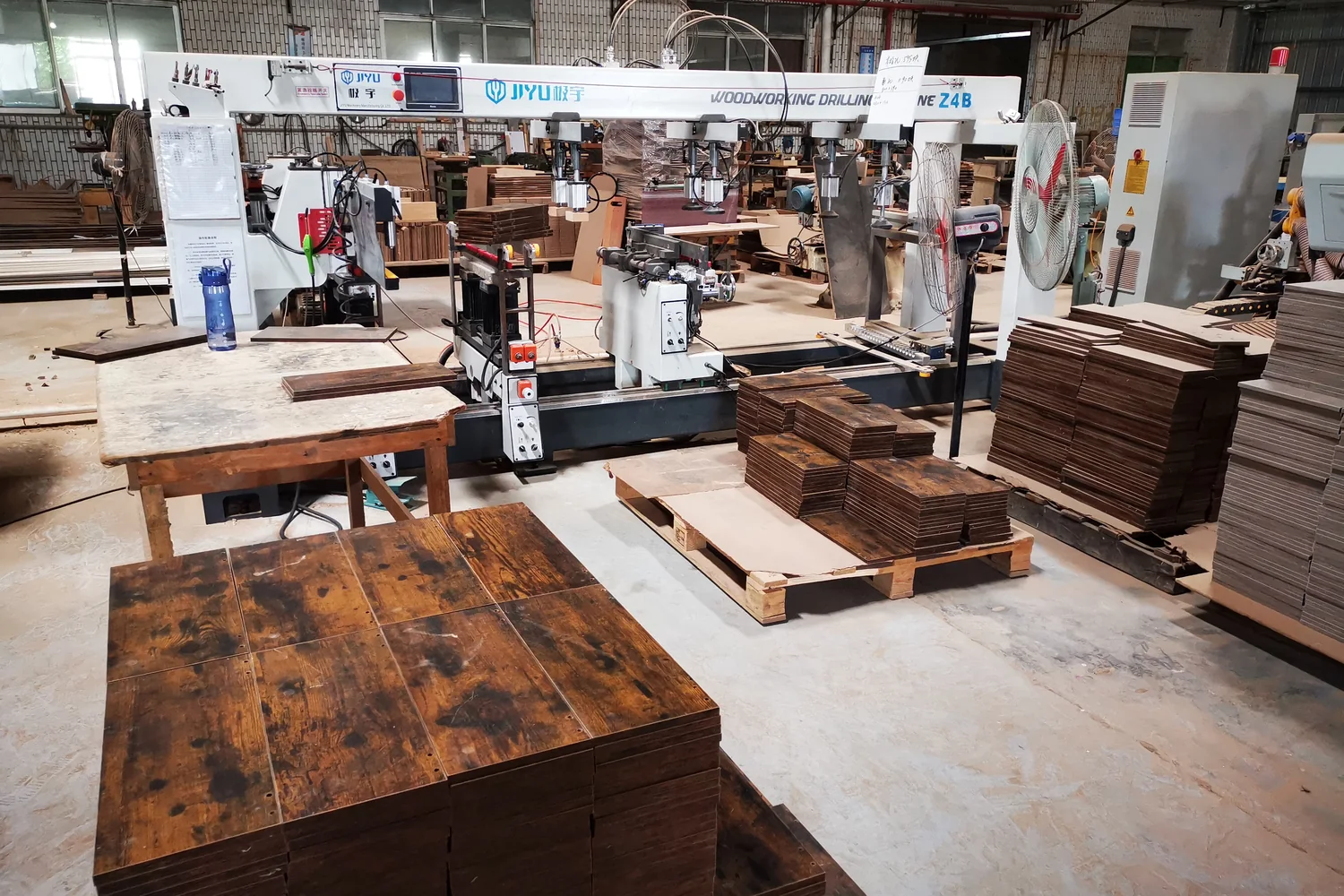
A furniture factory audit should answer a practical buyer question: can the named operating site control the processes, capacity, quality records and external providers needed for the proposed order?
The answer should come from traceable evidence, not a polished presentation, a certificate alone or a short walk through a showroom. Importers should define the product and process scope first, then test whether documents, interviews and what they observe at the site tell the same story.
This furniture factory audit checklist focuses on pre-order capability verification. It does not replace a product inspection, laboratory test, compliance review or the broader furniture sourcing process.
Define the Audit Scope Before Requesting Evidence
An audit has limited value when its scope is simply “the factory.” State what the buyer is considering and what the audit must verify. A useful scope identifies the legal entity, operating site, product family, proposed materials, key manufacturing steps, outsourced processes, target market and expected order context.
Link the audit to a working product or RFQ reference, while keeping unresolved details visible. The flat-pack furniture RFQ guide explains what belongs in the initial inquiry. The audit then asks whether the proposed supply arrangement is credible and controllable.
- Entity scope: Which company will quote, contract, manufacture and invoice?
- Site scope: Which physical location will perform each activity?
- Product scope: Which furniture family, construction and material direction is under review?
- Process scope: Which operations are performed in-house and which are external?
- Decision scope: What evidence would support approval, conditional approval or further review?
1. Verify the Factory Identity and Operating Site
Start by establishing that the organization being evaluated is the organization expected to supply the order. A trading office, showroom, warehouse and manufacturing site can all be legitimate parts of a supply arrangement, but they are not interchangeable.
Request the current legal name, registration information, operating address and the name of the entity that will appear on the quotation and contract. Where a document is in a local language, record the original name as well as any English trading name. Confirm who controls the site and which activities actually occur there.
Identity and Facility Checks
- Compare the legal entity and address across registration records, quotation, invoice details and audit documents.
- Record whether the site is owned, leased or shared when that affects continuity or control.
- Walk the actual material, production, inspection, rework, packing and finished-goods areas that fall within scope.
- Compare the process flow described by management with equipment, workstations, records and material movement.
- Identify additional sites, warehouses or subcontractors involved in the proposed product.
- Record areas that were unavailable, inactive or outside the audit scope rather than assuming their status.
A business license can support identity verification, but it does not prove that the site has the equipment, people or controls required for a particular furniture order. The audit should reconcile documentary identity with observable operations.
2. Test Capacity and Production Scheduling Claims
A single monthly capacity figure is rarely enough. Buyers need to understand what product mix, shifts, equipment, staffing, yield assumptions and bottlenecks sit behind the number—and how much of that capacity is already committed.
Ask the factory to explain the proposed order through its process route. For panel furniture, for example, capacity may depend on several connected operations rather than one machine. The audit should identify the constraint that governs the proposed product, not simply count equipment.
Capacity Evidence to Review
- A process route for the product family and the operation expected to be the bottleneck.
- The calculation behind stated capacity, including shifts, working time, changeovers and expected yield.
- A current production plan or load view, redacted where necessary, showing how committed work is scheduled.
- Recent output records for a comparable process or product family, without treating a different SKU as direct proof.
- Staffing and skill coverage for critical operations, shifts and peak periods.
- Maintenance, downtime and contingency records relevant to key equipment.
- Material lead-time assumptions and dependencies on external processes.
Trace one recent order from its planned dates to actual progress and completion. Interview both production planning and the responsible workshop team. Differences do not automatically mean failure, but unexplained differences weaken the capacity claim.
Do not impose a universal “safe” utilization percentage or visit frequency. Capacity risk depends on the product, process, season, backlog and the evidence available at the time of the decision.
3. Evaluate Quality Management and Production Controls
The factory audit should evaluate whether the site has a functioning system for controlling work. It should not become a substitute for inspecting the buyer’s finished units. For product-level checks, use a separate furniture quality control and inspection plan.
For each control, ask for a recent completed record and trace it back to the applicable product or process reference. Blank forms show an intended format; completed, consistent records show how the process was used.
| Control area | What buyers should verify | Example evidence |
|---|---|---|
| Document and revision control | Operators and inspectors can identify the current drawing, BOM, finish, hardware and packaging reference. | Approved-document list, revision history and controlled workstation copy. |
| Incoming materials | Acceptance criteria reflect the specified material and risk. | Purchase specification, incoming record, rejected-material record and supplier reference. |
| Production setup | Critical settings or first-piece results are approved before continued production where relevant. | Setup or first-piece record linked to the order or batch. |
| In-process control | Checks occur at defined stages and failures trigger action. | Process inspection record, measurement result and escalation evidence. |
| Measuring equipment | Relevant devices are identified, suitable and controlled. | Equipment register, status label and calibration or verification record. |
| Nonconforming output | Rejected material or product is identified, segregated and dispositioned by authorized personnel. | Nonconformity record, rework instruction and concession approval where applicable. |
| Corrective action | Repeated or serious failures are investigated and actions are checked for effectiveness. | Closed corrective-action record linked to evidence. |
| Final release | Defined acceptance evidence exists before packing or shipment release. | Final inspection and release record for the applicable revision. |
| Training and competence | Personnel performing critical work have appropriate instruction and demonstrated competence. | Training matrix, authorization and evaluated work sample. |
If a factory presents an ISO 9001 certificate, verify the issuing body, validity, certified legal entity, site address and scope. Certification can be relevant evidence of a quality management system, but it does not prove that a particular product, order or test result meets the buyer’s requirements. ISO 19011 provides guidelines for auditing management systems; it is not, by itself, a mandatory buyer factory-audit program.
4. Make Outsourced Processes Visible
A factory may legitimately use external providers for materials, components or processes. The buyer’s risk comes from undisclosed or weakly controlled outsourcing, not from the word “outsourced” alone.
Ask for a process map that shows where work leaves the audited site and returns. Identify critical materials, components and services, then determine how providers are selected, instructed, monitored and re-evaluated.
External-Provider Checks
- Which materials, components or processes for the proposed product are externally provided?
- Which provider and physical site performs each critical activity?
- How are technical, regulatory and buyer requirements transferred into the purchase order or specification?
- What approval criteria are used before a provider is added to the approved list?
- How does the factory verify received work and monitor delivery, quality and recurring failures?
- How are deviations, concessions and provider changes approved and communicated?
- Does the buyer need advance approval for a change in provider or processing site?
The ISO 9001 Auditing Practices Group paper on external providers is useful educational guidance for examining procurement and supply-chain controls. Its own disclaimer states that it has not been endorsed by ISO, ISO/TC 176 or IAF. Buyers should use it as a source of audit questions, not present it as a binding ISO requirement.
5. Plan On-Site and Remote Audit Evidence Differently
An on-site audit gives the buyer direct access to physical flow, equipment condition, workplace practices, material identity and records at the operating location. A remote audit can support document review, interviews, follow-up and access when travel is impractical, but it changes what can be observed and how evidence is selected.
IAF MD 4 sets requirements for applicable accreditation and conformity-assessment bodies when information and communication technology is used in auditing or assessment. It does not make the document a mandatory standard for a buyer’s commercial factory audit. Its disciplines are nevertheless useful: agree on the technology, security and confidentiality; assess risks to audit effectiveness; confirm both parties can use the tools; plan where ICT will be used; and state its extent and effectiveness in the report.
Remote-Audit Evidence Practices
- Test the connection, camera, audio, document-sharing method and access permissions before the audit.
- Agree how confidential documents, recordings and screenshots may be handled.
- Use live navigation and real-time interviews where practical; label prerecorded material accurately.
- Ask the site representative to connect observed equipment, materials and records to the audit scope.
- Record interruptions, inaccessible areas, unreadable records and other limitations.
- Convert unresolved physical observations into targeted on-site follow-up rather than assuming equivalence.
Manufacturing is performed in a physical environment. A video call can show parts of that environment, but it does not turn the physical factory into a “virtual site” or prove conditions outside the evidence actually observed.
Evidence Buyers Should Request
The following checklist is a planning tool, not a universal submission gate. The appropriate depth depends on the product, market, order risk and audit scope. Sensitive commercial or customer information may be redacted if the remaining evidence is still verifiable.
| Area | Request before the audit | Verify during the audit |
|---|---|---|
| Entity and site | Legal name, registration, address, organization chart and site/process list. | Entity consistency, responsible personnel, actual activities and undisclosed locations. |
| Product and process fit | Relevant product-family examples, process map and equipment list. | Comparable construction capability, process flow, active equipment and excluded processes. |
| Capacity and planning | Capacity method, proposed route, production-plan view and lead-time assumptions. | Bottleneck, current load, recent actual output, staffing, maintenance and external dependencies. |
| Quality system | Quality responsibilities, process-control plan, document-control method and sample records. | Current references, completed records, nonconformity handling, corrective action and release controls. |
| External providers | Critical outsourced-process map, provider controls and change-notification rules. | Purchase requirements, approval basis, incoming verification, performance monitoring and concessions. |
| Order trace | One suitable recent order or batch reference, with confidential details redacted as needed. | Consistency across planning, materials, production, inspection, rework, packing and release records. |
| Remote method | Platform, participants, live-tour plan, document access and confidentiality agreement. | Connection quality, evidence access, coverage, restrictions and required on-site follow-up. |
Turn Audit Findings Into a Sourcing Decision
A useful audit report distinguishes evidence from interpretation. Each finding should identify the requirement or audit question, what was observed, the supporting record or interview, the risk to the proposed order and the follow-up needed.
- Finding: State the fact and its evidence, not a vague score alone.
- Risk: Connect the finding to identity, delivery, quality, compliance or continuity.
- Action: Define the correction, responsible party, due date and required proof.
- Verification: Decide whether documents, a remote follow-up, a sample or an on-site revisit is appropriate.
- Decision: Record approval, conditional approval, deferment or rejection for the stated scope.
Do not treat a passed audit as permanent proof of capacity, product conformity or supplier performance. Conditions can change, and a factory-level review answers different questions from the supplier performance review used before repeat orders.
How This Checklist Applies to a HOMVND Inquiry
HOMVND works with B2B furniture buyers, including importers, wholesalers, online sellers and private-label brands. A project can begin with a buyer brief and move through design alignment, sampling and approval before production preparation. Depending on the project, customization may include dimensions, colors, materials, hardware and packaging.
Those general capabilities do not establish a named factory site, production capacity, certification, QC procedure or audit result. Buyers should ask for project-specific evidence and confirm which entity, site, processes and external providers apply to the proposed order.
Frequently Asked Questions
What is the difference between a factory audit and a product inspection?
A factory audit evaluates the organization, site, processes and controls relevant to a proposed supply arrangement. A product inspection checks defined units or batches against specified criteria. One does not replace the other.
Does an ISO 9001 certificate mean the factory is approved?
No. Verify the certificate’s issuer, validity, legal entity, site and scope, then evaluate its relevance to the proposed product and processes. Certification is one input; it does not prove product conformity, available capacity or buyer-specific approval.
Can a furniture factory audit be completed remotely?
Remote methods can support document review, interviews, live video and follow-up. Buyers should record what was covered and what could not be verified, then require on-site follow-up when physical conditions or evidence remain material to the decision.
What is the strongest way to verify a factory’s capacity?
Reconcile the calculation, bottleneck, current production load, recent actual output, staffing, maintenance and material or outsourcing dependencies for the proposed product route. A headline monthly figure alone is not enough.
Should buyers reject every outsourced process?
No. Buyers should identify critical external processes and verify how requirements, provider approval, incoming verification, performance, changes and nonconformities are controlled. The key issue is transparency and control.
Reference Boundaries
This checklist draws on current audit and supplier-evaluation principles from ISO 19011, ISO 9001, IAF MD 4, the ISO 9001 Auditing Practices Group guidance on external providers, NIST MEP supplier-selection guidance, CIPS supplier evaluation guidance and Intertek’s description of factory evaluations. Third-party or certification requirements apply only within their stated scope. Buyer checklists should be adapted to the product, market, contract and risk.
Prepare a Project-Specific Factory Review
Share the proposed product family, target market, quantity, timing, critical processes and known external-provider or evidence requirements. Keep open questions visible so the factory-audit scope reflects the actual sourcing decision.
Discuss Your Furniture Project